Sign in. It’s quick, free and it’s up to you.
An account is an optional way to support the work we do. Find out more.
Sign in. It’s quick, free and it’s up to you.
An account is an optional way to support the work we do. Find out more.

In Politics by Numbers, broadcaster, author and spreadsheet stan Gavan Reilly takes a data deep dive into a political point of the week.
LET’S BE REAL, you’d probably moved on from the budget, hadn’t you? The government would probably be secretly delighted if so: the modern test of a budget is whether it causes any massive public outcry. If the biggest controversy is over RTÉ’s missing €20 million – in which the stakeholder is a public body held in mediocre regard – then job done.
Last week’s column discussed how the budget speeches, for all their showbiz set pieces, are only the tip of the full budgetary experience given the slew of documents published alongside them.
In that sense, the approaches of the government, the media and the public are completely at odds – the public is still moulded to think of the budget news cycle as only kicking off on the actual Budget Day; the media now treats it as a weeks-long feeding frenzy that culminates on the day itself; meanwhile, the government is technically working on it for months, with economic forums in late spring and fiscal statements in summer.
While he tries to mend fences with the trade unions, Jack Chambers remains a bogeyman within the rest of Cabinet, over his strong-arming of funding allocations for 2027. Patrick O’Donovan blamed RTÉ’s shortfall equally on his own overall budget just as much as RTÉ’s pace of reform.
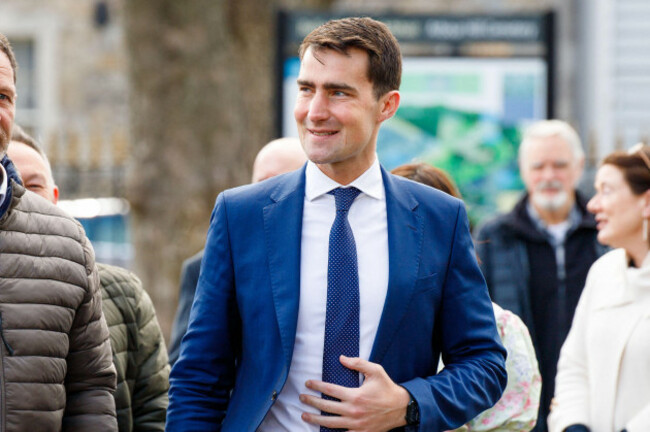
The counterpoint Chambers and supporters would offer is that the Cabinet agreed collectively, months ago, to limit next year’s increase in overall spending to 6%. Putting the brakes on runaway spending was not a solo run on Chambers’ part, but a collective Governmental decision – one that was made months ago, as far back as April when some of next year’s funding was reallocated to cover an underallocation for the Department of Education.
That rule of 6% caused ministers untold hardship in the last few weeks, as they tried in vain to get more money out of the Department of Public Expenditure, Infrastructure, Public Service Reform and Digitalisation (commonly known as DPER) for their pet projects. It was a rule that held firm for six months – and was dispensed with in eight days.
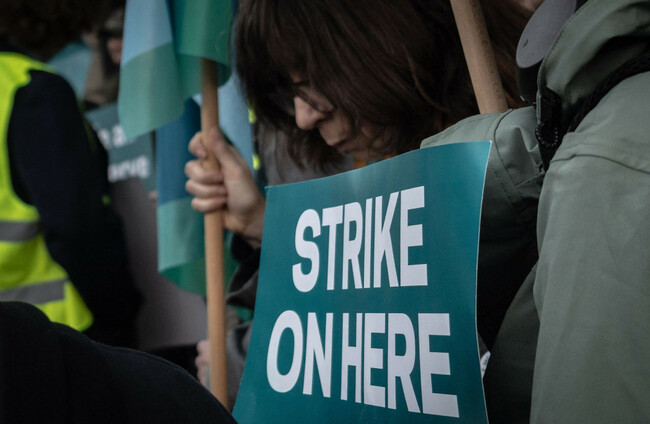
Resolving the row on public pay is evidently in everyone’s interests. The government may not have appreciated just how much support the striking workers would enjoy this week, with incessant car horns beeping approval at many pickets all day yesterday. Avoiding a second day of similar disruption is an absolute must. For workers, this high watermark of support can only fall – eventually parents get angry at school closures and the likes – and a day on the pickets is a day unpaid; nobody wants continual disruptions that begin to take from the bottom line.
But Chambers now saying that the €1.2 billion set aside for public pay increases next year can only be “the starting position” is a tacit acceptance that the goalposts of the budget may have to be moved. Unions correctly diagnosed that some of that pot cannot be available for increased pay, given previous commitments to increase recruitment – and also argue that some pay promises of the last deal haven’t been redeemed either.
Increasing pay in exchange for some other efficiencies and reforms, are what pay negotiations are all about. It’s been the bread and butter of public industrial relations for over 15 years – ever since the advent of the ‘Croke Park Deal’ in 2010, which itself came in the aftermath of the last nationwide public strike in 2009.
The consequence, however, of increasing public pay any further is to break the same 6% rule that Chambers and other ministers set for themselves so many months ago. The total cost of running Ireland’s everyday services this year is due to come in at €99.3 billion, and under the budget was due to rise to €105.3 billion in 2027. That’s almost precisely a 6% increase in overall spending. Any further increase means the 6% threshold is broken.
If the self-imposed limit can be ditched so easily – for simple political necessity, albeit one that means industrial peace for another few years – then what was the point of forcing other ministers to make such tricky decisions about their own areas?
And if a rule that was set in stone for six months can be sacrificed within eight days, what does it say about the way that budgets are crafted in Ireland?
The long-winded process of how the broad parameters of budgets are created is, undoubtedly, far better than the older model. Say what you like about the public kite-flying that now dominates the pre-budget speculation, but it’s still a vast improvement on the era within living memory when a minister for finance would walk into the Dáil without even presignalling how much cash he could inject, or would have to subtract, from the economy.
Put it this way: we knew months in advance this year that there would be about €1.5 billion to put towards tax measures. As recently as the era of Brian Lenihan, there would be no prior indication of how big this package could be, or how much public spending could increase. The mind boggles as to how we thought this was sound practice.
But let me pivot for a second. Housing is the country’s biggest crisis, right? So isn’t it weird that there wasn’t much hubbub last week about the housing budget? There’s a reason for that: the Department of Housing’s budget is dominated by capital spending (i.e. one-off infrastructure, like literally building houses) rather than recurrent day-to-day programmes.

The reason is that capital budgets, unlike current ones, are set literally years in advance. We already know that Housing’s capital budget in 2030 will be €6.446 billion – the Cabinet agreed as much in the summer of 2025, when it updated the National Development Plan. Long-term planning for capital spending makes sense too, in a world where it’ll take ten years to build a Metro.
Which then begs a question: why don’t we do the same for short-term budgets? Why is it sensible to allocate capital budgets years in advance, but not have drama-free rolling updates that outline the current budgets that each Department can expect, years ahead of time, so that politicians and civil servants alike can make their plans accordingly?
The three-year funding package given to RTÉ in 2024 was a rarity simply because it gave the broadcaster more security than anyone else in the State: if it needed to undertake major redevelopment, invest in new facilities or transition to new models, it already knew how much cash would be available for the year to follow. Micheál Martin and Simon Harris declared publicly, at the time, that multiannual funding security was key to RTÉ getting its house back in order.
Why not take the same approach for everywhere else? The Fiscal Council thinks it’s a good idea, as it would also enforce discipline: a Department that overspends in one year of a cycle, would already have to self-correct and pare back its plans for the future. Chambers has spoken against making multi-year budgets the norm, saying they would leave governments hamstrung against short-term crises like energy shocks, and that guaranteeing funding years ahead of time would remove any incentive for Departments to find internal efficiencies.
But if a public sector pay deal emerges as a result of this strike, it too will be a multi-year deal, giving clarity and security to everyone – the government included. So if the minister can bend his own budget to buy his way out of that trouble, and adopt a multi-year deal in doing so, why not go the whole hog? It could genuinely allow public services to plan for more than 14 months at a time – and save everyone the pointless theatre of Budget Day in doing so.
Gavan Reilly is the political correspondent for Virgin Media News and the host of Monday with Gavan Reilly, which airs every Monday at 10pm on Virgin Media Play and Virgin Media One.
To embed this post, copy the code below on your site













have your say