We need your help now

Support from readers like you keeps The Journal open.

You are visiting us because we have something you value. Independent, unbiased news that tells the truth. Advertising revenue goes some way to support our mission, but this year it has not been enough.

If you've seen value in our reporting, please contribute what you can, so we can continue to produce accurate and meaningful journalism. For everyone who needs it.

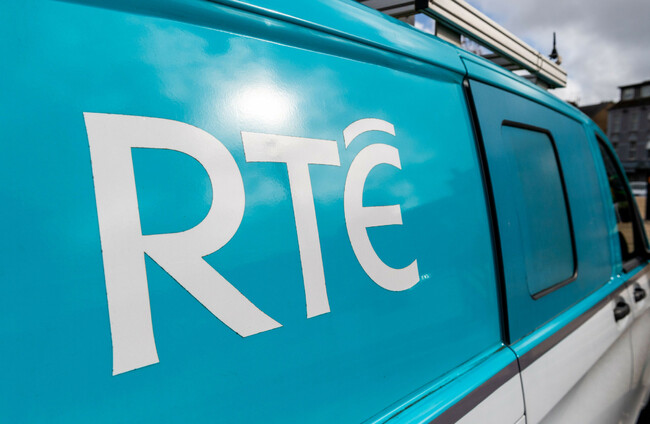
Alamy Stock Photo

RTÉ funding Public service media isn’t optional — it’s critical infrastructure

With RTÉ under-funded and tech platforms dominant, Ireland must rethink media funding and regulation, writes Mark Shiel.

DEBATE ABOUT PUBLIC service media in Ireland has been stuck in low gear since the financial scandal gripped RTÉ in 2023.

July 2024 saw a €725m three-year funding package that was billed by government as a dramatic intervention, but was mostly licence fee revenue RTÉ was due to receive anyway. Then, a general election and government formation were followed by two appearances by RTÉ management at the Oireachtas Media Committee, in May and December 2025, which were mostly box-ticking the broadcaster’s adherence to austerity.

Now, in early 2026, over two years after Ryan Tubridy’s departure, we have an opportunity for more meaningful debate as RTÉ begins celebrations for its important centenary against a backdrop of increasing international conflict that profoundly threatens media culture. But to do this, we must properly recognise the dangers and re-learn the importance of public service media to the nation and its people.

Slow recovery

RTÉ’s centenary celebrations offer many opportunities to appreciate the organisation’s vital contributions to Irish society through 100 years of excellent programming in news and current affairs, the arts, sports, the Irish language and regional life.

Despite decades of under-funding, it serves the public every day as a national cultural institution, a cornerstone of journalism, a forum for self-expression and debate, an archive of popular memory, and a reservoir of creative talent and technical expertise.

However, at a time when social cohesion, public trust and democracy are under a kind of pressure not seen since 1945, several profound challenges have converged.

Firstly, RTÉ’s recovery is painfully slow and still not guaranteed. Secondly, Ireland’s need for economic growth and innovation has led us to rely on multinational tech firms that generate jobs and tax revenues but heavily expose us to media dominance by foreign private corporations.

Thirdly, geopolitical instability and conflict are causing increased tension between media technologies, privately and publicly owned media, and media and government (for example, challenges to public service media and media regulation by advocates of social media, many of them aligned with the far right).

Scattered media

Additionally, indigenous Irish and European Union media companies are relatively small and uncoordinated. And, finally, Ireland has an infrastructural deficit in media that is not yet properly recognised in policy but is at least as urgent as those around transportation, utilities, healthcare, education, housing and defence.

Relative to these challenges, government and RTÉ management are lacking in ambition.

While there are some nascent improvements in media regulation and media literacy (e.g. through Coimisiún na Meán), options for sustainable funding of public service media recommended by impartial expert studies have not been implemented (e.g. the Future of Media Commission, 2022).

Instead, the government exercises a de facto chokehold that restricts RTÉ’s options, cedes space to social media and multinational corporations, and creates a climate of fear in which government ministers and most politicians hide from the merest suggestion of substantially increased funding.

Meanwhile, RTÉ, playing defence, conforms to political pressure with a narrow strategy that promises to barely keep the company afloat by reducing staff, subcontracting production, closing departments, and neglecting facilities.

These are presented as wins despite mixed evidence. For example, in a recent op-ed in the Irish Times, Kevin Bakhurst asserts rather than explains the organisation’s need to reduce overheads, downplays its withdrawal from programming that other public service media companies prioritise (e.g. in-house drama, children’s, arts-related), and overstates other developments as if they are major achievements. For example, he highlights that RTÉ commissioned 70 hours of television documentaries in 2025, but this represents less than one hour every five days, a smaller output than other European public service media companies, even allowing for Ireland’s small population. 

In this upside down world in which failure is presented as success, Ireland needs people to come forward to advocate for a substantial increase in political and financial support for public service media beyond what government and RTÉ management currently offer.

Future direction

Some practical steps we could take are well known but need political will: for example, replacing the licence fee with direct exchequer funding, with proper safeguards to ensure RTÉ’s independence; using our presidency of the Council of the EU to champion the Audiovisual Media Services Directive and Digital Services Act; revisiting the possibility of an EU or Irish digital media content levy, emulating the successful example of Denmark and several other countries; and acting on our increasing understanding of the social costs of social media by adopting aspects of Australia’s Online Safety Act.

Some of these ideas were addressed or implied in the recent petition by the Institute of Future Media, Democracy, and Society at Dublin City University. Succinctly, passionately, and sensibly, it advocates for public service media as a basis for democracy, for building public trust across digital platforms, and for recalibrating the balance of public and private interests against overbearing foreign multinationals and right-wing populists. This is especially for the benefit of our children and future generations.

This effort needs to be scaled up to create a safe space in which the ambition to invest more in public service media is de-stigmatised, in which members of the public feel able to think outside the current box, and public representatives have the leeway to adjust their positions towards increasing, not just disciplining, RTÉ. 

The idea of media as essential infrastructure has so far been neglected by domestic policy bodies such as the Irish Fiscal Advisory Council, but is taken increasingly seriously by the European Union, United Nations, OECD and World Bank. These acknowledge that thinking about media as infrastructure means not only providing transmitters and cables for broadcast and data but ensuring their ability to support meaningful media culture, content and participation.

Thinking along these lines encourages much-needed brainstorming.

What could RTÉ achieve if Irish public service media funding per capita were increased by 2.5 times to match the European average? What activities and units could it grow, what new content could it commission, how many more people could it employ, what new facilities could it build?

Could it expand news and current affairs, adding overseas bureaus beyond the current three (London, Brussels, Washington)? Could it open new channels or platforms dedicated to children or the arts? Could it ramp up in-house television drama for export, launch a fit-for-purpose streaming service for overseas markets, create new content in AR/VR, immersive media, or gaming, or invest more in public education for social cohesion and against extremism?

Historically, the growth of public service media and the growth of democracy have indeed tended to go hand in hand, especially as societies have rebuilt after war. This was recognised in 1926 with the foundations of RTÉ’s forerunner 2RN, and it remains just as relevant at its centenary when bold new ideas are called for once again.

Mark Shiel is an Irish media researcher, author, and educator who divides his time between consulting in Dublin and teaching as Professor of Media Studies at King’s College London.

Readers like you are keeping these stories free for everyone...
A mix of advertising and supporting contributions helps keep paywalls away from valuable information like this article. Over 5,000 readers like you have already stepped up and support us with a monthly payment or a once-off donation.

View 32 comments
Close
32 Comments
This is YOUR comments community. Stay civil, stay constructive, stay on topic. Please familiarise yourself with our comments policy here before taking part.
Leave a Comment
    Submit a report
    Please help us understand how this comment violates our community guidelines.
    Thank you for the feedback
    Your feedback has been sent to our team for review.

    Leave a commentcancel

     
    JournalTv
    News in 60 seconds