We need your help now

Support from readers like you keeps The Journal open.

You are visiting us because we have something you value. Independent, unbiased news that tells the truth. Advertising revenue goes some way to support our mission, but this year it has not been enough.

If you've seen value in our reporting, please contribute what you can, so we can continue to produce accurate and meaningful journalism. For everyone who needs it.

Kelly Earley Society's gender norms – who do they really serve?

As Pride season begins, whether you’re straight, queer, cisgender or trans, society’s narrow rules come with a price that few of us manage to escape.

PRIDE IS AS good a time as any to interrogate the impact of gender roles on your life. Though many may consider themselves unaffected by conversations about gender and identity, we all have expectations placed upon us by society, which limit us in different ways.

The “rules” of gender are a constant presence in life, first apparent in childhood. Enforced by adults, institutions and other kids as we grow up, deviations are policed subtly and consistently in our everyday lives.

The enforcement of gender roles is bad for everyone. Even the groups that are most dedicated to upholding traditional ideals of masculinity and femininity are seeing the benefits start to dwindle.

The rise of looksmaxxing, an incel subculture fixated on “ascending” to Patrick Bateman-esque levels of masculinity and stoicism, has been dubbed the “manosphere beauty cult”. It’s a trend that would almost be laughable if it weren’t so clear how hurt the people participating are.

Previously, wasting time, energy and money trying to adhere to excruciating beauty standards was the toil of women. Now, we’re seeing a growing number of men tediously engineering themselves into arbitrary and toxic ideas of what being “hot” is, opting for a strain that’s rooted in an unforgiving masculine ideal.

It’s a symptom of the interplay between gender and capitalism that immerses most of us in a lifelong battle with our bodies, whether that’s about our build, height, weight and hairlines, or some other random thing that capitalism can benefit from. Women know this better than everyone else, having had extreme beauty treatments and unattainable standards pushed upon them for decades.

None of us really makes it through life unscathed by the carceral notion of gender norms.

The LGBTQ+ community has pointed out that the narrow scope of the gender binary is harmful to virtually everyone. Masculine-presenting queer women endure an extra helping of misogyny in daily life for venturing beyond the bounds of “acceptable” femininity.

Conversely, more feminine presenting queer women find themselves fetishised. Gay and bisexual men are uniquely hurt by the expectation to perform masculinity masterfully, often being expected to do so to overcompensate for the perceived shortcomings of their sexuality. If they fail to do this successfully, ridicule ensues.

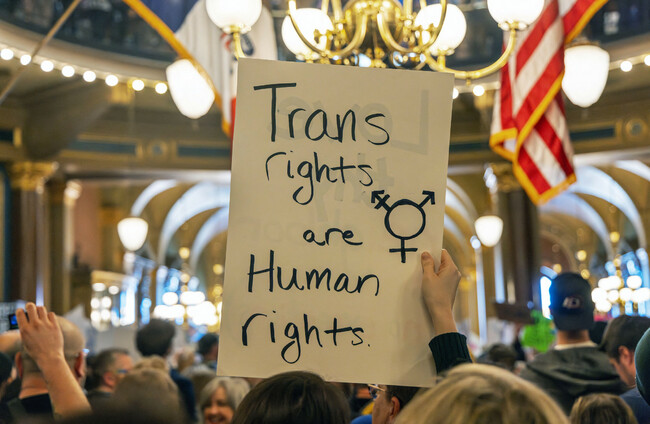
While society is indiscriminate in its punitive nature, it is transgender people who are harmed most by this system that expects people to bury themselves alive to meet the narrow criteria of what is permissible.

Liberating yourself

The culture surrounding gender norms is deceptive: losing looks like winning.

Sticking to the script and performing the lines better than the person standing next to you offers a fleeting sense of achievement. Some people’s success is their ability to draw their attention to the“failure” of others to achieve the elusive standards. In the end, success only upholds a system that punishes any misstep you might make in the day-to-day, emotionally or physically.

While there’s a lot at stake within the confinement of our gender roles, there is nothing to lose from liberating yourself from cultural and societal expectations.

It comes with an immediate sense of vulnerability, as it inevitably takes more strength to swim against the tide than to go along with prevailing norms. But, as Leslie Feinberg wrote in the pivotal queer novel, Stone Butch Blues, “Surrendering is unimaginably more dangerous than struggling for survival.”

Our world is designed to be legitimately terrifying for people who venture too far beyond the established gender norms. As a result, we see so many people who are afraid to be themselves, give in to the temptation to turn against the groups that are most vulnerable as a result of this system. That’s what is unfolding in the UK, with the policing of trans people’s existence in public intensifying to a violent extent. It brings to mind a line from journalist Zeb Larson, who previously wrote: “Fascism is a weak person’s idea of strength.”

That observation explains why the historically oppressed trans community is continuously villainised in political discourse, despite making up such a tiny percentage of the population and posing no material threat to the world.

For instance, this year, UK-based LGBTQ+ advocacy group TransLucent issued hundreds of Freedom of Information (FOI) requests to public bodies across Britain (spanning hospital wards, local authority toilets, domestic abuse refuges and other public spaces where people share bathrooms). Of 382 FOI requests, it emerged that only four complaints had been made between 2022 and 2024, illustrating the unbelievably outsized amount of time that the UK’s bathroom debate takes up in public discourse. The advocacy group noted that it’s an issue that exists primarily in political rhetoric rather than in documented service delivery problems.

Against the backdrop of this, politicians, billionaires and far-right figures are attributing the “collapse of civilisation” to queer and trans people, who have only recently carved a space for themselves in mainstream society. The US president continuously pins failures caused by the gutting of public services on the existence of diversity, equity and inclusion initiatives.

This hostility is pushed by a small cohort of people, and it is becoming reflected in policy, impacting people’s ability to live peacefully. All of us are being robbed of joy in one way or another because of the expectations placed upon us to adhere to the standard of normality that we never signed up for. It’s worth reflecting on whether you’re imposing undue suffering on yourself or others as a result of this propaganda, which is being embraced so uncritically, because no matter how excessively the existence of trans people is policed, they will always exist.

Going into Pride season, we owe our gratitude to those who have the courage to be themselves, as it becomes increasingly difficult to do so, whether they’re trans people, butch lesbians, femme gays or anyone in between.

Their very existence is a reminder of our potential on this planet as human beings. Even in the face of violence, queer and trans people demonstrate what it means to be alive.

Kelly Earley is a writer and podcaster from Coolock, who has a deep interest in culture, technology, community and social justice. She writes for The Journal every week.

Readers like you are keeping these stories free for everyone...
A mix of advertising and supporting contributions helps keep paywalls away from valuable information like this article. Over 5,000 readers like you have already stepped up and support us with a monthly payment or a once-off donation.

Close
JournalTv
News in 60 seconds