Sign in. It’s quick, free and it’s up to you.
An account is an optional way to support the work we do. Find out more.
Sign in. It’s quick, free and it’s up to you.
An account is an optional way to support the work we do. Find out more.
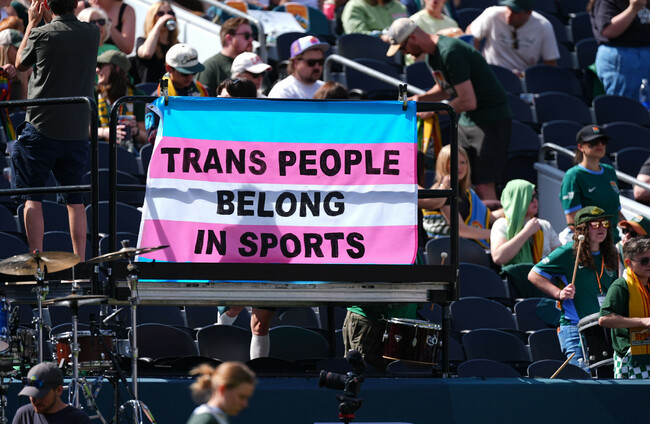

ALTHOUGH TRANSGENDER PEOPLE account for about 1% of the overall population, this particular community has been subjected to an outsized amount of moral panic in recent years.
Anti-trans sentiment has bled into many areas of public conversation, often echoing the homophobic tropes of the late 20th century. Over the last couple of decades, we’ve seen outdated societal attitudes towards gay, lesbian and bisexual people abandoned, to the point where it’s widely accepted that these misconceptions are wildly inappropriate.
Yet, those same outdated ideas that there’s an innate deviance, predatory nature or underlying mental illness behind being gay or lesbian, have resurfaced and are now being targeted towards trans, intersex and non-binary people.
To complicate things further, there’s a new layer of amplification in the age of social media, which means that unfiltered, unmoderated and factually inaccurate prejudices can spread like wildfire.
This new wave of transphobia seeks to quash any involvement that trans and gender non-conforming individuals could hope to have in the public sphere.
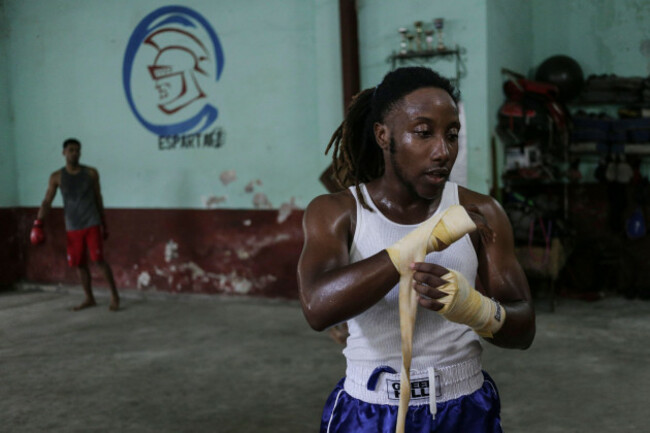
We’ve seen it in the UK after last year’s Supreme Court ruling, whereby the presence of transgender people in public single-sex bathrooms has been the subject of scrutiny.
These spaces must, from next month, only be used based on a person’s sex recorded at birth, not the gender they now identify as. Changes like these have a knock-on effect for anyone who doesn’t meet arbitrary standards of femininity.
We’ve also seen this moral panic rear its head in conversations about trans inclusion in sports in recent years. This was demonstrated recently in the United States Irish dancing circuit. The sport’s governing body, Coimisiún Le Rincí Gaelacha (CLRG), was threatened with legal action from the Attorney General of the State of Florida.
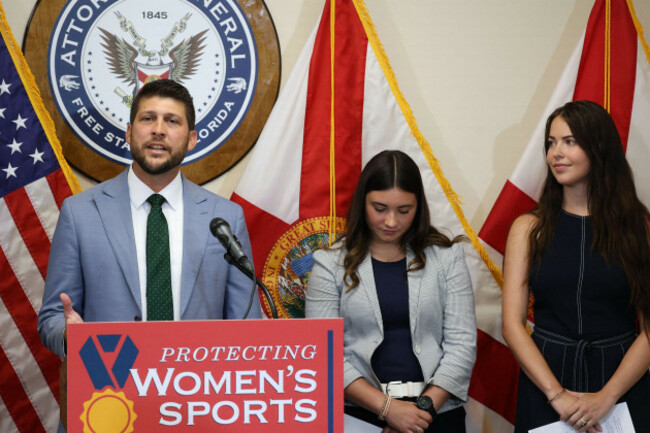
As hostilities grow towards transgender people under Trump’s administration, Dublin-based CLRG and the Irish Dance Teachers’ Association of North America (ITDANA) faced calls from Attorney General James Uthmeier to ban trans dancers from participating in a private Orlando competition, in line with the state’s legislation. In 2021, the state banned transgender athletes from participating in “female” sports.
Unaware that Irish dancing categories are separated by gender solely to accommodate different steps, Uthmeier claimed that allowing trans women to compete is unfair to cis women.
In a petition to maintain inclusion in the sport, retired Irish dancer Gabrielle Siegel wrote: “Success in Irish dance is, and always has been, a multifactorial result upon which no assigned birth sex can confer a biological advantage.”
The petition added: “We recognise the right of transgender dancers to succeed in our sport and celebrate their wins without exception.”
The conflict between the state of Florida and CLRG is just one of many examples of the growing tension in sports, which aims to push transgender, intersex and non-binary to the sidelines.
Don’t fall for the idea that this is a new phenomenon. Just as history has repeated itself in the redirection of homophobic rhetoric towards the trans community, we’re seeing another historical pattern re-emerge. Some of the arguments used to restrict trans people’s participation in sport echo those once used to exclude cis women.
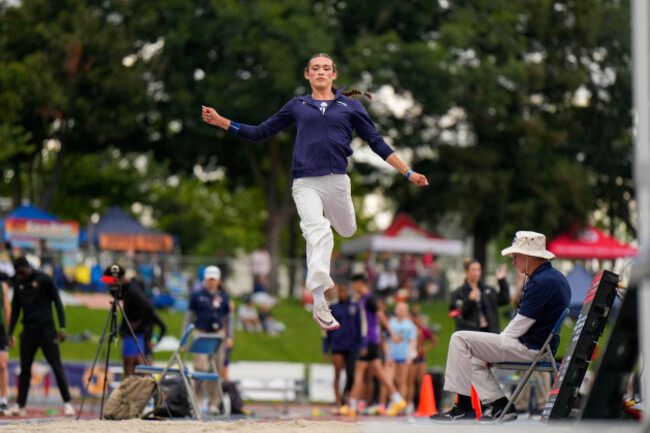
In an interview with Off The Ball a couple of years ago, sports historian Paul Rouse noted that there was a time when people were “unable to conceive of women having a place in the sporting world.”
This was fuelled by bizarre societal beliefs in the late 19th and early 20th century, suggesting that women had less energy than men, and what little energy they had should be focused on child rearing. It was also put forth that sports and exercise would damage women’s delicate organs, preventing them from conceiving or giving birth.
We’ve come a long way from these ridiculous claims, and through tireless work, cis women have carved out a significant space within the sporting world. Even so, many of the most important strides have been made within living memory.
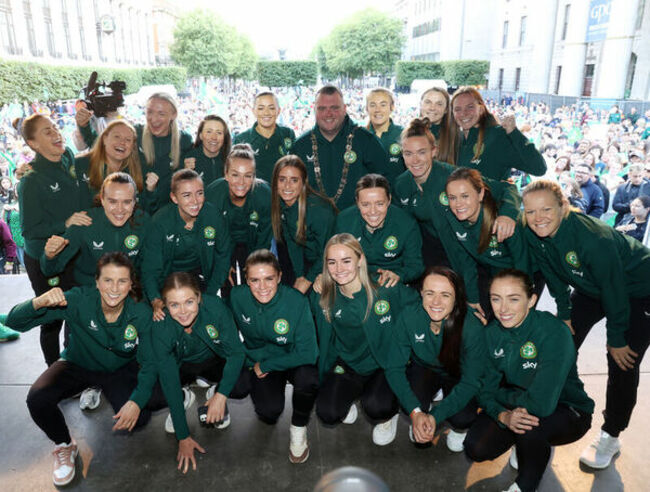
It was only in 1973 that the Women’s Football Association of Ireland was established, with the Republic of Ireland women’s team making their international debut in that same year. In comparison, the men’s team debuted almost 50 years earlier at the 1924 Summer Olympics.
Separately, our national sports have also been a breeding ground for inequality. With the division between the GAA, the Camogie Association and the Ladies Gaelic Football Association (LGFA), differences came to the fore during debates about uniforms (namely, skorts).
Though sports uniforms have now evolved in Ireland, earlier camogie kits were a far cry from what hurlers were wearing on the pitch. Just look at what camogie kits looked like from the 1910s to the 1990s. Camogie players were playing a fast-paced field sport in school uniforms, while their male counterparts wore shorts and t-shirts. As integration between LGFA, the GAA and the Camogie Association looms (albeit with delays), we could see the playing field levelled.
While Irish soccer and the GAA are the two most beloved sporting institutions in Ireland, one of our greatest sources of pride on the international stage is boxing.
Katie Taylor and Kellie Harrington have brought the nation together countless times through their achievements. Yet, it was not until 2001 that Ireland held its first ever officially sanctioned female boxing match, which saw a 15-year-old Taylor defeat Belfast’s Alanna Audley in the National Stadium. This helped shape Taylor into one of the pioneers of a sport that she would later go on to transform.

Internationally, when cis women fought to participate in marathons, they were met with violence and intimidation. Bobbi Gibb was the first woman to run the Boston Marathon back in 1966, doing it unofficially as women were not allowed to compete.
When Kathrine Switzer was the first numbered Boston Marathon runner in 1967, an enraged race official tried to drag her from the course, as documented in a now famous photograph taken by the Boston Globe.
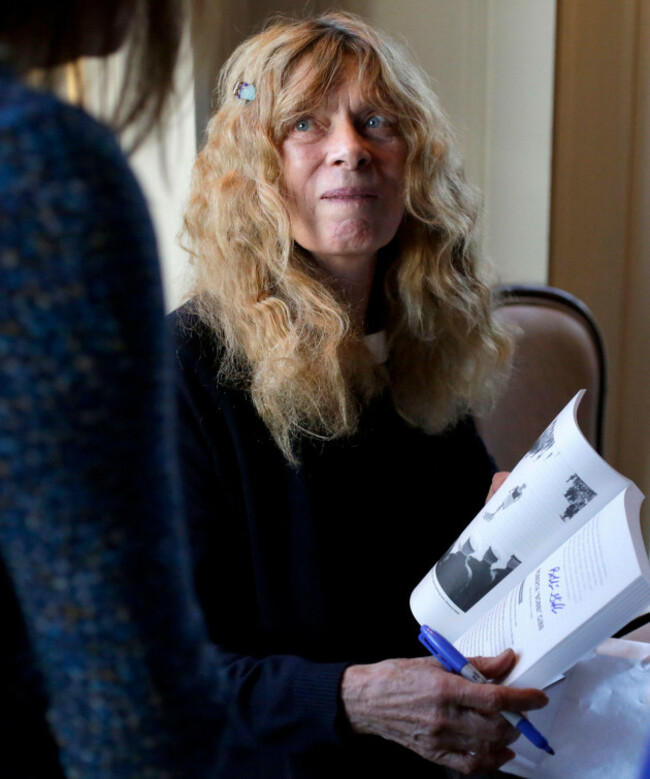
At home, Mary Nolan Hickey is an Irish marathon powerhouse, having run every single Dublin Marathon since its inaugural race in 1980. She noted the tense atmosphere while training in the 1980s, stating that “Women out running on their own were viewed like aliens.”
At that first Dublin Marathon, there were a mere 40 women among the 2,100 runners at the starting line – with the runner recalling: “We got a lot of stick, to be honest. In some towns you’d have fellas howling at you.”
In 1956, Maeve Kyle (neé Sharkey) was Ireland’s first Olympic athlete. Instead of inspiring pride, her participation invited sneering. One letter in the Irish Times described her as a “disgraceful hussy” for going off to the Olympics, leaving her husband and small child behind. This is completely absurd in hindsight, but it’s not a million miles away from the vitriol and moral panic that drives today’s outlandish transphobic narratives.
Change doesn’t happen overnight, and these examples illustrate just how deeply entrenched our ideas about gender and who belongs in certain public spaces can be, and how it can take a long time and a lot of energy to challenge them.
The debate around transgender participation in sport is, it’s fair to say, not identical to the historical exclusion of cisgender women. It would be unfair to everyone if we didn’t acknowledge that there are legitimate and unresolved questions still in some sports around fairness and eligibility that make it a more complex debate.
Those will take time to iron out; that’s a given, but there are clear parallels in how certain groups have been told they do not belong along the way. It’s that very exclusion that eats away at the heart of what sport is, and should stand for: a place for community, inclusion and humanity.
Human nature being what it is, I believe there is still a distance to go. Some day, I hope we will look back at the anti-trans and misogynistic rhetoric that seeks to undermine inclusion in sport with the same disbelief with which we now read accounts of women being mocked, threatened or excluded from the sporting world.
The truth is that there is and should always be a place for everybody in sports. Anyone who says otherwise may find themselves sitting on the wrong side of history.
Kelly Earley is a writer and podcaster from Coolock, who has a deep interest in culture, technology, community and social justice. She writes for The Journal every week.
To embed this post, copy the code below on your site
















have your say