We need your help now

Support from readers like you keeps The Journal open.

You are visiting us because we have something you value. Independent, unbiased news that tells the truth. Advertising revenue goes some way to support our mission, but this year it has not been enough.

If you've seen value in our reporting, please contribute what you can, so we can continue to produce accurate and meaningful journalism. For everyone who needs it.

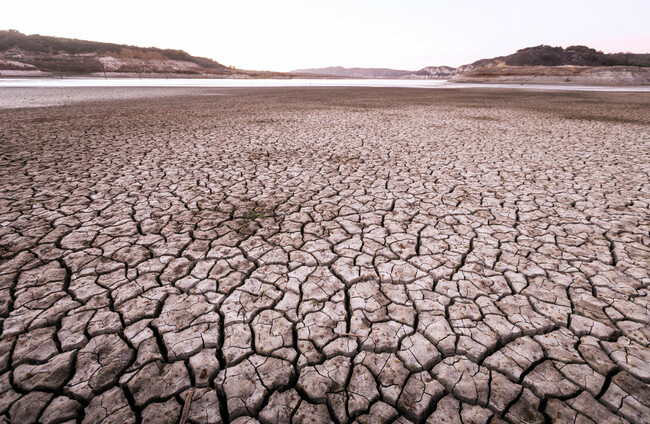
Alamy Stock Photo

Scorched Earth War, water and the unravelling of climate stability

Rising temperatures, water scarcity and war are fuelling instability with global consequences, writes Emma DeSouza.

THE HUMAN BODY is up to 60 per cent water. Water is not just a resource, it is a lifeline. Agriculture, economics and our survival all depend on it; So what happens when water runs out?

While we are gripped by global conflict, a lethal crisis is developing with potentially irreversible consequences. The world is rapidly depleting its natural water resources, with three-quarters of the world’s population living in countries classified as water-insecure or critically water-insecure.

The Middle East is the most water stressed region on the planet; 83 per cent of its population is exposed to extremely high water stress, a figure that is expected to reach 100 per cent by 2050. Research shows that conflict can amplify existing risks associated with water scarcity and transform them into larger security emergencies that can lead to mass displacement.

There are five major conflict zones in the Middle East, all of which are escalating: Iran, Gaza, Syria, Yemen and Lebanon. Israel is the only country involved in all five conflicts, dropping countless thousands of munitions on Iran in the last few weeks, and is the only nation in the Middle East expanding beyond its borders through occupations and invasions.

The scale of what is unfolding in the Middle East has beenobscured by media bans, internet blackouts and the absence of independent observers in many circumstances, but what we do know is that tens of thousands of civilians have been killed in violent conflict in the last 12 months alone, while hundreds of thousands will have died in excess deaths due to attacks on healthcare infrastructure, leading to infectious diseases and treatable conditions becoming fatal.

What is perhaps most disturbing is how normalised the death and destruction in the Middle East has become. Attacks on civilians, journalists, healthcare workers, schools, hospitals, religious sites – all of these actions are war crimes under the Geneva Convention – yet they continue unabated, again and again.

The climate link

The violence erupting is destroying not only infrastructure, but the land itself, counteracting the global efforts to tackle climate change.

The temperature in the Middle East is already on course to rise twice as fast as the global average, increasing by 4 per cent versus 1.5 per cent. This is a region that has already been experiencing extreme heatwaves, increased sandstorms and prolonged droughts.

Every military action contributes to a hotter and more unstable planet. This isn’t just a humanitarian crisis; it is an ecological disaster that risks creating a whole new generation of climate refugees.

Every bomb, missile and destroyed building releases harmful carbon emissions, while fuel consumption and fuel destruction burn through the global carbon budget. What has been unleashed in the Middle East is a carbon bomb, which stands to have devastating consequences for the environment and living conditions across the region as a whole.

Iran was already on the verge of water bankruptcy – defined by the UN as both insolvency and irreversibility – when the United States and Israel launched their most recent attacks.

Earlier this year, Tehran came close to running out of water following five years of drought and poor management. The crisis is so severe that President Pezeshkian has suggested Tehran might eventually need to be evacuated or the capital moved if water supplies fail to recover.

The Syrian drought (2005-2010) did not directly cause the country’s civil war, but it did exacerbate it. Reduced precipitation crippled rural agricultural communities, leading to food insecurity, and internal migration created conditions for rural economic collapse in several regions, including Deraa, the centre of the uprising. When water becomes scarce, all agricultural communities compete, causing internal division.

A finite resource

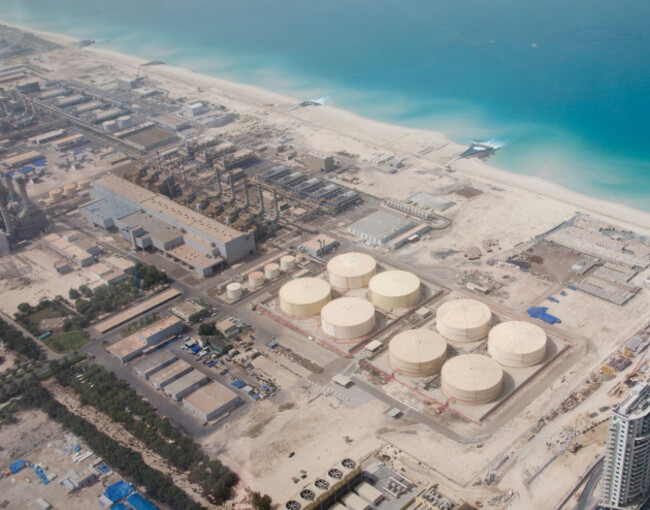
In the current cycle of war, water has moved from a background environmental concern to a weapon of war. Desalination, the process of converting sea water to drinking water, accounts for nearly 100 per cent of the water supply in several countries, including Kuwait, Qatar and Bahrain.

Most Gulf nations maintain only three to seven days of water reserves, making them extremely vulnerable to attacks on water infrastructure. The bombing of Iran’s desalination plant on Qeshm island impacted 30 villages, not the military. Attacks on water infrastructure are a war crime under international law.

desalination-plant-in-dubai-uae A desalination plant in UAE. Alamy Stock Photo Alamy Stock Photo

The political instability and fragile governance structures of several states in the Gulf region leaves many nations on a crisis-response footing rather than prepared for climate adaptation. Climate change does not recognise borders, but hostility between states prevents cross-border cooperation. While Israel’s military assaults in Gaza, Yemen and Lebanon mean that basic infrastructure, such as sewage and irrigation, is destroyed faster than it can be upgraded for climate resilience, limiting the ability for the region to become climate-ready.

194 states and the European Union are signatories to the Paris Agreement, a legally-binding international treaty adopted in 2015 to combat climate change by limiting global warming. Signatories are required to submit plans to reduce emissions, aiming for net-zero by 2050.

Meanwhile, 5 million tonnes of greenhouse gas emissions have been generated in just the first 14 days of the US-Israel war against Iran – equivalent to the cumulative emissions of 84 countries, according to new analysis from the Climate and Community Institute.

The environmental damage in Gaza has essentially poisoned the land for future generations, from agricultural destruction to toxins released by explosives sinking into the soil. Conflict in the Middle East is creating an environmental wasteland that could force mass displacement.

Analysis on the carbon footprint of Israel’s assault on Gaza estimates 33.2 million tonnes of emissions have been generated, the equivalent of the annual emissions of 7.6 million petrol cars, or the entire annual emissions of Jordan. This is not just a regional statistic; it is a withdrawal from a global carbon budget that is already overdrawn.

The climate crisis in the Middle East is no longer a localised environmental issue – it has become a global economic and security centrifuge impacting energy, trade, migration and global climate efforts.

Military emissions should not be excluded from international climate reports and inventories; doing so covers up the immense harm being inflicted upon the planet.

If we continue to treat war as an environmental exception, we are effectively choosing to scorch our own future. It is time to recognise that the pursuit of so-called ‘national security’ through kinetic warfare is in fact the greatest threat to our collective planetary security.

Emma DeSouza is a writer and campaigner. 

Readers like you are keeping these stories free for everyone...
A mix of advertising and supporting contributions helps keep paywalls away from valuable information like this article. Over 5,000 readers like you have already stepped up and support us with a monthly payment or a once-off donation.

View 58 comments
Close
58 Comments
This is YOUR comments community. Stay civil, stay constructive, stay on topic. Please familiarise yourself with our comments policy here before taking part.
Leave a Comment
    Submit a report
    Please help us understand how this comment violates our community guidelines.
    Thank you for the feedback
    Your feedback has been sent to our team for review.

    Leave a commentcancel

     
    JournalTv
    News in 60 seconds