Sign in. It’s quick, free and it’s up to you.
An account is an optional way to support the work we do. Find out more.
Sign in. It’s quick, free and it’s up to you.
An account is an optional way to support the work we do. Find out more.
LAST UPDATE | 12 Jun 2024
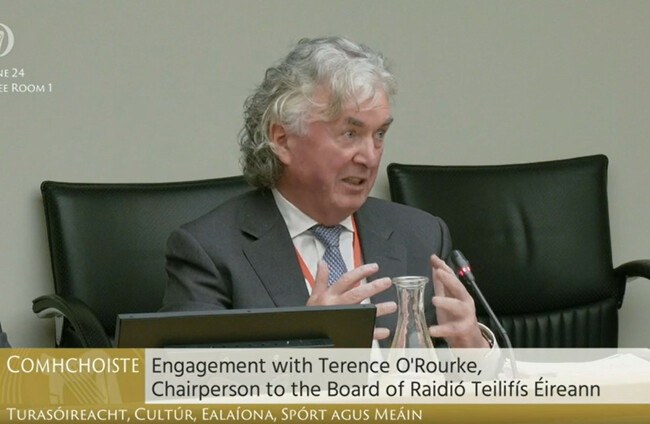
THE NEW CHAIRPERSON of the RTÉ board told politicians that the broadcaster is considering making a €400,000 exit payment to an individual.
Terence O’Rourke, the new chait who took up the position following the resignation of Siún Ní Raghallaigh, confirmed to politicians that he had approved the package, when asked by Fine Gael TD Brendan Griffin, but had not signed off on it yet.
He added that media minister Catherine Martin is aware of the payment, but refused to reveal to who the payment was for.
During the same Oireachtas media committee hearing today the new chair told TDs that the TV licence fee is an “archaic and out of date” funding model and stressed the importance of it to be revamped.
Terence O’Rourke took up the position following the resignation of Siún Ní Raghallaigh amid a public fall-out with Media Minister Catherine Martin.
While the former managing partner at KPMG acknowledged that it is up to the Government to decide how RTÉ’s future funding will be allocated, he emphasised that it must be “sufficient, predictable and independent”.
He later added: “A licence fee system which is depending on TV sets is archaic and out of date.”
O’Rourke said he believes the current TV levy, issues to every household who owns a television, is “not working properly” and suggested that a household charge would be another way of involving public-sector funding.
“There are different ways of doing it, but probably all of those would be better than the current system.”
The new chairman said that his biggest concern when taking the job was that for the funding model to be fixed.
In his opening statement to politicians, he stressed that a significant funding model would help the broadcaster keep up with a changing media landscape.
He told politicians that news and information media faces a challenging decade and that RTÉ must be able to deliver content and engage with audiences digitally, increase production from outside RTÉ, upgrade it’s media infrastructure, maintain their skillsets and focus on increasing its facilities outside of the capital.
O’Rourke expressed on behalf of the RTÉ board its “profound disappointment and regret” about the actions, events and behaviours that triggered “several reports”.
“The organisation has learned from what happened. The necessary controls and procedures are being put in place to make sure that those kinds of events cannot happen again,” he said.
In the statement, which is provided to politicians ahead of time, O’Rourke says that the spread of misinformation and disinformation “risks undermining public confidence in news and information”.
Last year RTÉ became scandal-hit after it emerged that the broadcaster had under-reported the salary paid to former presenter Ryan Tubridy.
The broadcaster’s spending, its use of barter accounts, and its treatment of staff on self-employment contracts which have been described as “bogus” have all come under scrutiny since.
Director General Kevin Bakhurst announced a hiring freeze when he came into the job, and has been working to make changes at the broadcaster since then.
Includes reporting by Muiris O’Cearbhaill

To embed this post, copy the code below on your site














have your say