Take part in our latest brand partnership survey

We need your help now

Support from readers like you keeps The Journal open.

You are visiting us because we have something you value. Independent, unbiased news that tells the truth. Advertising revenue goes some way to support our mission, but this year it has not been enough.

If you've seen value in our reporting, please contribute what you can, so we can continue to produce accurate and meaningful journalism. For everyone who needs it.

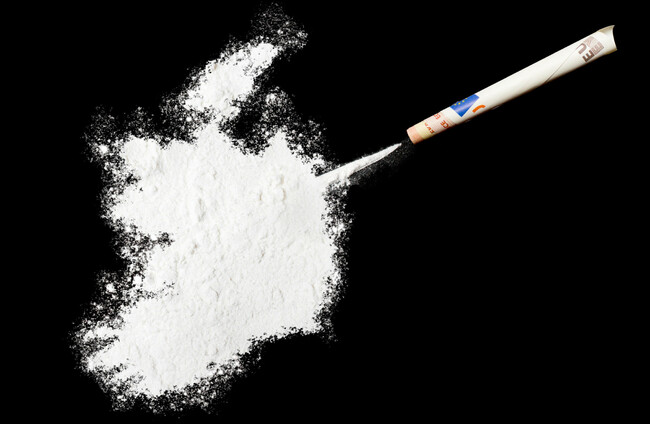
Cocaine business: corrupt ship crew members earn €200k to drop drugs off Irish coast, gardaí say

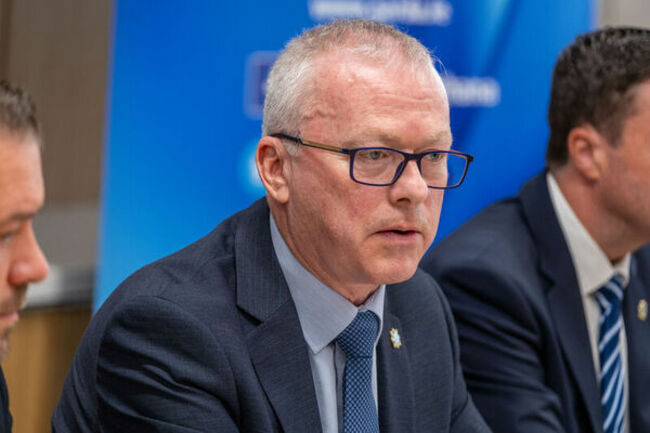
Seamus Boland, who leads An Garda Síochána’s organised crime operations, has spoken about how drug smuggling has changed significantly in the past two years.

CORRUPT CREW MEMBERS on legitimate cargo ships are being paid up to €200,000 to drop cocaine shipments in the waters off Ireland, the garda who leads the investigations into organised crime has said. 

The figure gives an indication of the huge amounts of money involved in the lucrative drug smuggling market, even for people at the bottom rungs of the ladder. 

Speaking to The Journal, Detective Chief Superintendent Seamus Boland, who leads the Garda National Drugs and Organised Crime Bureau (GNDOCB), described how gangs from the Middle East, Europe and South America are working with Irish criminals to use Ireland as a conduit for deliveries of large quantities of drugs.

Boland said that there has been a major shift in drug importation methods: gangs have moved from importing drugs by paying off workers at container ports to now conducting large-scale operations off the coast. 

He said that law enforcement focused on ports between 2014 and 2023 because that was the “main route” in for drugs, but the gangs have changed in recent years and are now focused on off-shore delivery methods.  

This change in tactics happened after significant amounts of drugs were seized in ports by police operations, both here in Ireland but also particularly in Rotterdam in the Netherlands and Antwerp in Belgium. 

The solution for the cartels, Boland said, has been to use legitimate ships with criminal agents on board who can drop off the drugs into the water with flotation devices and beacons attached, in order for them to be picked up by fast boats known as Rigid Hulled Inflatable Boats. 

“The ships don’t have to stop, the RHIB then heads back to shore, and the cargo vessel keeps on its journey,” he said. 

“That’s being used everywhere at the moment and it’s actually very bloody simple.

“It’s so simple, it’s actually ingenious, but it requires corruption of somebody, or a few people on the cargo vessel,” Boland said. 

Corrupt crew

Boland said that corrupt crew members have the potential to make multiples of €200,000 per trip, as they are doing multiple voyages over a matter of months and doing the same thing each time. 

The investigator said that the activity along the coastlines has been particularly busy since 2023 with multiple large-scale successful or attempted drops along the south and west coasts in particular. 

Many of those operations resulted from garda and customs intelligence that placed gardaí in the position to make arrests. A large number of people are now before the courts or in prison having been arrested and charged with a variety of offences from possession of drugs to facilitating an organised crime group to importing drugs. 

Since April 2023 there have been 18 major seizures of drugs from either off the coast or from searches of cargo ships in ports. They have included the importation of crystal meth through Cork, and masses of cocaine like in the MV Matthew operation.

There have been a number of incidents off the Cork, Kerry, Limerick and Clare coasts in which RHIBs have been deployed by drug gangs from land to rendezvous with ships to collect drugs. This is either done by lowering the drugs to the boat, known as ‘coopering’, or floating the shipment in the tide with flotation devices and beacons.

While there have been huge successes by law enforcement, it is not all a story of victories. Sources have said it often requires a great deal of luck to place the police resources in the right locations to intercept. 

Europol conference-007_90713231 Det Chief Supt Seamus Boland. Rollingnews.ie Rollingnews.ie

Throughout the lengthy interview, Boland’s explanations of the operations targeting the shipments is not limited to the borders of Ireland – it is global, involving multiple jurisdictions and law enforcement entities, with gardaí based in some of those countries working with their international colleagues.

He described the process of targeting the gang operations as akin to “finding a needle in a haystack”.

Irish gardaí have worked very closely with Dutch colleagues in particular. Boland used the example of Rotterdam port where there have been huge police operations across the enormous facility which has a coastline of 14 kilometres full of many thousands of containers.

“The gangs have diversified so that any country of Europe that has a coastline now has potential for cocaine drops, because they’ve focused on one of their methods being to corrupt the crew members, or a few members of the legitimate cargo ships,” he added.

While there has been significant media coverage of operations in Ireland there is not as much about the broader European picture. 

“Spain is seeing it, France is seeing it, Portugal is seeing it and Denmark even,” he said. “The UK is experiencing it – they have it a lot more than we even have.

“That’s clearly because you can land bulk tonnage of cocaine on the island of Ireland, but the market’s not there because our population is too small.

“You’re talking about a market of five million versus a market of 70 million in the UK, versus a market of 200 million in Europe. It’s supply versus demand.

“If you can land it in the UK or in mainland Europe that’s much more profitable than landing it in Ireland, because in Ireland they [the criminals] have to move it on as well. And there are costs involved. Everytime you’re moving from one country to another country, you’re just increasing the cost,” the garda added. 

He said that while the cartels are moving drugs through countries along the Gulf of Guinea on the west coast of Africa, costs are an issue, particularly as there is a lot of political instability in the area.

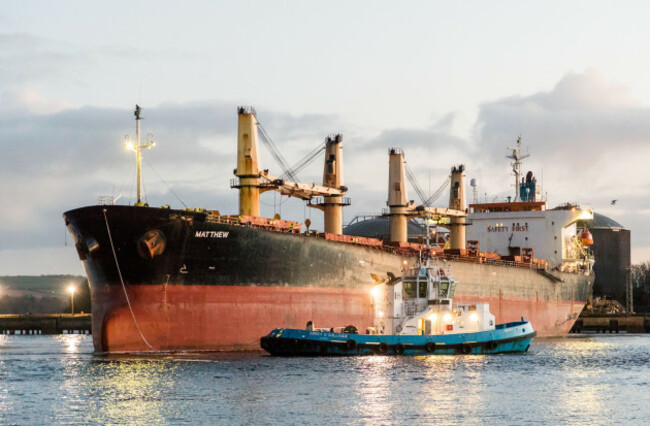
marino-point-cork-ireland-07th-november-2023-siezed-drug-ship-mv-matthew-is-assisted-by-the-tug-boat-gerry-osullivan-as-she-performs-a-turning-manoeuvre-on-the-river-lee-at-dawn-before-transferr Boland said the MV Matthew was an outlier as it was bought and operated by the cartel. Alamy Stock Photo Alamy Stock Photo

‘Well aware’

The police operations are not just catching the shipments as they come in. Boland said that the shipping companies are “well aware” of the issue of corrupt crew members and he said they are working with law enforcement to solve the problem.

He and another senior garda officer attended a conference recently in which a senior player in the shipping industry spoke about their concerns. 

The garda stressed that the MV Matthew was an outlier in this scenario as that was solely bought and operated by the drugs gangs involved and its only cargo aboard was cocaine. 

Boland said in many of GNDOCB’s operations there has been a key component: information from members of the public. While there are huge volumes of intelligence from Ireland and other countries, a simple phone call from a member of the public has made the difference in a number of cases. 

He asked for the public to keep a lookout for suspicious activity along the coastlines as a key way to fight the growing problem. 

Readers like you are keeping these stories free for everyone...
A mix of advertising and supporting contributions helps keep paywalls away from valuable information like this article. Over 5,000 readers like you have already stepped up and support us with a monthly payment or a once-off donation.

Close
JournalTv
News in 60 seconds