We need your help now

Support from readers like you keeps The Journal open.

You are visiting us because we have something you value. Independent, unbiased news that tells the truth. Advertising revenue goes some way to support our mission, but this year it has not been enough.

If you've seen value in our reporting, please contribute what you can, so we can continue to produce accurate and meaningful journalism. For everyone who needs it.

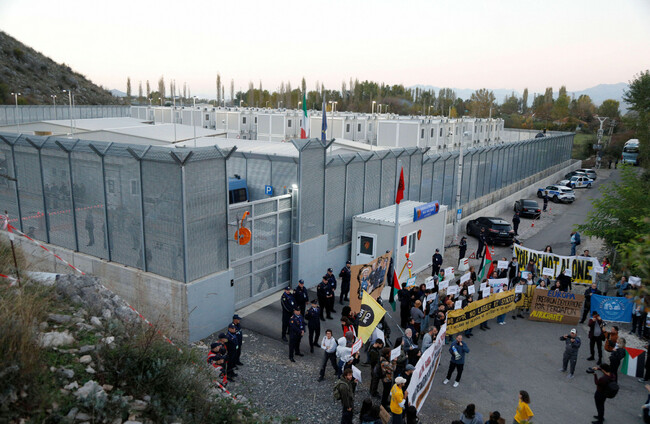
Protests last November outside a centre built to hold asylum seekers in Albania on behalf of Italy, but which has mainly lain empty since due to legal disputes over its operation. Alamy Stock Photo

Unease from Fianna Fáil MEPs at EU plan to use 'third countries' to hold asylum seekers

The plan would allow Ireland and other member states to use so-called ‘third countries’ to hold asylum seekers in immigration ‘hubs’.

A EUROPEAN PARLIAMENT vote this week in the French city of Strasbourg cast a nervous light once again over an EU plan that would allow Ireland and other member states to use so-called ‘third countries’ to hold asylum seekers in immigration ‘hubs’.

Versions of the plan have received backing by senior members of the Irish government, but – taken as a block – the majority of Fianna Fáil and Fine Gael MEPs were against the proposals this week, with some citing fears that the current version of the plan is too rushed.

The European Parliament voted to make it easier for the 27 EU member states to send asylum seekers to countries that they have no connection with, but that Europe considers safe.

The move paves the way for an agreement similar to the UK’s former deal with Rwanda where the latter country’s government accepted people who had been seeking asylum in exchange for money.

That plan collapsed after court challenges, while a similar agreement by Italy with Albania has also faced legal obstacles.

But this week’s vote is likely to see further attempts at resurrecting the concept, with the measures now being forwarded to the European Council (the heads of government of the bloc) for final approval.

Minister’s support

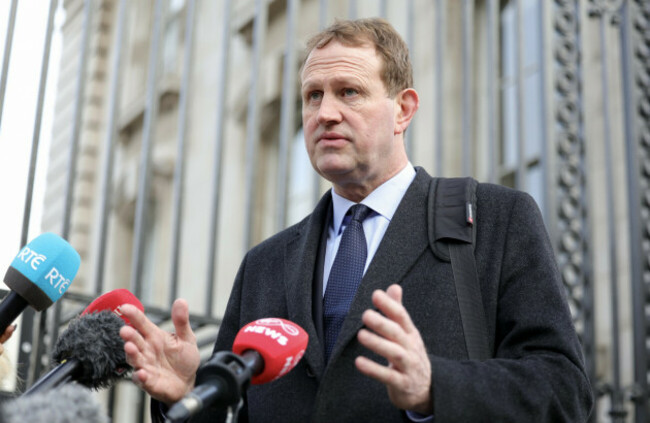
In Ireland, Justice Minister Jim O’Callaghan attended EU-wide meetings discussing the ‘third country’ concept with his European counterparts in December where they discussed how a country would meet the criteria to maintain these facilities.

Those meetings have looked at creating an EU-wide deportation model as part of the Migration and Asylum Pact, which Ireland is to enact in June.

river - 2026-02-13T135145.858 Justice Minister and Fianna Fáil TD Jim O'Callaghan RollingNews.ie RollingNews.ie

Back in 2024, Fine Gael leader Simon Harris said that the processing of asylum applications in third countries was “worth considering” as it might allow “dignity” for people instead of ending up homeless in a country that can’t provide accommodation.

So while there is interest in the proposal among senior members of the Irish government, there was little support from Irish MEPs for the measure this week, as all four of the MEPs in O’Callaghan’s Fianna Fáil party voted against.

Fine Gael’s MEP Maria Walsh was also against, while outside of the government parties, Sinn Féin, Labour and others voiced opposition.

This was all the more striking given that in the case of Fianna Fáil, its MEPs are largely in favour of the EU Migration and Asylum Pact.

ep-199168f_plenary_10_syria Fianna Fáil Dublin MEP Barry Andrews European Parliament Multimedia Centre European Parliament Multimedia Centre

Explaining the reasons for voting against the measure to hold asylum seekers in a third country, the party’s Dublin MEP Barry Andrews said that it risks people being rushed away from the EU without proper, detailed examination of their case taking place.

“We must have a strong and efficient common returns system for those with no legal right to remain in the EU,” Andrews told The Journal.

“However, this text risks that people are sent back to countries outside the EU without their claim being fully examined in Europe. As such I voted against along with my colleagues in the Renew Europe Group.”

More broadly, when the EU looks at how it implements the Pact, Andrews said that it must uphold both a “strong and efficient returns system of returns but also fundamental rights”.

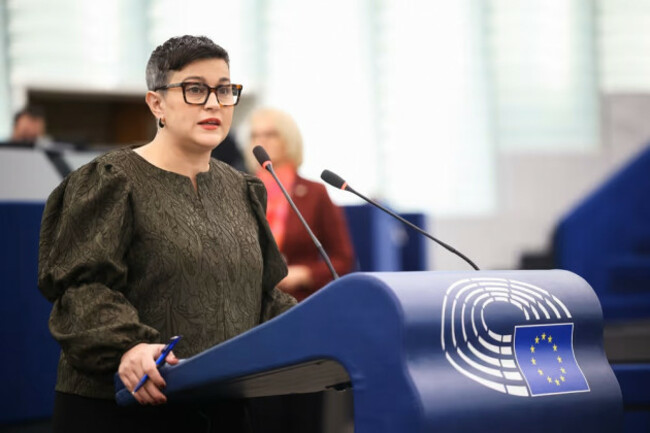
Walsh – Fine Gael’s Ireland Midlands–North-West MEP – told The Journal that she feared that the proposed hubs would “not be fit for purpose”, adding that she had noted reports from NGOs including Amnesty International voicing concern about the potential conditions inside the centres for people seeking international protection.

20260212_EP-199170A_AHA_LD_0249-PREVIEW Fine Gael MEP Maria Walsh European Parliament Multimedia Centre European Parliament Multimedia Centre

The Department of Justice was contacted for comment on how Ireland will be progressing in respect of third countries but did not respond.

‘Big concerns’ expressed over proposals

A senior MEP with the Renew Europe group – of which Fianna Fáil is a member – told The Journal in Strasbourg that there are “big concerns” over how the transfers of asylum seekers could play out.

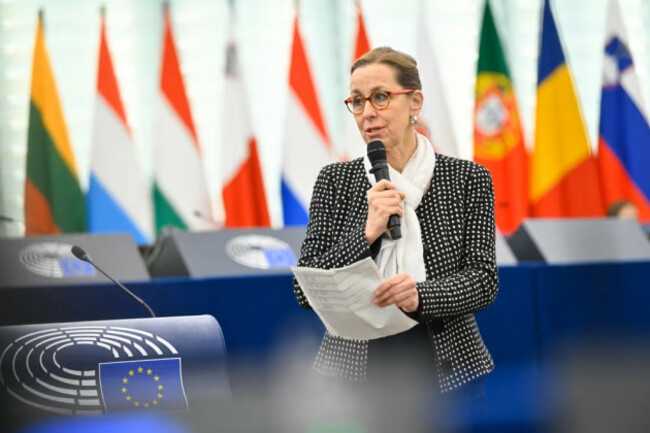
Fabienne Keller, a French MEP who worked on this week’s migration proposals as a Shadow Rapporteur, further raised concerns over possible “exploitation” of asylum workers for forced labour if they are sent elsewhere.

20260206_EP-186524C_STP_PST_0170-PREVIEW French MEP Fabienne Keller European Parliament Multimedia Centre European Parliament Multimedia Centre

A mounting concern among centrist MEPs such as Keller has been how this week’s vote was pushed through after an “alliance between the centre right and the far right”, with the latter having taken on a greater role in this parliament since the last election in 2024.

Rwanda and Albania may well be used again given past efforts to involve them in such schemes, Keller said, but she believes a number of countries could be used.

“It’s probably that it will be more used to make migrants not come to your country,” she said, referring to the model as a way of creating “panic” in people looking to come to Europe.

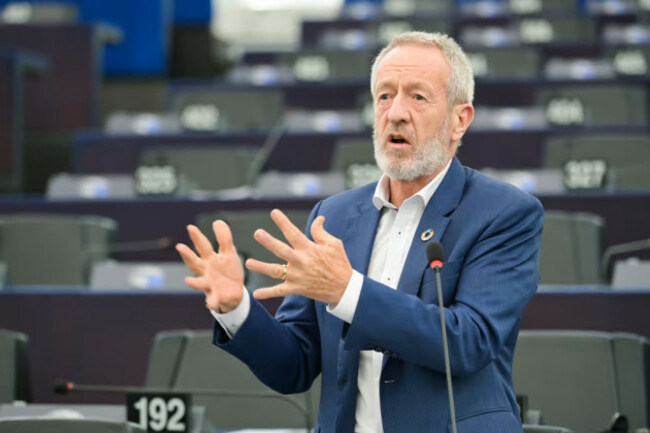
20251007_EP-191448G_CCR_PST_063-PREVIEW Fine Gael MEP Seán Kelly European Parliament Multimedia Centre European Parliament Multimedia Centre

Three out of Ireland’s 14 MEPs voted in favour of the measures, with all coming from Fine Gael. The party forms part of the parliament’s largest grouping, the European People’s Party (EPP).

The party’s Ireland South MEP Seán Kelly told The Journal that he was “without a doubt” that the Irish government will hold asylum seekers offshore as a way of “controlling” migration levels.

Fine Gael’s MEPS Nina Carberry and Regina Doherty also voted in favour. 

Asked about where the third country model has worked in previous attempts, Kelly said that while judges found Italy’s deal to hold people in Albania unconstitutional, the critical part was that it showed that two governments could come to such an agreement.

“I think once we cover all the legal aspects, it’s going to be one of the ways to solve the problem, because you can’t ignore it,” Kelly said.

Readers like you are keeping these stories free for everyone...
A mix of advertising and supporting contributions helps keep paywalls away from valuable information like this article. Over 5,000 readers like you have already stepped up and support us with a monthly payment or a once-off donation.

Close
JournalTv
News in 60 seconds