Sign in. It’s quick, free and it’s up to you.
An account is an optional way to support the work we do. Find out more.
Sign in. It’s quick, free and it’s up to you.
An account is an optional way to support the work we do. Find out more.

OVER TWENTY YEARS on from the 1995 Oscar-winning production of Jane Austen’s Sense and Sensibility, the classic tale is to return to cinemas on Friday in a new film.
As with all Jane Austen novels, there have been many takes at getting the story on screen and bringing it to new audiences. This year’s film promises to remain true to the novel while offering it as a fresh story, distinct from its predecessor screenings.
There is little need for a reminder of the story, but promotional material succinctly reads: “Three sisters experience love and heartbreak after they’re forced to leave their family estate with their widowed mother and move to a humble cottage”.
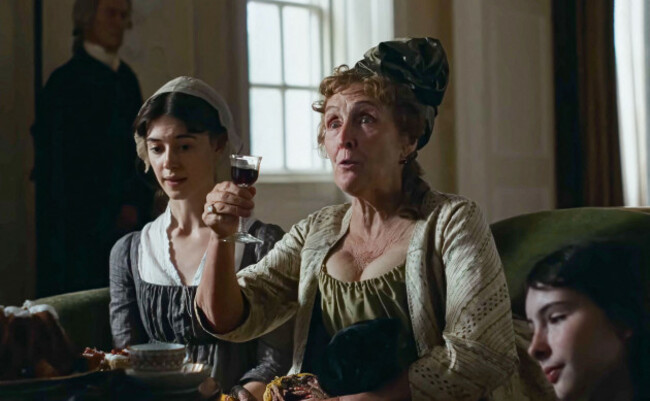
It sports a stacked cast. Fiona Shaw takes on the role of Mrs Jennings with a marvellous hearty laugh, George MacKay is the noble Edward Ferrars, and Esmé Miles-Creed is the impassioned Marianne Dashwood.
The Journal got a chance to sit down with two of its stars, Daisy Edgar-Jones (Normal People, Twisters), and Caitríona Balfe (Outlander, Belfast), to ask them what makes this film different.
Edgar-Jones is the lead Elinor Dashwood – the personification of the word ‘sense’ in the title, while Balfe plays her mother Mrs Dashwood.
While Sense and Sensibility is ultimately one of the great romantic novels, Austen took care to flesh out her female characters and their familial and sisterly relationships. The newest film nurtures this further as the sisters navigate through love and heartbreak.
Much of the most tender moments in the film are between Elinor and Marianne.
On how they cultivated these relationships off-screen, the actors said their director Georgia Oakley had placed a lot of importance on their bonding before filming.
“She [Oakley] really wanted us to spend time together, not even rehearsing the text, but actually just getting to know each other. And she gave us a task the week before we were set to film – our first two weeks were in Norland, which was really useful, because it’s the, you know, the beginning of the film – but she had us draw Norland as a family, because she wanted us to understand the sort of house inside and out as you would if you grew up there.
“So, I remember Caitríona’s drawings being incredible.”
“We were watercolouring!” Balfe said. “We had an artist come and it was the most beautiful day. We sat on the lawn and we all painted.”
“Esme’s were very like charcoal and expressionistic,” Edgar-Jones said, “and Bodhi’s [Rae Breathnach, the youngest sister Margaret] were really bold, and mine were rubbish, which is ironic, because I was meant to be playing the artist. It was really special.”
Balfe also spoke of the importance of building up off-screen relationships.
“It’s really special when you get those moments to sort of just get to know each other as people before you start the scenes, because it imbues it.
“I remember the first time meeting you [Edgar-Jones] and Esme, and it was so wonderful, because you were already in the room, and you already had your folder out, and everything set, and it was so Elinor.
“And then, you know, Esme came in a few minutes late, and she’s like this whirlwind, and she was so Marianne. And it’s like I don’t know, from that first moment, you already started to feel the kind of dynamics of the family. It was so lovely.”
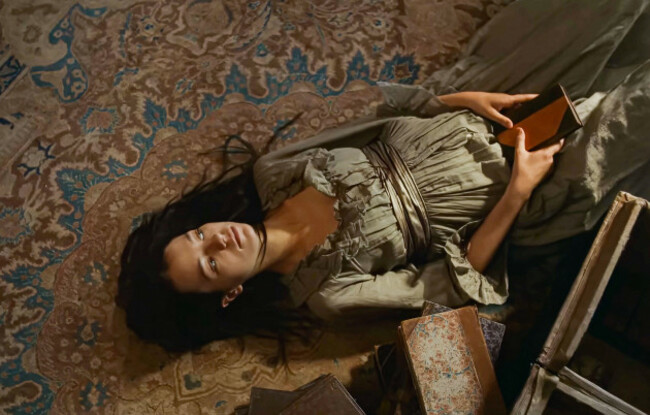
The film will undoubtedly draw comparisons to its 1995 companion – as remakes do – but the cast and crew behind the production are determined for it to be viewed as its own offering.
“I think every generation brings to these classic texts their own contexts,” Balfe said.
“It does feel very fresh. It feels very grounded. I think every single one of us brings our own histories, our own viewpoint on life to whatever job that we do.
“The way Georgia Oakley, our director, the way that she envisioned this spoke to her unique kind of artistic vision. And then each of us, I think, bring our own kind of embodiment of what those characters are.”
She instanced actor Frank Dillane’s turn as Mr Willoughby in the film, the handsome young man who breaks Marianne Dashwood’s heart.
“It was really refreshing to see that kind of, you know, he’s not just a cad. He’s somebody who is perhaps just careless.”
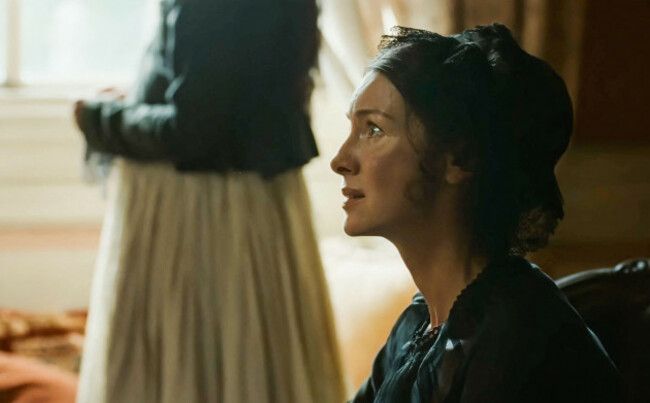
Edgar-Jones was in agreement with the differences. “One thing that I really noticed when watching it is that I think Georgia was really interested in these women in nature.
“There’s a lot of this sort of wild earthiness to this film, and I think perhaps in the way she as a filmmaker creates a very realistic world, which can be difficult at times when you’re doing a period drama, because there is this feeling as a modern audience of distance – because obviously we no longer wear corsets and ride in horses and carriages.”
Even with costuming, she continued, it felt less like elaborate period costumes and more like a wardrobe. It added to the setting of women who had lost their income with the death of their father in how the cast shared clothes and re-wore their dresses and corsets throughout the film, she said.
It was also something that added to their characterisation.
Elinor Dashwood was a character Edgar-Jones was always attracted to, the actor said, with Sense and Sensibility being one of her favourite novels.
While Elinor is the sensible character in the novel, opposing her sister Marianne’s outspoken desire for arts and a mad love, Elinor too has a deep love for art and romance, only she knows rationally that life can’t always be as one would like it to be.
“I think the parts of Elinor that I have always been so attracted to as a character is probably because I relate to them very deeply myself. I think Elinor is someone who, yes, she is sort of categorised as sense, but really she is full of sensibility.
“She’s got this kind of very, very deep well of experience, and she goes through such devastating ups and downs, but she really has learned how to govern that.
“I think we can all really relate to that kind of person because, you know, especially as women, but also just as human beings, there’s always that constant kind of battle with who you feel you should be for others or for the world or within society, but also who you are authentically and how much of that you are allowed to show.
“And so I think that kind of exhausting battle is something that I very much find interesting and related to in Elinor, but also felt quite daunted to play on screen as well.”
Balfe, when asked whether she would define herself as more of a ‘sense’ or ‘sensibility’ type of person, laughed.
“I think in my teens and 20s, I was very Marianne. And then you realise that you can’t really go through life like that. So I think I’ve I’ve grown into Elinor. That’s what I will say.”
Sense and Sensibility is in cinemas on Friday 25 September

To embed this post, copy the code below on your site














have your say