Sign in. It’s quick, free and it’s up to you.
An account is an optional way to support the work we do. Find out more.
Sign in. It’s quick, free and it’s up to you.
An account is an optional way to support the work we do. Find out more.
THE CAR I’M driving speeds past fields of manicured grape vines that will soon be fermented and eventually bottled for sale at the Shiloh Winery that lies just off Route 60.
The highway bisects the occupied West Bank, connecting Israel with a string of illegal settlements in the Palestinian territory.
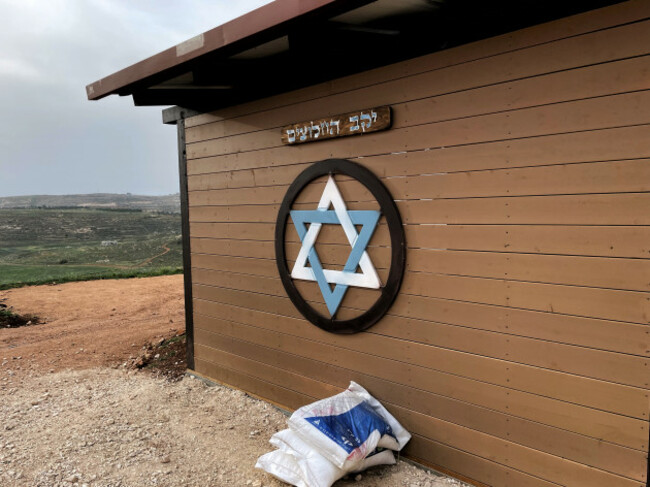
The Shiloh winery is part of one such settlement that was established in 1978 on land confiscated from the neighbouring Palestinian villages of Qaryut and Turmus Ayya.
The extremist settlers who have since occupied this area believe that 3,000 years ago, this land was the capital of the biblical land of Israel.
The US ambassador to Israel and a Christian Evangelical, Mike Huckabee, visited Shiloh last year with a group of settler leaders, and said, “President Trump loves this land. You have sacrificed so much to live in these places — you’ve paid in blood, sweat and tears.” Last December, over a thousand leaders and influencers from the United States took part in the tour of the Shiloh site.
Doing the driving today is Dror Etkes, director of Kerem Navot, an Israeli NGO which tracks settlement activity in the occupied Palestinian territory.
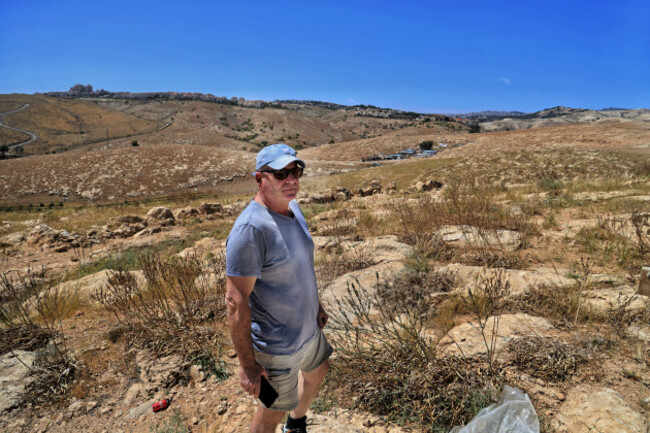
From the driver’s seat, he explains that Shiloh is one of the most violent settlements in the West Bank and, in recent decades, it has rapidly expanded its control over agricultural land once farmed by local Palestinians.
During visits to several vineyards in settlements that day, Etkes points out disused entrance gates that were abandoned after the borders of vineyards were expanded, and new gates were installed on the expanded territory settlers had secured either through force or by lobbying the Israeli administration overseeing the occupied West Bank.
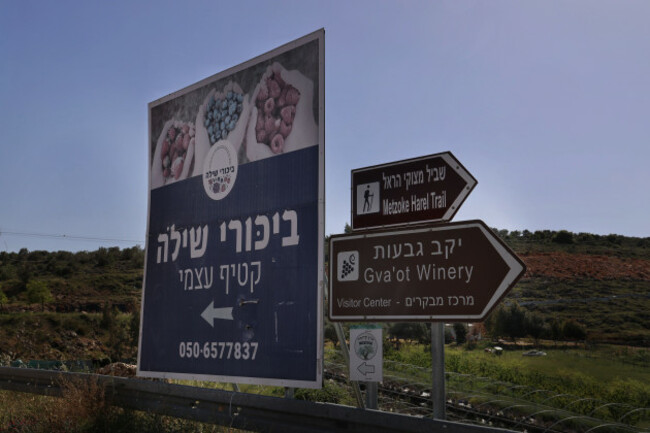
We stop at the Gvaot winery located on a strategic hill between the Palestinian cities of Ramallah and Nablus. “If you control this part of the West Bank, you basically control the northern part of the West Bank,” says Etkes.
Etkes takes out a pair of binoculars and surveys the surrounding hill, looking out for any signs of a new path being built. “I always look out for new roads being built,” he says. “It’s a sign of a plan for a new settler outpost.”
Often, a single settler with a caravan will move in overnight and begin the process of rendering the land off-limits for local Palestinians.
But where do these caravans come from?
At least some of them come from the Shiloh settlement. After driving through the main town area in Shiloh and past a few fields growing grapes and olive trees, Etkes stops the car by an open field and allows me to survey an open field where dozens of caravans are being built, ready to start the next new settler outposts.
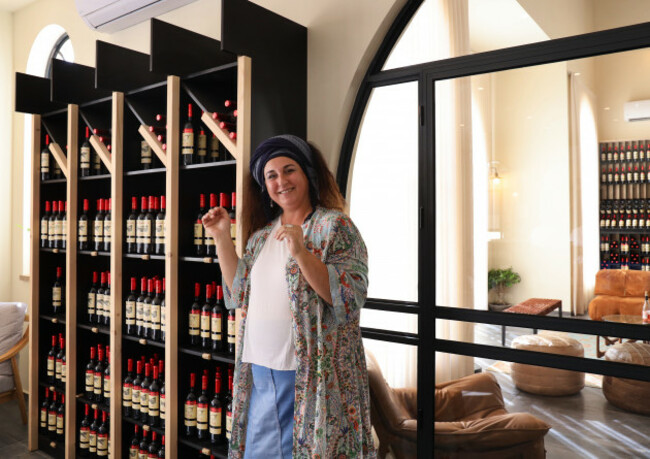
Cogat, the Israeli military unit responsible for overseeing the Israeli occupation in Palestinian territory, did not provide a statement in response to the photos.
If you drive further along the dirt tracks and closer to Jordan, you will arrive at Esh Kodesh, a remote settler village with a violent history, constructed deep in the territory that Palestinians want as part of their future state.
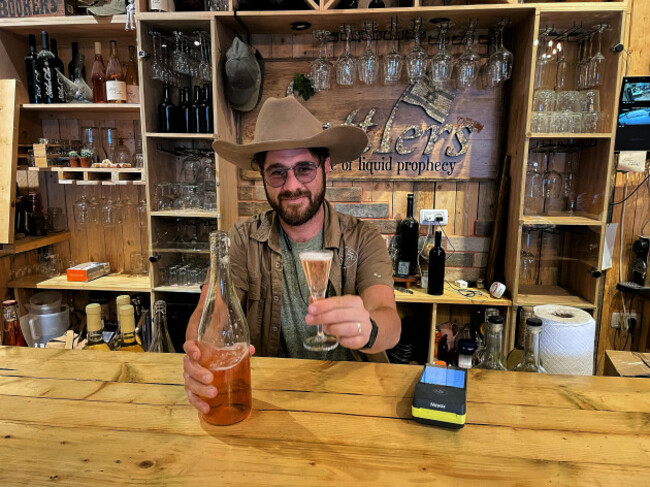
Situated on a hilltop looking onto vineyards with the Palestinian villages of Qusra and Jalud in the background is a small winery called The Settler Cellar, run by AY Katsof and his daughter Neomi. Wine is a part of many Jewish religious days and celebrations, used to sanctify the Sabbath and a central part of the seders held at Passover.
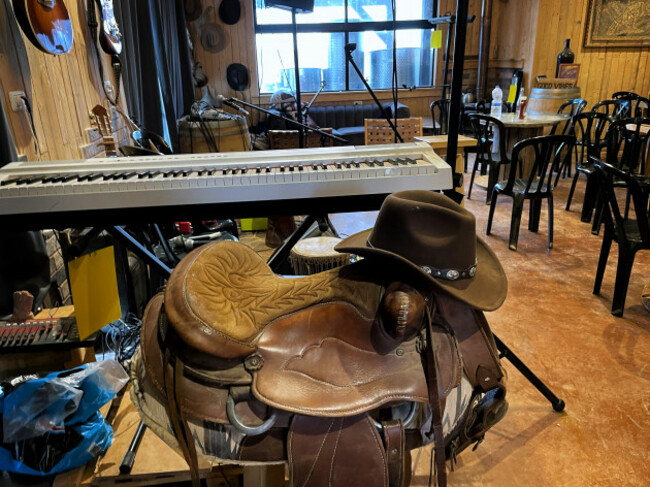
Katsof is originally from California but now operates the small winery and guesthouse in Esh Kodesh. The Settler Cellar is designed and decorated as a midwestern American bar, with the staff wearing cowboy hats and live music played on a Thursday night. A sparkling pink champagne called “Buot” (Hebrew for “bubbles”) is served from the bar with a sign saying “the test of liquid prophecy.”
But wine isn’t just grown by Jewish settlers in the West Bank, but also by Christian Palestinians, a minority among the mostly Muslim Palestinian population.
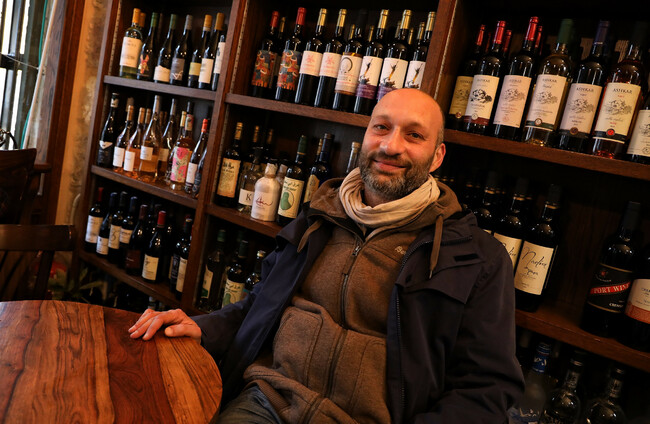
“Palestine is the homeland of the domesticated grapevine, olive tree and wheat,” says winemaker Sari Khoury (47).
“A human being here [in Palestine] has a much more complex, natural relationship with the vine, and he’s producing so many different things throughout the season,” says the Palestinian winemaker.
“Today, for us, every little farmer has a few chickens, has a few sheep, has a few beehives, has some trees, has some fruit trees, grows a few vegetables. Permaculture for us was always the norm.”
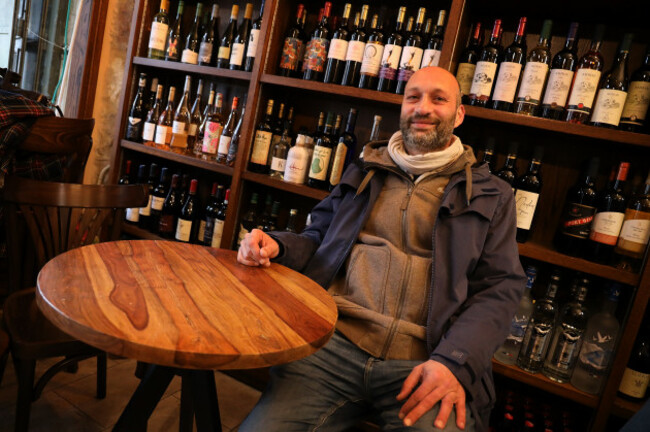
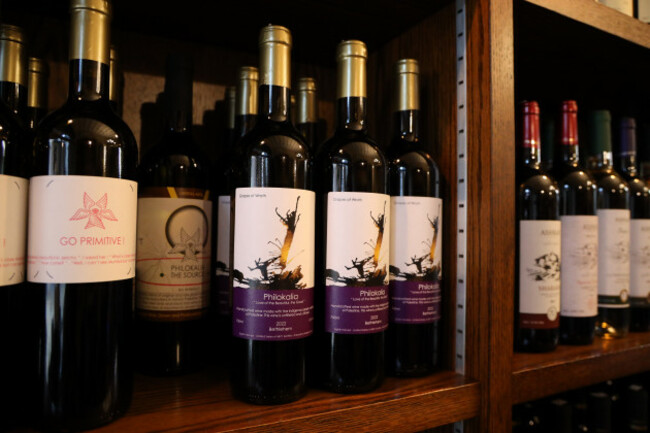
Khoury has chosen native varieties of grapes for the Palestinian wines, which he produces under the Philokalias label. “I’ve chosen native grapes, partly because they are good without irrigation,” says Khoury.
“There are different varieties scattered in different places. I had to seek out where they are to get samples to taste, to compare, to analyse, to make microvinification experiments.”
Like many Palestinian farmers in the West Bank, Khoury lacks access to water for irrigation due to restrictions imposed by the Israeli military occupation. Meanwhile, settlement vineyards typically grow foreign varieties of grapes, which require irrigation and draw on limited water resources in the West Bank.
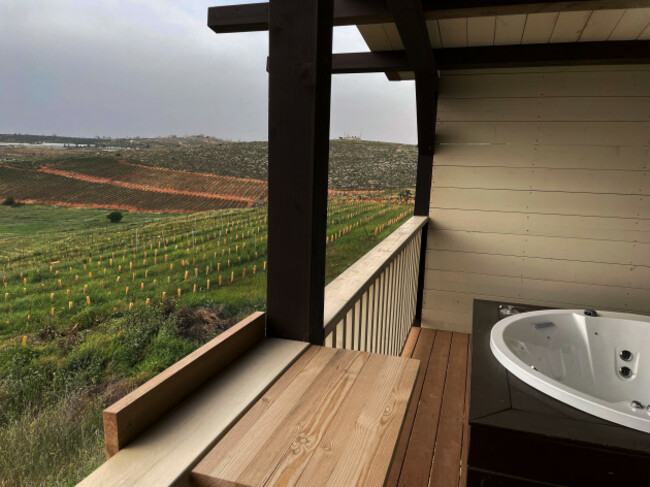
One of Khoury’s wines is labelled “grapes of wrath”. The term originally comes from the Book of Revelation in the Bible, where “grapes” of the earth are described as being thrown into “the great winepress of God’s wrath”.
The biblical term became well known as the title for American novelist John Steinbeck’s book about a tenant family forced from their land during the US depression in the 1930s.
More recently, in 1996, the Israeli military launched “Operation Grapes of Wrath”, a brutal 16-day campaign by the Israeli Defence Forces (IDF) which displaced large swathes of Lebanese from their homes.
The grapes used for Philokalia’s run of ‘Grapes of Wrath’ come from a small plot of land where 90-year-old vines were destroyed by the IDF as they cleared a road for an illegal settlement. Despite being crushed by boulders, the vines grew back through the hard stone.
Khoury’s rising profile as a Palestinian winemaker, including coverage in The New York Times and The Economist, has attracted negative attention from right-wing Israeli media such as The Jerusalem Post.
The Israeli outlet wrote an article entitled: “Sour grapes: How the NYT gave Palestinians credit for ancient Jewish winemaking tradition”, which criticised The New York Times for creating “the impression that wine was produced in ancient times by a ‘Palestinian people’ who were not Jewish is an act of identity erasure.”
When I meet Khoury at a small bookshop and café selling his wine in the Christian quarter of Jerusalem’s old city, I ask him about the negative article. Khoury says that positive coverage in the foreign press about a Palestinian is often followed by this type of coverage in the right-wing Israeli media. “It wasn’t even written to actually give substance,” he says. “It was just noise to discredit another article.”
Khoury’s concerned that he can’t access the plot of land he uses to grow vines for ‘Grapes of Wrath’. It is located in a sensitive location near settlers. Khoury says that if he tries to visit the vineyard, there would be “no discussion. We’ll get shot on the spot.”
If he tried to visit another “beautiful” plot which produces olives and a wine called ‘Stubborn Saints’, Khoury says the Israeli military “will arrest us and confiscate our equipment.”
Despite the challenges, Khoury is philosophical about the opportunities presented by having to produce great wine under occupation: “This is the ideal circumstance for somebody who wants to be creative.”

To embed this post, copy the code below on your site














have your say