Sign in. It’s quick, free and it’s up to you.
An account is an optional way to support the work we do. Find out more.
Sign in. It’s quick, free and it’s up to you.
An account is an optional way to support the work we do. Find out more.
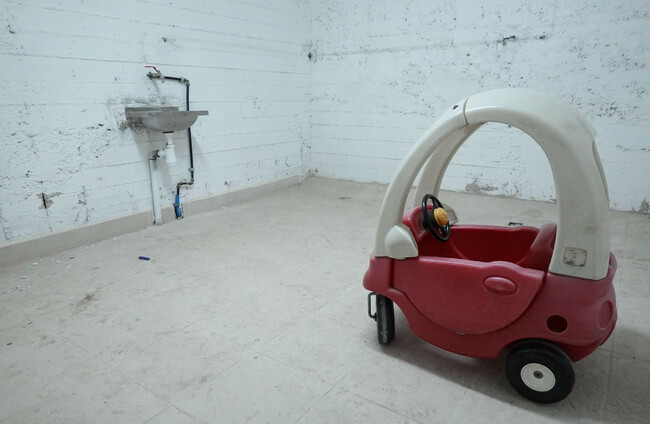
PEOPLE LIVING IN Arab parts of Israel are far more exposed to rocket fire and explosions than their close neighbours, after decades of planning decisions that have resulted in few bomb shelters in their neighbourhoods.
A new report by Bimkom, a group of planners and architects advocating for infrastructure equality, has found that adequate bomb shelters are few and far between in Arab areas.
The escalation of the war with Iran in recent weeks has increased anxiety among unprotected Palestinians.
According to Israel, around 26% of Israeli households lack access to bomb shelters. For Arab households, the figure is at least 46%, with Bimkom suggesting the state’s estimate is conservative.
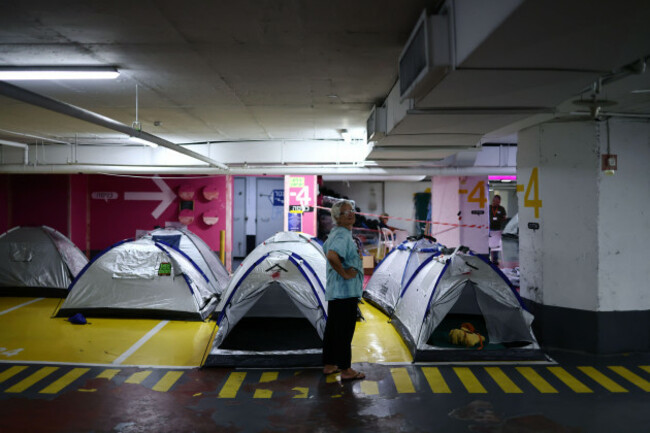
Some schools and mosques have bomb shelters, but these are only useful for those who live close by.
Moreover, Bimkom reports that these shelters are often not clearly mapped on local authority websites, and residents often aren’t aware of their existence or location.
Fakhri Masri is a pharmacist who lives in Tira, a city in central Israel, with his wife and four children. Their home is around 20 minutes from the nearest bomb shelter.
When sirens sound in the middle of the night, they huddle under the stairs.
“It’s scary for my children, scary for my wife [...] They have seen the damage the rockets have caused,” he told The Journal.
“You haven’t got time to wake up all the children and take them to a school, so we go down under the stairs.
“I know it is not a shelter, but I want to calm down my family because they are in distress. So I used to tell them, ‘don’t worry, nothing will happen, we will be safe,’ to calm them down.
“I know inside me it won’t protect us.”
The state has deployed a number of mobile bomb shelters in central Israel. Masri says that these were primarily allocated to Jewish areas, despite Arab areas having far fewer existing shelters.
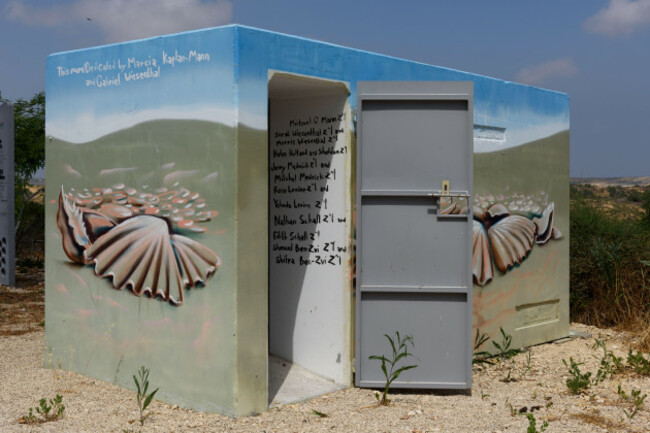
Rawan Shalaldeh is a single mother of one. She lives in At-Tur in East Jerusalem, a part of the West Bank annexed by Israel. Around 60% of the population are non-Jews, and there is clear segregation between communities.
“There is a huge difference in the infrastructure even though we both, Israelis and Palestinians, pay taxes the same … in return we don’t get the same services,” Shalaldeh told The Journal.
It’s standard for newer buildings to contain bomb shelters, but most of the buildings in East Jerusalem’s Arab neighbourhoods are older.
Palestinians can build on their own land, but they risk demolition as the state often denies them planning permission. “In the end, they just come and erase your building,” says Shalaldeh.
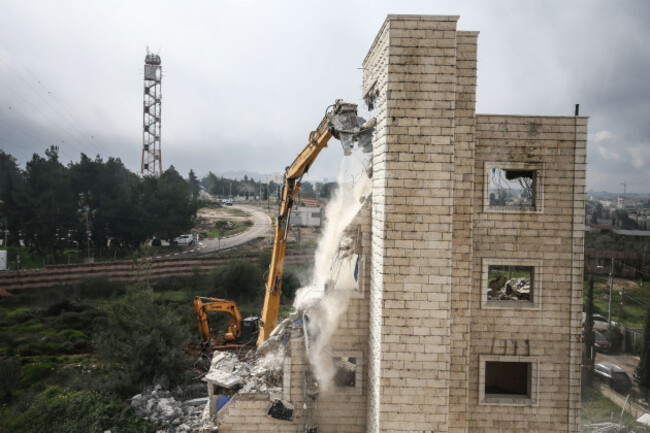
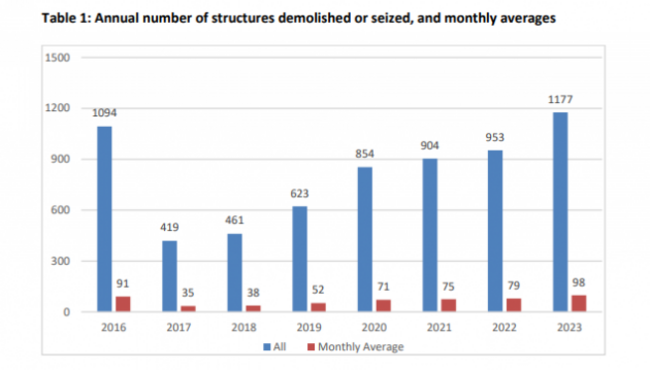
The Israeli state demolished more than 1,500 Palestinian-owned structures in the West Bank in 2024.
The figure includes 700 homes, 398 agricultural structures, and 205 commercial buildings.
There’s been a steady increase in the number of state-sanctioned demolitions every year since 2017.
Israel often demolishes homes to punish those suspected involvement in attacks against the state.
Dr Michal Braier, who authored the Bimkom report, explains that many towns and villages are “unrecognised”. Demolitions and forced evictions are more common in these areas.
Due to Israeli zoning laws, an area may have hundreds of inhabitants and structures, but they are considered “illegal” and are denied basic state services such as healthcare and education.
A lack of public buildings and a precarious housing situation means proper bomb shelters are rarely built.
“Because the houses are unpermitted, they’re usually substandard … some of it is tents, but a lot of it is make-shift housing,” said Braier.
After the events of 7 October 2023, the Israeli government made a new planning strategy that it said would simplify and accelerate the process of securing building permits.
However, Braier says it only served to tranfer responsibility for providing protection from the state to individuals, and those most in need of infrastructure – who live in unrecognised or deprived areas – cannot necessarily afford it.

To embed this post, copy the code below on your site














have your say