We need your help now

Support from readers like you keeps The Journal open.

You are visiting us because we have something you value. Independent, unbiased news that tells the truth. Advertising revenue goes some way to support our mission, but this year it has not been enough.

If you've seen value in our reporting, please contribute what you can, so we can continue to produce accurate and meaningful journalism. For everyone who needs it.

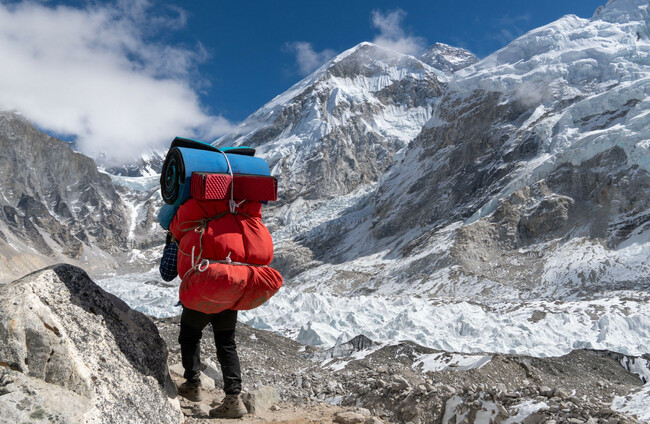
File photo of a Sherpa porter carrying expedition equipment reaching Mount Everest Base Camp. Alamy Stock Photo

Sherpa guide missing for a week on Everest rescued while crawling to base camp

A leading figure in the Sherpa community described the rescue as ‘nothing short of a miracle’.

A SHERPA GUIDE was found crawling to base camp on Mount Everest a week after he went missing and has been reunited with his family who had given up hope he would return.

Dawa Sherpa was last seen around 29 May descending the mountain, but he did not reach base camp even though his client did. The pair were among the last climbers on the mountain as the climbing season came to an end and the route was dismantled.

Dawa was located by a cleaning crew this morning as he was crawling down the snowy slopes around the Khumbu Icefall, just above base camp, said Pemba Sherpa of 8K Expeditions, which coordinated the search.

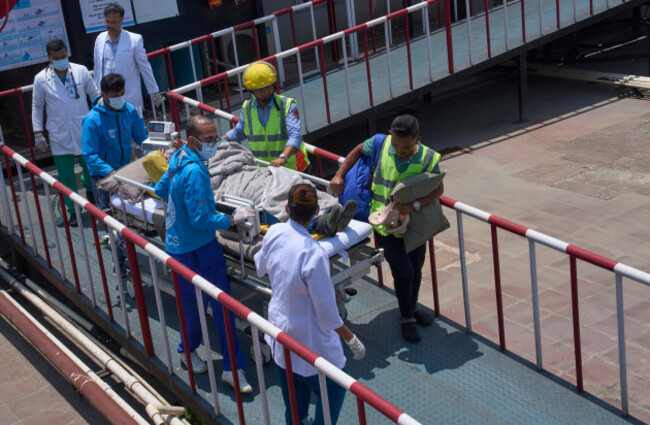
correction-nepal-everest-sherpa-rescued Medics take Dawa Sherpa for treatment after he arrived at HAMS Hospital in Kathmandu. Niranjan Shrestha / PA Niranjan Shrestha / PA / PA

He was quickly carried down to safety and given food and water. A rescue helicopter flew him to HAMS Hospital in Kathmandu, where his wife and daughter, who already had begun funeral rituals for him, were waiting.

“We first heard that he was still alive on the local news and from a person we know who called with the news that … he is being brought down,” said his wife, Damu Sherpa.

Though Dawa had been missing since last week, there was a delay in organising a search team. No reasons were given for the delay, but when helicopters were finally sent to look for him, they could not find him.

His family had given up hope. Dawa’s teenage daughter, Mendo Lhamu Sherpa, said they were on the second day of a funeral ritual, which lasts for several days.

“When we first heard about it (the rescue), we could not be sure if that person was indeed our father,” Mendo Lhamu said. “So to be certain we asked for photos to be sent and then only we were sure and very happy.”

The team that spotted him was part of the Sagarmatha Pollution Control Committee, which lays the ladders and ropes on the route at the start of each climbing season and then removes the equipment and cleans up the site after climbers have left.

correction-nepal-everest-sherpa-rescued Dawa Sherpa had been missing for several days. AP Photo / Niranjan Shrestha AP Photo / Niranjan Shrestha / Niranjan Shrestha

Dawa was last seen at a spot called Yellow Band above the Camp 3, which is located at 7,200 metres. The base camp is at 5,300 metres.

Dawa, 52, works for a small Kathmandu-based company called Himalayan Traverse, and he was guiding a Polish climber. He comes from the town of Okhaldhunga, south of Everest.

Nepal’s mountaineering community has hailed Dawa’s survival as miraculous.

“This is nothing short of a miracle surviving so many days on the mountains facing such harsh condition,” said Ang Tshering Sherpa, a leading figure in the community.

“Sherpas are built tough growing up in the mountains,” Ang Tshering said. “If there was someone else in his place they might not have survived.”

Members of the Sherpa community were mostly yak herders and traders living deep within the Himalayas until Nepal opened its borders in the 1950s. Their stamina and familiarity with the mountains quickly made them sought-after guides and porters, eventually allowing them to dominate the Himalayan climbing business.

More than 1,000 climbers and their guides scaled Everest this May, which was the busiest climbing season ever on the world’s highest mountain. It began late because of a massive ice block on the route just above the base camp that took about two weeks to clear.

The 8,849-metre high peak was first climbed on May 29, 1953, by Sir Edmund Hillary and Sherpa guide Tenzing Norgay.

Close
3 Comments
This is YOUR comments community. Stay civil, stay constructive, stay on topic. Please familiarise yourself with our comments policy here before taking part.
Leave a Comment
    Submit a report
    Please help us understand how this comment violates our community guidelines.
    Thank you for the feedback
    Your feedback has been sent to our team for review.

    Leave a commentcancel

     
    JournalTv
    News in 60 seconds