Sign in. It’s quick, free and it’s up to you.
An account is an optional way to support the work we do. Find out more.
Sign in. It’s quick, free and it’s up to you.
An account is an optional way to support the work we do. Find out more.
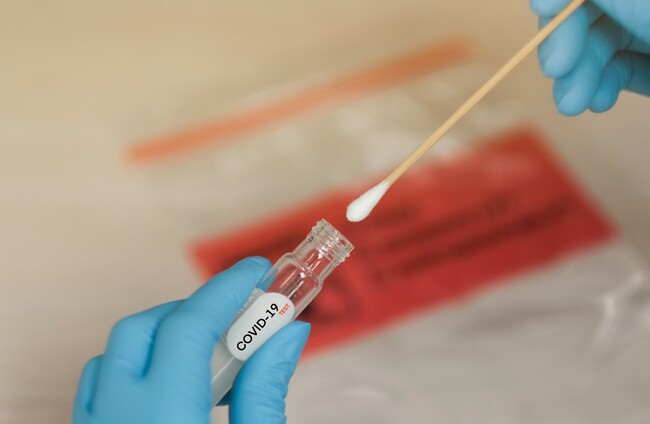
WHAT’S THE DIFFERENCE between quarantine and self-isolation? What about social distancing?
There are a lot of terms flying around the place at the moment, some of which might be a bit confusing. You know you need to exercise social distancing, but what additional precautions do you need to take if you’re waiting for a coronavirus test, or you’ve had a test and you’re waiting for the results?
Let’s take a look at everything you need to know about this.
Social distancing
If you’re not sick, and you’re an average person going about your business – whether you’re young, old, in work or not, you need to employ social distancing.
Here’s more on that here:
Self-quarantine
The HSE says that self-quarantine is ‘restricted movement’. This means:
You need to do this if:
A ‘close contact’ is someone:
If you self-quarantine:
If you’re coming back to Ireland from another country and you don’t have coronavirus symptoms, you need to self-quarantine (unless you return from Northern Ireland OR you are an essential chain worker – eg a pilot or haulier).
If you come back to Ireland and you do have symptoms of coronavirus, you need to self-isolate and phone your GP, so a test can be arranged if your GP feels you need it.
Self-isolation
Self-isolation is a step up from quarantine. It means:
When do you need to self-isolate?
The HSE says one reason to do this is if you have symptoms of coronavirus.
Here’s what the HSE says are symptoms:
Other reasons to self-isolate:
The reason you have to self-isolate is because you can spread the virus to others.
When should I stop self-isolating?
When you haven’t had a fever for five days, and it has been 14 days since you first developed symptoms, says the HSE advice.
When should I stop self-quarantine?
For up to 14 days, but shorter if there is a delay between exposure and identification.
I am self-isolating – what about the people I live with?
The HSE advises that you should stay in a room with a window that you can open (needless to say, stay on your own).
Sharing a bathroom? Use it last and clean it thoroughly.
Don’t share any items you’ve used with other people – like food, dishes, cups, towels, bedding.
You should eat in your room if possible, and your items should be washed in a dishwasher.
Proper hand hygiene is to be followed throughout all this – keep those hands washed often.
Your laundry should be washed at a high temperature, and the washing machine should be cleaned.
Don’t use a launderette.
Throughout all this, the HSE advises you keep yourself mobile – try and get fresh air by going out to your garden, backyard or balcony. Stay hydrated, keep in touch with people, and avoid alcohol.
If you’re caring for someone with coronavirus, there are some tips here.
I feel well, but a close contact has coronavirus
The HSE says that in this case you need to restrict your movements (self quarantine). See above for more info.
If you start feeling unwell and showing symptoms of coronavirus, contact your GP.
Do my family have to self-quarantine too?
In this case, the HSE says that: “Other household members do not need to restrict their movements unless they are told to.”
This is something to check with your doctor.
Testing in Ireland
Currently, there are 19 community coronavirus testing sites in Ireland – including Croke Park. The HSE said this week that it’s looking at more testing sites, including using naval ships as testing centres.
There have been delays in waiting for tests. Two people told TheJournal.ie they waited a week for their test, after speaking to their GP. But by the end of this week, 10 hospitals were to have the capacity to process tests.
On St Patrick’s Day, the HSE said that there was a delay in the number of days it was getting through the test backlog, but it was due to come down as the process ramped up.
A delivery of 30,000 swabs was due on Thursday of this week. This was also due to improve test times. But if you are waiting for a test, be aware that at this point, it won’t be immediate. Your GP will have more information on your specific case.
The HSE told TheJournal.ie:
We are aware that patients who were referred for a test earlier this week may still be waiting for a call back with a test date and location. This is a result of the large number of tests being ordered since the case definition changed last Friday.
We regret that people are waiting and we are asking people to bear with us as we continue to roll out community testing hubs. Waiting for a test doesn’t change how you manage your symptoms or interactions with other people.
If you are waiting on a test to see if you have Covid 19 or you have been tested and are waiting for the results you need to stay home and self-isolate to prevent you spreading any potential infection to others.
If the virus for Covid 19 is not detected you should continue to self-isolate until 48 hours after you last had symptoms. This is because, while the virus for COVID-19 was not detected, you have symptoms of an infectious respiratory illness which you do not want to pass on to others.
If the virus for Covid 19 is detected you must continue to self-isolate until you are 14 days without symptoms and have had no high temperature for the last 5 days of the 14 days.

To embed this post, copy the code below on your site















have your say