Sign in. It’s quick, free and it’s up to you.
An account is an optional way to support the work we do. Find out more.
Sign in. It’s quick, free and it’s up to you.
An account is an optional way to support the work we do. Find out more.
IT’S A DAY of rest, and you may be in the mood for a quiet corner and a comfy chair.
We’ve hand-picked the week’s best reads for you to savour.
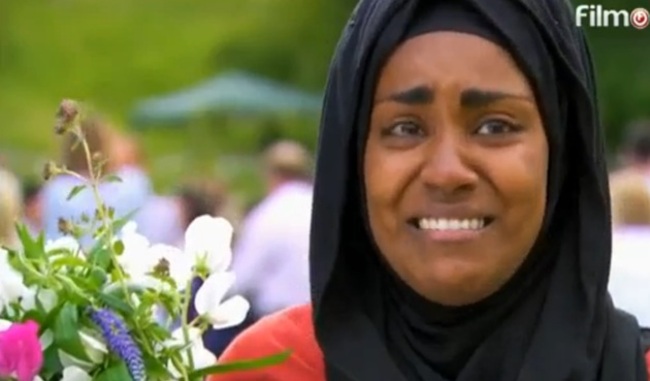
Everyone loves GBBO. And with good reason: it’s a tough competition, but it has a wonderful feelgood side to it. Nice trumps nasty. Here’s more on why it’s great.
(The Guardian, approx 29 mins reading time)
Imagine that someone had told you in 2009 that by 2015 the great television success would be a baking competition presented by two decidedly unglitzy middle-aged women, one of them gay, and judged by an octogenarian cookbook writer and a Liverpudlian professional baker of whom you had never heard. You might have cheered for the sisterhood, but you probably wouldn’t have believed it.
2. The man who will save Twitter

Jack Dorsey is CEO of Square, and now is to step up to become CEO of Twitter again. If you’ve ever wondered what goes on behind the scenes of big social media companies, this is for you.
(Re/Code, approx 15 mins reading time)
In his first stint at Twitter, Dorsey would piss off some employees when he would leave ahead of them at night for yoga or drawing lessons, according to Nick Bilton’s book “Hatching Twitter.” Dorsey supposedly got back to work later at night, but people didn’t know that. So at Square, Dorsey made a point of arriving early and staying late, especially when his employees were grinding away into the evening.
3. The anti-drug programme that failed
Even those of us in Ireland are probably aware of DARE, the US drug education programme aimed at students. It took place in the 1980s and 1990s, but, says Priceonomics, it didn’t work.
(Priceonomics, approx 14 mins reading time)
When the school opened in September 1983, the LAPD took to the classroom to both teach kids about the dangers of substance abuse, boost their self-esteem, and help them practice “just saying no” (a la Nancy Reagan). Within a few years, DARE was a regular fixture in LA schools. By the mid-nineties, it was a national organization with multi-million dollar annual revenue.
4. Big guy journeying across America
Eric Hites was obese, separated and feeling terrible about his life. So he got on his bike and started cycling across America. Here’s his story.
(New York Times, approx 15 mins reading time)
“I wasn’t expecting it whatsoever,” Mr. Hites said of the circus that has sprung up around him. “I was hoping for a book deal and then I’d get an advance and we’d be able to use that money to travel across the country. People think I was trying to get famous from it. This was an accident, really.”
5. The secret people who write all the hits

You’ve never heard of Karl Martin Sandberg – but you know loads of his songs. He has written pop songs for Taylor Swift, Britney Spears, David Guetta and more, under the pseudonym Max Martin. Here’s the incredible story of the people behind the hits.
(The Atlantic, approx 20 mins reading time)
Millions of Swifties and KatyCats—as well as Beliebers, Barbz, and Selenators, and the Rihanna Navy—would be stunned by the revelation that a handful of people, a crazily high percentage of them middle-aged Scandinavian men, write most of America’s pop hits. It is an open yet closely guarded secret, protected jealously by the labels and the performers themselves, whose identities are as carefully constructed as their songs and dances.

Taiwan’s Hakka people were forbidden from speaking their native language – but now there’s a major push on to reclaim and save it. Here’s how they’re doing it.
(Narrative.ly, approx 15 mins reading time)
“If there’s no language, there is no culture,” says Vong, who worries the language will be extinct in the next few decades. Vong carries around white buttons that say “I speak Hakka” on them, giving them to Hakka people he meets. “I sense a language crisis,” Vong says. “It motivates me to want to protect the Hakka language.”
…AND A CLASSIC FROM THE ARCHIVES…
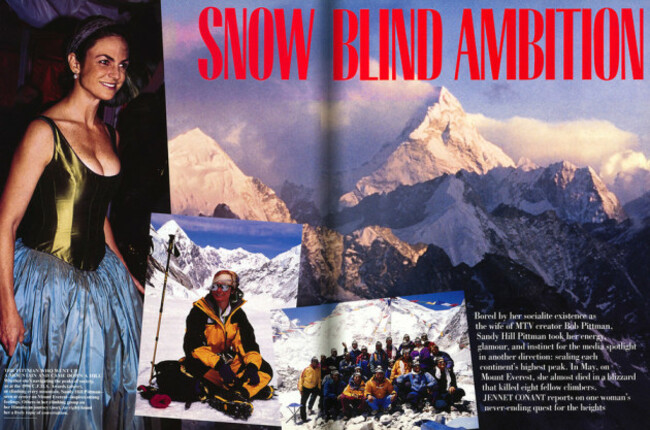
Socialite Sandy Hill was one of a group of climbers who journeyed up Everest. But a terrible blizzard killed eight climbers. This 1996 Vanity Fair article looked at the motivation behind Hill’s journey. Is it fair in what it concludes?
(Vanity Fair, approx 36 mins reading time)
Pittman, 41, had more at stake than the other climbers who had plunked down around $65,000 for the chance to stand at the world’s apex. Years earlier, bored with life as the socialite wife of MTV creator Bob Pittman (estimated worth, more than $40 million), she had transformed a girlhood enthusiasm for mountaineering and adventuring into a high-profile outlet for her energy and ambition.

To embed this post, copy the code below on your site
















have your say