We need your help now

Support from readers like you keeps The Journal open.

You are visiting us because we have something you value. Independent, unbiased news that tells the truth. Advertising revenue goes some way to support our mission, but this year it has not been enough.

If you've seen value in our reporting, please contribute what you can, so we can continue to produce accurate and meaningful journalism. For everyone who needs it.

Alamy Stock Photo

Sitdown Sunday: An ode to the humble bar of soap

Settle down in a comfy chair with some of the week’s best longreads.

IT’S A DAY of rest, and you may be in the mood for a quiet corner and a comfy chair.

We’ve hand-picked some of the week’s best reads for you to savour.

1. How did a wealthy New-Yorker end up being killed by his son in a five-star Irish hotel?

Screenshot 2026-02-19 134925 Henry McGowan pictured in 2023. ABC News ABC News

American man Henry McGowan strangled his father John McGowan to death at a five-star midlands resort in 2024. McGowan was found not guilty of murder by reason of insanity by a jury in the Central Criminal Court last week. The McGowan family spoke to The New York Times to explain how Henry and John ended up in the crisis situation at Ballyfin Demesne hotel, and share their love for both men.

(The New York Times, approx 12 mins reading time)

“John’s family said his devotion to his troubled son during that crisis was unsurprising: He was devoted to all five of his children, making each of them feel like the highest priority from the time they were small. The McGowans, who raised their family in Greenwich, Conn., built their social life around their children, and they did not travel without them. John, who worked in finance, drove his children to school and was home for dinner most nights. ‘He helped feed the kids, he helped with bedtime, he was on the ground playing, he was in the pool all summer,’ said Ms. McKechnie, his sister.”

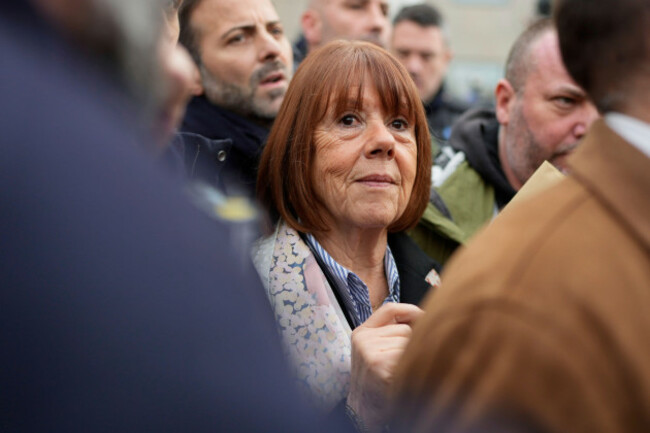
2. How the trial of Gisèle Pelicot’s rapists divided her family

gisele-pelicot-exits-the-avignon-courthouse-in-southern-france-dec-19-2024-ap-photolewis-joly Gisèle Pelicot. Alamy Stock Photo Alamy Stock Photo

The former husband of 72-year-old Gisèle Pelicot admitted to drugging her with sedatives and inviting dozens of strangers to rape and abuse her over nearly a decade in a case that shocked the world. Gisèle took the decision to waive her anonymity and allow the public into the courtroom during the months-long trial to raise awareness about sexual violence. However, the famous case ended up fracturing her family due to accusations that Dominique Pelicot abused his daughter and grandchild – a claim Gisèle does not fully accept.

(The New Yorker, approx 45 mins reading time)

“Three months after the trial ended, Caroline filed a new police complaint. She accused Dominique of drugging and raping her, citing details that had not been discussed at trial, including an erased folder on her father’s computer called “my naked daughter” and Skype exchanges in which he referred to his daughter being “trapped.” (Dominique did not respond to a request for comment on the complaint.) On the same day, she published her account of the trial, “Pour Que l’On Se Souvienne” (“So That We Remember”), which hasn’t been translated into English. In her first book, she had disowned her father; in this one, she seems to be testing the possibility of doing the same to her mother. She refers to her as both “mom” and “Gisèle,” at one point calling her “his wife.” The next month, Time named Gisèle one of the hundred most influential people in the world.”

3. The fight against AI slop

cutecatplayinggamesonphoneanimationstyle Shutterstock Shutterstock

If you’ve been on the internet in the last few years you’ve probably come across AI slop. The latest Irish iteration of the issue are the AI-generated, extremely glossy-looking versions of Pitt in local pubs, holding pints of Irish stout, visiting local businesses or just taking selfies with locals. This article dives into the impact of the low-quality, artificially created content, and highlights the creatives making it their mission to fight against it.

(CNET, approx 20 minutes reading time)

“You see slop because it’s being forced upon you — not because you’ve indicated to the algorithms that you love it. If you were to sign up for a new YouTube account today, a third of the first 500 YouTube Shorts shown to you would be some form of AI slop content, according to a report from Kapwing, a maker of online video tools. There are over 1.3 billion videos labeled as AI-generated on TikTok as of February. Slop is baked into our scrolling the same way microplastics are a default ingredient in our food.”

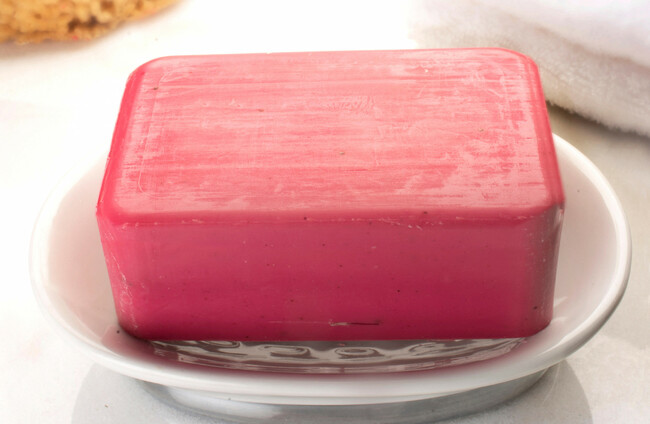
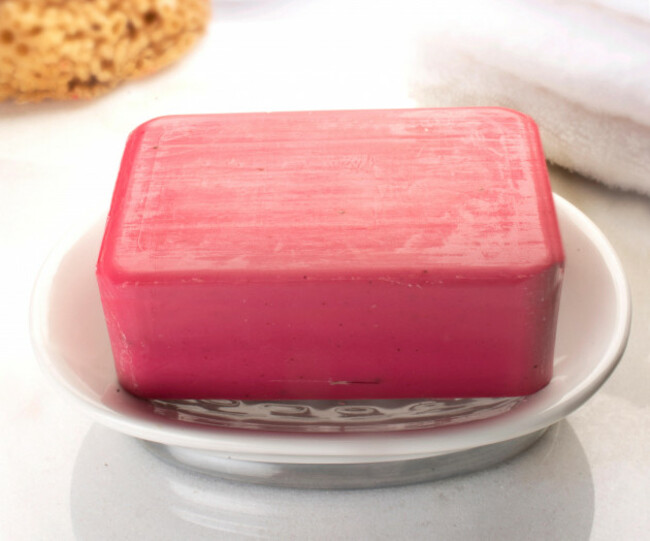
4. An ode to the humble bar of soap

soap-bar Alamy Stock Photo Alamy Stock Photo

The once popular bar of soap is increasingly being replaced with trendier forms of hygiene products. But how did a once integral part of the bathroom become so passé?

(Slate, approx 30 minutes reading time)

“I love bar soap. I find it the most efficient, effective way to clean my filthy body. I love the way it feels when it lathers up in your hands, and that you can always see just how much soap you have left. I love that bar soap isn’t sold for $11.79 in a giant plastic bottle that will still be lying in a landfill when the sun explodes. I love bar soap so much that I now bring my personal bar of soap, Irish Spring, with me on vacation, because I know that wherever I stay, they won’t have any. I carry my soap in one of those snap-top containers that you last used when you went to summer camp.”

5. Did a prize-winning novelist steal a woman’s life story?

A woman is suing a novelist for stealing her life story. In November 2024, Kamel Daoud won the Goncourt prize for his novel about the Algerian civil war. The story is told from the perspective of a 26-year-old woman who survived a massacre as a child and had to undergo a tracheostomy to survive. It goes on to chronicle her personal battle with deciding whether to have an abortion or not as an adult. Saâda Arbane, 30, said the story is a replica of her life. She said she hid her story to everyone but her therapist, who turned out to be the wife of Kamel Daoud. She’s now suing the novelist in both Algeria and France.

“Eleven days after the Goncourt ceremony, a woman appeared on an Algerian news show. She wore a blue-and-white-striped shirt; her long hair was tied into a bun. This left her neck visible, and attached to it, some breathing apparatus with a cannula. She introduced herself as Saâda Arbane, 30. Daoud, she claimed, had stolen her personal details to make his bestseller. ‘It’s my personal life, it’s my story. I’m the only one who should determine how it should be made public.’ For 25 years, she said, “I’ve hidden my story, I’ve hidden my face. I don’t want people pointing at me.” But, Arbane said, she had confided in her psychiatrist. ‘I had no filter, no taboos. I told her everything.’ Her psychiatrist was Kamel Daoud’s wife.”

(The Guardian, approx 25 minutes reading time)

6. The life of Gerry Hutch 

Screenshot 2026-02-20 at 14.41.45 Gerry Hutch (right) having a selfie taken with an audience member at the Ambassador Theatre.

During the week, The Journal’s news correspondent Eimer McAuley went along to the opening night of Rex Ryan’s one-man show The Monk in the Ambassador Theatre to see his rendition of the life of Gerry Hutch.

(The Journal, approx five mins reading time)

“The play shows an enraged side to him, and a pensive side, but never a remorseful one. It addresses the Kinahan-Hutch feud and the Regency Hotel shooting briefly, with some shouting, intensifying noises, and sometimes the sound of gunshots. In one of the play’s more jarring moments, Ryan’s Hutch reflects on how the late journalist Veronica Guerin should have “left” when threats against her life were being made, and then swiftly moves on to his grievances with having to pay “tax” to the Criminal Assets Bureau – almost IR£2 million that he ended up owing – that was set up in part because of her legacy.”

…AND A CLASSIC FROM THE ARCHIVES…

7. What happens when humans disappear?

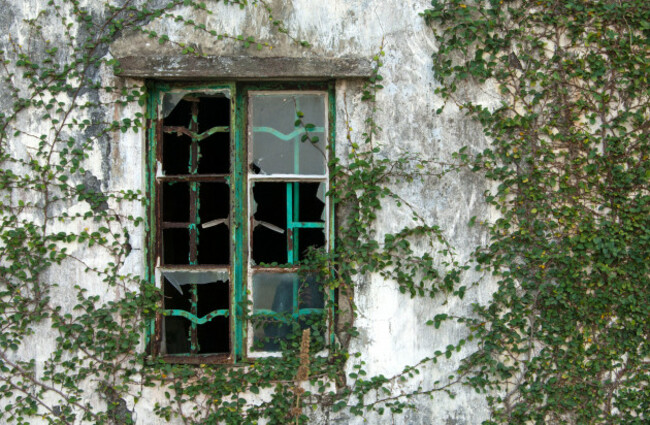
broken-window-of-an-abandoned-house-in-an-abandoned-village-chek-keng-hong-kong-hong-kong-china-peoples-republic-of-china Alamy Stock Photo Alamy Stock Photo

This beautifully-written article from The Guardian explores the unexpected impact of abandonment on the natural world by examining how rural Bulgaria has changed since people began leaving villages. Due to immigration and low birth rates and a move towards urban living for work, the population of Bulgaria dropped from close to 9m in 1989, to fewer than 6.5m. This issue is not confined to Bulgaria, some academics estimate that since the 1950s there has been an increase of up to 400m hectares of abandoned land. 

 (The Guardian, approx 18 mins reading time)

“Scientists have found that humanity’s relationship to the natural world is far more complex than we often assume. This is one of Daskalova’s more counterintuitive findings: rather than always being antithetical to nature, human presence can help make life possible for a vast array of species. Even more surprisingly, total abandonment can sometimes have worse consequences for biodiversity than landscapes where some people remain.”

Readers like you are keeping these stories free for everyone...
A mix of advertising and supporting contributions helps keep paywalls away from valuable information like this article. Over 5,000 readers like you have already stepped up and support us with a monthly payment or a once-off donation.

Close
6 Comments
This is YOUR comments community. Stay civil, stay constructive, stay on topic. Please familiarise yourself with our comments policy here before taking part.
Leave a Comment
    Submit a report
    Please help us understand how this comment violates our community guidelines.
    Thank you for the feedback
    Your feedback has been sent to our team for review.

    Leave a commentcancel

     
    JournalTv
    News in 60 seconds