We need your help now

Support from readers like you keeps The Journal open.

You are visiting us because we have something you value. Independent, unbiased news that tells the truth. Advertising revenue goes some way to support our mission, but this year it has not been enough.

If you've seen value in our reporting, please contribute what you can, so we can continue to produce accurate and meaningful journalism. For everyone who needs it.


The Wicklow town of Greystones is being held up as an example of a village coming together to reduce phone use and screen time in children. Alamy Stock Photo

Sitdown Sunday: The Irish town inspiring countries to crackdown on phone use among kids

Settle down in a comfy chair with some of the week’s best longreads.

IT’S A DAY of rest, and you may be in the mood for a quiet corner and a comfy chair.

We’ve hand-picked some of the week’s best reads for you to savour.

1. How Greystones is creating phone-free childhoods

cliff-walk-trail-in-bray-wicklow-ireland Alamy Stock Photo Alamy Stock Photo

The New York Times has featured the Wicklow town of Greystones as an example of a village coming together to reduce phone use and screen time in children. The town has taken part in the ‘It Takes a Village’ movement since 2023, when parents became concerned phone-use was increasing anxiety in their children. All primary schools in the town signed a letter to parents in support of a code being rolled out that parents would agree not to buy a smart device for their kids before secondary school. Now Greystones is serving as an inspiration to other towns concerned about technology and children.

(The New York Times, approx nine mins reading time)

“The kids are a little different here in Greystones. In 2023, the Irish seaside town just south of Dublin launched a grass-roots initiative led by local parents, school principals and community members to loosen the grip of technology on their younger kids by adopting a voluntary ‘no smart devices’ code and supporting it with workshops and social events. Three years later, no one in Greystones claims to have cured the ills of modern technology. But they’ve learned that they can’t do anything about it one child at a time. Only a townwide effort could defang the kids’ ‘everyone else has one’ argument.’”

2. The UK’s cargo theft crisis

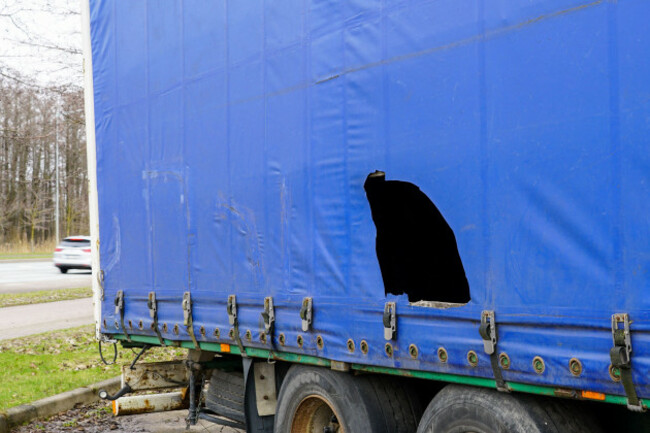
truck-trailer-with-blue-damaged-awning-cargo-theft-problem-by-cutting-the-awning-goods-thefts-from-cargo-trailers-goods-stealing-cut-awning Alamy Stock Photo Alamy Stock Photo

The Guardian spoke to the man who investigates nearly all cargo theft in the UK – a criminal activity costing the UK economy £700m a year. .. has seen everything, from the theft of 950 wheels of premium cheddar to 23 pallets of high-end vacuums – and he says the issue is only getting worse. Due to the high value of goods being transported across the UK everyday, the author said haulage vehicles have effectively become bank vaults on wheels, and thieves just have to cut open a PVC-coated polyester sheet to access the treasure.

(The Guardian, approx 25 mins reading time)

“Dawber is a busy man. These days, organised criminal gangs aren’t after bullion, but baby formula, kitchen fittings, perfume, PS5s. ‘When I first joined the police 20-odd years ago, people were still holding up jewellery shops, banks or post offices,’ says Dawber. ‘Your switched-on villains don’t do that any more, because if you get caught doing that, you’ll get 15 years. So they’ve moved on to less risky crimes.’ Since 2017, when Dawber joined Navcis, the number of cases that reach him have more than tripled, to about 5,000 each year. When I first spoke with him last spring, he was investigating a case of stolen plastic drinking cups worth about £70,000, and laptops worth £250,000. It was a typical day. Two years earlier, he said, an entire truck of sex toys went missing. He was still trying to locate them.”

3. Head lice wars

close-up-of-person-hand-using-lice-comb-on-patients-hair Alamy Stock Photo Alamy Stock Photo

According to this article a moral panic over head lice has been going on for years and it’s much less nefarious than we all think. Interesting read, but it made me feel itchy.

(The Atlantic, approx ten mins reading time)

“The human-head louse has a ghostly quality. It tends to glimmer in and out of view, leaving only subtle signs and omens of its presence. Is that oblong speck an egg sac or a flake of dandruff? Was that a prickle on your scalp? Is it normal that your son is scratching just behind his ear? Maybe you have lice and he has lice, and you’ve all had lice for weeks. The possibility is frightening. The uncertainty leads to madness.”

4. How the Epstein Files exposed survivors instead of perpetrators

Survivors of convicted sex offender Jeffrey Epstein alleged that some of their names and identifying information had been exposed sooner after the files were abused, while the identifying information of the perpetrators remained hidden. Now some survivors have filed a class action lawsuit against the federal government and Google alleging the release of the files failed to protect their identity.

(Vanity Fair, approx 15 mins reading time)

“There were indeed places where the names of Epstein associates were redacted within the same set of documents in which an alleged victim’s name, image, or personal identifying information were left exposed. A 69-page Drug Enforcement Agency memo dated May 18, 2015—which revealed that Epstein was the subject of a major DEA drug trafficking and money-laundering investigation—included redactions of the names of 14 other ‘targets’ of the investigation. According to a Wall Street Journal report, the surname of a survivor was left unredacted, enabling news outlets to identify her. Within a single JPMorgan Chase investigative file, a victim’s banking information, credit card numbers, and routing details were initially visible to the public in over 50 separate instances. The names of the wealthy, powerful men being discussed—including alleged perpetrators—were entirely blacked out.”

5. Hunting for treasure in storage units

a-long-hallway-containing-many-storage-units-inside-a-self-storage-building-mississauga-ontario-canada Alamy Stock Photo Alamy Stock Photo

A 17-year-old New Jersey teen has made tens of thousands of dollars selling items he finds scouring storage lockers. The enterprising teen uses AI to find storage lockers for sale that may have been owned by public figures, as that’s where he is most likely to find treasure. 

(The New York Times, approx 12 mins reading time)

“‘I’m always on the search for the next Crispo,’ he said, mowing away. ‘That was my first big score.’ He was referring to the haul that turned his hobby into a quest, a storage unit he bought in Brooklyn for $450 that had belonged to Andrew Crispo, a shadowy 1980s art dealer. Michael sold a Man Ray painting and some Walt Kuhn drawings he found inside for nearly $50,000. ‘My family took my hobby seriously after that,’ he said.”

6. How a homeless mother protects her children

traditional-rickshaw-and-tuktuk-on-a-street-in-new-dehli-the-green-and-yellow-tuktuks-are-iconic-for-dehli Alamy Stock Photo Alamy Stock Photo

As part of a miniseries called Mother on the Margins about mothers in difficult situations, Al Jazeera has interviewed Abida, a homeless woman living with her three children in New Dehli, India.

(Al Jazeera, approx six mins reading time)

“About 5am on a cold November morning in 2023, Abida and her children were sleeping, wrapped in a thin blanket, when a speeding car crashed into them. ‘When I opened my eyes, everything was dust, blood and screaming,’ she says. ‘My two children, Sonia and Amir, were crushed to death in front of me.’”

…AND A CLASSIC FROM THE ARCHIVES…

7. Uganda’s hidden children

This 2020 article from Al Jazeera is a difficult but important read. It details the dangerous situations facing many children with disabilities in Uganda, and the organisations attempting to help them. Due to a lack of government and community support, stigma and abuse, many children with disabilities in Uganda are hidden indoors, and sometimes killed.

(Al Jazeera, approx 27 mins reading time)

“There has been a lot of resistance towards these children over the years,’ says Stephen Kabenge from Embrace Kulture, a not-for-profit that works to find hidden children. ‘So many organisations are trying to fight it, but it is not one man’s struggle.’ Embrace Kulture houses and schools 20 disabled children and young adults at its headquarters in Entebbe, a gated oasis about an hour’s drive southwest of the Ugandan capital of Kampala. It wants to grow this number tenfold, an ambitious goal even before coronavirus wound back efforts to help some of the estimated 2.5 million children living with disability.”

Readers like you are keeping these stories free for everyone...
A mix of advertising and supporting contributions helps keep paywalls away from valuable information like this article. Over 5,000 readers like you have already stepped up and support us with a monthly payment or a once-off donation.

Close
3 Comments
This is YOUR comments community. Stay civil, stay constructive, stay on topic. Please familiarise yourself with our comments policy here before taking part.
Leave a Comment
    Submit a report
    Please help us understand how this comment violates our community guidelines.
    Thank you for the feedback
    Your feedback has been sent to our team for review.

    Leave a commentcancel

     
    JournalTv
    News in 60 seconds