We need your help now

Support from readers like you keeps The Journal open.

You are visiting us because we have something you value. Independent, unbiased news that tells the truth. Advertising revenue goes some way to support our mission, but this year it has not been enough.

If you've seen value in our reporting, please contribute what you can, so we can continue to produce accurate and meaningful journalism. For everyone who needs it.

Alamy Stock Photo

Sitdown Sunday: Irish author Colm Tóibín on living in the US under Trump

Settle down in a comfy chair with some of the week’s best longreads.

IT’S A DAY of rest, and you may be in the mood for a quiet corner and a comfy chair.

We’ve hand-picked some of the week’s best reads for you to savour.

1. Colm Tóibín on living in the US under Trump

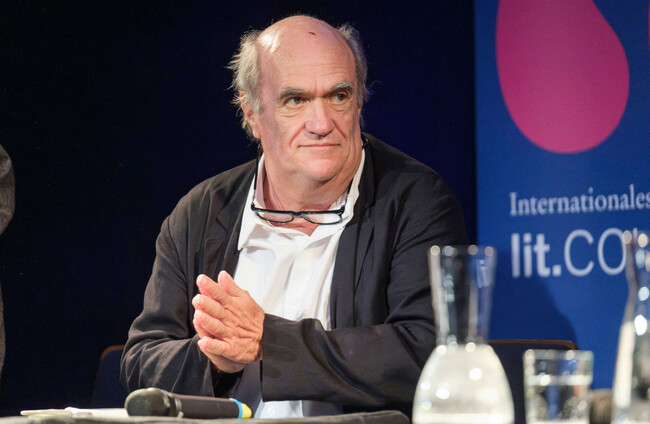
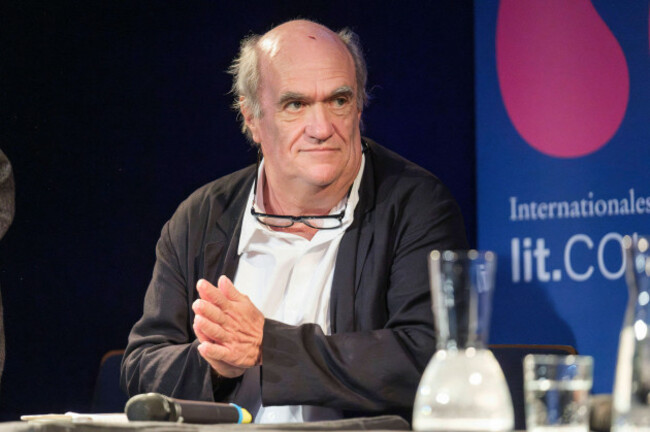
der-irischer-schriftsteller-journalist-und-literaturkritiker-colm-toibin-wahrend-einer-veranstaltung-in-der-kulturkirche-anlasslich-der-lit-cologne-the-irish-writer-journalist-and-literary-crit Alamy Stock Photo Alamy Stock Photo

Colm Tóibín says living in the US under Donald Trump is how he learned what evil is like and how it is tolerated. Speaking to The Guardian Tóibín delves into life in the US and his new book The News from Dublin.

(The Guardian, approx ten mins reading time)

“In the future, if I live long enough, I will be able to see this room as though framed, as though completed. It will be part of memory, part of history. I will be able to write about it. This is the room where I learned first‑hand not only what evil is like but how evil is tolerated. What is strange about being in America in the time of Trump is how ordinary it is, how what was unimaginable just over a year ago is suddenly, shockingly no longer a surprise.”

2. ‘Psychopaths’ aren’t real

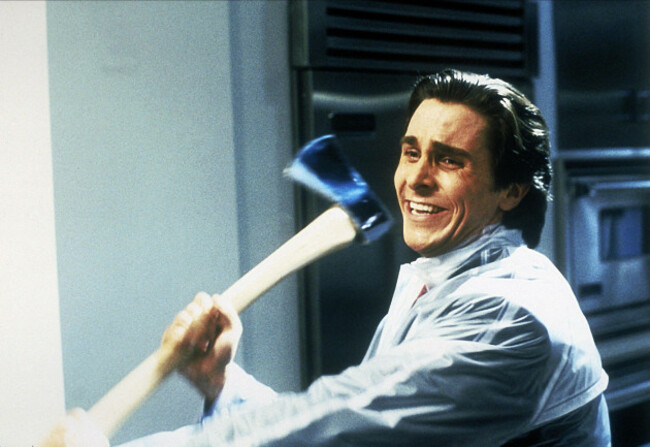
christian-bale-american-psycho-2000 Christian Bale famously played an unfeeling killer in American Psycho (2000) Alamy Stock Photo Alamy Stock Photo

Apparently everything we know about psychopaths is nothing more than “dubious speculations”, according to this article in aeon. The concept of a psychopath came about in the late 19th century and has been popularised in movies and books, for example the 2000 film American Psycho. But it turns out there is actually very little concrete evidence to support the idea.

(aeon, approx 16 mins reading time)

“There’s a problem with this idea of psychopathy. While it has been researched across hundreds of empirical studies – especially since the explosion of research in the late-1990s – there is still remarkably little evidence that corroborates popularised claims about the diagnosis. Despite enthusiasm among researchers in the 1990s and 2000s, when a few studies seemed to validate theories about psychopathy, the past two decades have been sobering. Today, virtually every single claim about psychopathy has been either thoroughly refuted or failed to find empirical support in experimental settings. Psychopathy may not exist at all.”

3. The men abandoning their partners on mountains

snow-capped-mountain-peaks-with-forested-slopes-under-a-blue-sky Alamy Stock Photo Alamy Stock Photo

Have you heard of Alpine divorce? I hadn’t until recently, but apparently it’s a term that has been coined for a recent phenomenon where men are abandoning their partners in the wilderness. The abandonment unsurprisingly often knells the bells of doom for the relationship. 

(The Guardian, approx ten mins reading time)

“In a TikTok with more than 4.2m likes, a woman bawls as she takes shaky steps down a rock formation. ‘He left me by myself, I should have never come with him,’ sobs the woman, who did not respond to a request for comment. Others flooded the comments section with stories about being served with an alpine divorce. One woman described a 12-hour journey out of the Grand Canyon after her boyfriend ditched her, during which she was assisted by a ‘very nice man from Norway’ who carried her backpack. Another described getting lost in the woods after a man left her behind, and immediately blocking his number once she got home.”

4. Why do we feel bad if we don’t finish a book?

pile-of-stacks-of-used-paperback-books-in-the-uk Alamy Stock Photo Alamy Stock Photo

I will admit that I am one of the many people who take not finishing a book as a personal failure. Logically, I know I shouldn’t care – but I do. This book critic has delved into the unique guilt that comes with not finishing a book.

(Yale Review, approx 12 mins reading time)

“Finishing the book should be straightforward enough. The writer has gone to the trouble of arranging the words one after the other. My task is to follow: start with the first and go in order until I have reached the last. How hard can that be? Very hard, it turns out, if you are a nonfinisher like me.”

5. America’s abortion wars

Since Trump returned to power, punishment for people committing crimes while picketing outside abortion clinics has become increasingly lax. Mother Jones looks into how the conversation around abortion has changed in other ways since Trump became president again and examines the groups continuing their anti-abortion crusade. 

(Mother Jones, approx 30 mins reading time)

“A few days after his second presidential inauguration, Trump pardoned 23 people convicted under the FACE Act, including those who had accosted pregnant patients, stolen fetal tissue, and physically blocked access to clinic entrances. The following day, Trump’s Department of Justice announced it would pursue FACE Act prosecutions only in “extraordinary circumstances”—cases that resulted in “death, serious bodily harm, or serious property damage.” In an online event hosted by the anti-abortion group Live Action, one of the people Trump pardoned, Paul Vaughn, who’d been convicted of obstructing a Tennessee abortion clinic in 2021, said the president’s reprieve had “emboldened” him and other anti-abortion demonstrators. “They wanted to spread fear into the church and people that would dare stand up for the unborn,” Vaughn said. “And yet, God had other plans.””

6. In search of Banksy

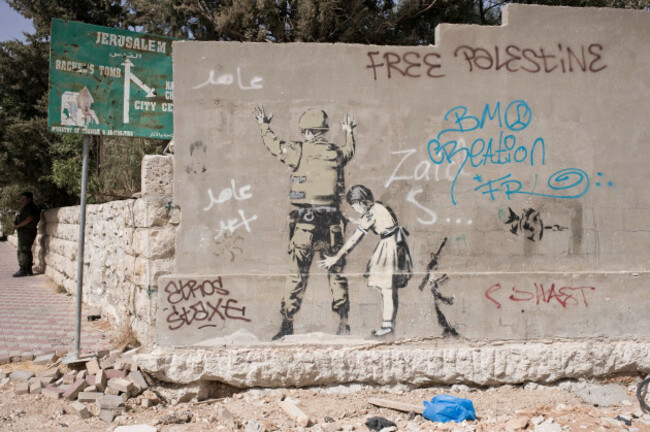
banksy-graffiti-artwork-by-the-world-famous-uk-artist-banksy-in-bethlehem Banksy Graffiti artwork in Bethlehem. Alamy Stock Photo Alamy Stock Photo

British street artist Banksy has been unmasked. After Banksy art began cropping up near to active combat areas in Ukraine, Reuters investigative team set out on a mission to discover the identity of the artist. The journey took them from Ukraine to New York’s Meatpacking District, and the walls and auction houses of London.

(Reuters, approx 35 mins reading time)

“Some critics believe Banksy’s ability to paint at lightning speed in public and evade detection is ‘a big part of his work, or his most important work,’ said scholar Blanche. ‘This anonymity is a statement in itself.’ His mastery of disguise began as a way of shaking the police, says former manager Lazarides. In an interview, Lazarides said anonymity served a practical purpose in Bristol, where authorities enforced ‘draconian’ policies against graffiti. ‘Banksy’s anonymity, to start with, was exactly that: It was to evade law authorities,’ he said. Anonymity became integral to the brand. In 2010, when TIME magazine named him one of the world’s most influential people, Banksy appeared in a photo portrait wearing a bag over his head.”

…AND A CLASSIC FROM THE ARCHIVES…

7. The last true hermit

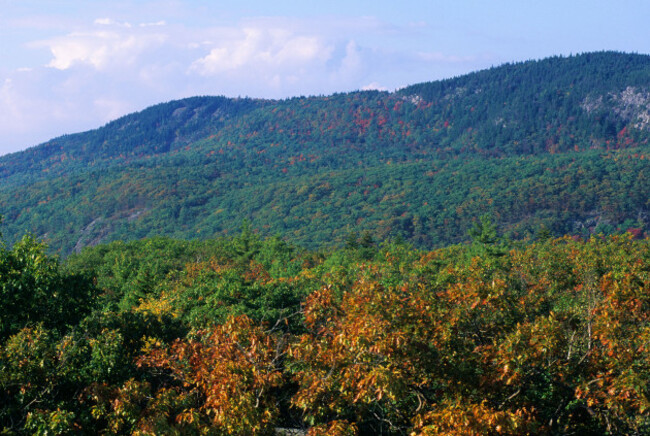
elk282-1642-maine-camden-coastal-mountains-behind-town-with-autumn-color-image-shot-102011-exact-date-unknown Woods in Maine, US. Alamy Stock Photo Alamy Stock Photo

Residents of Maine, US, were haunted for 20-years by a thief they began to call the North Pond Hermit. This person robbed a thousand homes in the area, only ever taking the necessities he needed to survive. Then, in 2013, while carrying out a routine robbery, he was caught and the world finally found out the identity of a man some call the last true hermit. Turns out a local called Christopher Knight lived in the woods of Maine for twenty-seven years, in an unheated nylon tent. He didn’t know what the internet was, he never took a picture, he didn’t keep a journal and in all that time in the woods he only spoke one word aloud to another person. The author of this article struck up a friendship with Knight after he was jailed and shared the inside story.

(GQ, approx 35 mins reading time)

“Knight stated that over all those years he slept only in a tent. He never lit a fire, for fear that smoke would give his camp away. He moved strictly at night. He said he didn’t know if his parents were alive or dead. He’d not made one phone call or driven in a car or spent any money. He had never in his life sent an e-mail or even seen the Internet. He confessed that he’d committed approximately forty robberies a year while in the woods—a total of more than a thousand break-ins. But never when anyone was home. He said he stole only food and kitchenware and propane tanks and reading material and a few other items. Knight admitted that everything he possessed in the world, he’d stolen, including the clothes he was wearing, right down to his underwear. The only exception was his eyeglasses.”

Readers like you are keeping these stories free for everyone...
A mix of advertising and supporting contributions helps keep paywalls away from valuable information like this article. Over 5,000 readers like you have already stepped up and support us with a monthly payment or a once-off donation.

View 18 comments
Close
18 Comments
This is YOUR comments community. Stay civil, stay constructive, stay on topic. Please familiarise yourself with our comments policy here before taking part.
Leave a Comment
    Submit a report
    Please help us understand how this comment violates our community guidelines.
    Thank you for the feedback
    Your feedback has been sent to our team for review.

    Leave a commentcancel

     
    JournalTv
    News in 60 seconds