We need your help now

Support from readers like you keeps The Journal open.

You are visiting us because we have something you value. Independent, unbiased news that tells the truth. Advertising revenue goes some way to support our mission, but this year it has not been enough.

If you've seen value in our reporting, please contribute what you can, so we can continue to produce accurate and meaningful journalism. For everyone who needs it.


Woman on her phone Alamy Stock Photo

Sitdown Sunday: The TikTok relationship experts making millions off singles

Settle down in a comfy chair with some of the week’s best longreads.

IT’S A DAY of rest, and you may be in the mood for a quiet corner and a comfy chair.

We’ve hand-picked some of the week’s best reads for you to savour.

1. Escape from Khartoum

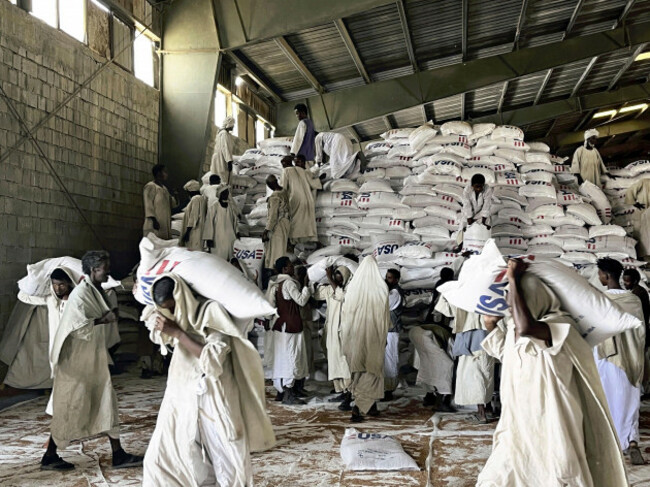
grains-are-transported-by-the-world-food-programme-wfp-from-a-warehouse-to-trucks-carrying-aid-to-the-capital-khartoum-in-port-sudan-eastern-sudan-on-may-3-2025-the-fighting-between-the-sudanese Grains are transported by the World Food Programme from a warehouse to trucks carrying aid to Khartoum (3 May) Alamy Alamy

Nicolas Niarchos writes about the devastating civil war in Sudan, focusing on one family’s struggle to survive. 

(The New Yorker, approx 34 mins reading time)

When night fell, Wanis crept outside, flattening himself against walls to avoid being spotted by fighters. He arrived at a station where minibuses were departing for Ombada. That morning, he’d paid less than a dollar to cross the city. Now the price was nearly seven dollars. The R.S.F. was still gaining ground, and its troops were pushing into Ombada. At around 9 p.m., amid ferocious shelling, Wanis arrived home. God has protected him, Intisar thought. She fell asleep as Wanis listened to the tumult outside. He feared that if they stayed in Khartoum all of them would die. The airport had been heavily damaged in the fighting, and the R.S.F. now controlled it, so returning to work was out of the question. With seven kids, he had limited options. The family’s only realistic way out was a long bus ride to the Nuba Mountains, where they still had relatives. But Wanis couldn’t yet afford nine tickets, which collectively cost about fifteen hundred dollars. And the route would take his family through the heart of the conflict.

2. America’s greatest espionage mystery

Two former top spy hunters offer exclusive new revelations about their quest to solve America’s greatest espionage mystery.

(Politico, approx 23 mins reading time)

The fact that it took the agency nearly a decade to nail Ames ignited outrage on the Hill. In response, CIA director James Woolsey reprimanded 11 top CIA officials. Yet he praised Redmond for keeping the investigation going, calling him the “[lone] voice crying out in the wilderness,” The New York Times reported. Woolsey soon promoted Redmond to be the associate director of operations for counterintelligence.

But it didn’t take long for the FBI and the CIA to realize Ames didn’t account for all the blown agents and operations. Another spy was still out there, still passing secrets to the Russians and still putting lives at risk.

3. Dating coaches

TikTok is overrun with these so-called romantic experts, who charge anywhere from $30 for a one-off meeting to tens of thousands for multi-month packages. Is it worth it?

(The Cut, approx 11 mins reading time)

Williams signed up for White’s $7,000, 12-month “Get Your Guy VIP” program. That “investment,” as she calls it, got her weekly one-on-one meetings, group calls with other clients, 24/7 texting access to White, and online coursework that promised to make her the CEO of her love life, too. “We created a strategy for meeting men online: how many matches to aim for, how to write my profile, how to move the convo forward,” she says. “And one for meeting men in person: where to go, how to make myself approachable, how to lead with softness. Dating became less emotional chaos and more intentional action.” Williams highlights what White calls a “funneling system,” which helps women progress relationships from app to text to phone call and beyond. “Before, I’d either get too excited too soon or feel discouraged too fast,” she says. “This funnel kept me grounded, focused, and able to assess a man’s consistency rather than his chemistry. It protected my heart and helped me filter fast, without burnout or heartbreak.” By March, she was in an exclusive relationship.

4. The show must go on

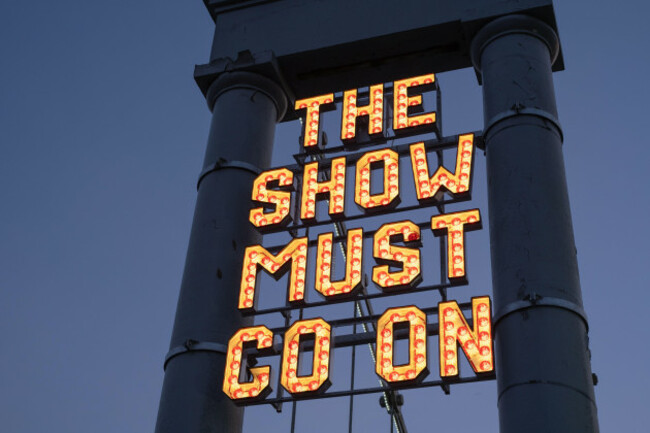
neon-sign-the-show-must-go-on-installed-by-the-stove-network-over-the-dumfries-suspension-bridge-inspired-by-the-historic-rood-fair Alamy Stock Photo Alamy Stock Photo

Three years after Russia’s invasion, Ukrainians continue to show resistance. Ann-Dorit Boy goes underground to meet the ensemble who are running a national theatre in Kharkiv 30 kilometers from the Russian border, and staging shows in the basement. 

(Der Spiegel, approx 16 mins reading time)

“Here, up ahead,” says Igor Tulusov, the general director of the theater and the man responsible for the hundreds of people who are once again working in the building below after an almost two-year break. Tulusov walks quickly across the roof between small, rounded windows made of acrylic glass. It is a lovely view, with the golden onion domes of the Church of the Holy Myrrh Bearers sparkling in the spring sun. The director points down at the roof we are walking across. Round patches can be seen stuck to the light-gray roof covering. Three years ago, during the first weeks of the war, shrapnel struck the roof and it caught on fire. On the other side of the roof lies a Russian artillery rocket that never exploded. The impacts and the shock waves from that early attack shattered 2,000 square meters of windows. They have since been replaced, says Tulusov. Because of the moisture, it is crucial to not merely board up the broken windows with plywood. “It’s also psychologically important for us,” says Tulusov.

5. From Father Bob to Pope Leo

pope-leo-xiv-leaves-the-borghese-chapel-of-the-papal-basilica-of-st-mary-major-in-rome-sunday-may-25-2025-after-venerating-the-icon-at-top-of-the-salus-populi-romani-protectress-of-the-roman Pope Leo XIV leaving the Borghese Chapel of the Papal Basilica of St. Mary Major in Rome Alamy Alamy

A profile of Pope Leo XIV.

(The New York Times, approx 21 mins reading time)

A man with a foot in two continents and multiple languages, Pope Leo XIV brings to bear a résumé that got him the job, full of deep religious education, frontline pastoral work, global order management and top Vatican governance experience. He also had a powerful booster in Pope Francis, who, at the end of his life, urgently pushed the American’s career forward. Throughout, Bob, as his American friends still call him, or Roberto, as his Spanish and Italian ones do, has remained consistently low-key, a gray man in a world of outsized personalities cloaked in sumptuous scarlet cassocks, an earnest admin of the apostles. His spiritual training has taught him to step back and make more room for others, while putting the faith above all else.

6. Rare earth minerals

The cold war brewing between China and the US over the elements. 

(The Verge, approx 10 mins reading time)

While the changes are making automakers nervous, there are even more significant issues at play in this new trade war. According to Worstall, China has designated rare earths and rare earth magnets as “dual use,” both for consumer (like those in your headphones) and military (like those you find in a fighter jet). Under this new designation, exporters have to disclose end-user data for any rare earth mineral or magnet they export.

“That means that your entire production chain has to be disclosed to the Chinese government,” Worstall says. “Somebody in my position who was wholesaling metals, that’s the thing you never want to tell anybody: who are you selling to and so on. You don’t want people to know this, because that’s how you make your living.” The effect is chilling, especially when some of those rare earths are used in military equipment like planes and drones. Disclosing the information would mean disclosing to a foreign country how US military technology is made.

…AND A CLASSIC FROM THE ARCHIVES… 

The banker who caused the 1929 stock crash.

(The Hustle, approx 10 mins reading time)

Inside the House of Morgan, Mitchell and bankers J.P. Morgan Jr., Thomas Lamont, and Albert Wiggin decided to go on a stock-buying spree to inject confidence into investors. The momentum spread at the exchange and, miraculously, the market stabilized. Mitchell believed the worst had passed. “I still see nothing to worry about,” he told reporters. But that day was Black Thursday, and the next week brought Black Monday and Black Tuesday, the defining days of the 1929 stock crash, an event that signaled the beginning of the Great Depression. A few weeks later, when the smoke cleared enough to assess the damage, several leaders pointed at Mitchell once again. This time, his status as the ideal banker meant he represented something far grimmer.

Note: The Journal generally selects stories that are not paywalled, but some might not be accessible if you have exceeded your free article limit on the site in question.

Readers like you are keeping these stories free for everyone...
A mix of advertising and supporting contributions helps keep paywalls away from valuable information like this article. Over 5,000 readers like you have already stepped up and support us with a monthly payment or a once-off donation.

Close
Comments
This is YOUR comments community. Stay civil, stay constructive, stay on topic. Please familiarise yourself with our comments policy here before taking part.
Leave a Comment
    Submit a report
    Please help us understand how this comment violates our community guidelines.
    Thank you for the feedback
    Your feedback has been sent to our team for review.

    Leave a commentcancel

     
    JournalTv
    News in 60 seconds