We need your help now

Support from readers like you keeps The Journal open.

You are visiting us because we have something you value. Independent, unbiased news that tells the truth. Advertising revenue goes some way to support our mission, but this year it has not been enough.

If you've seen value in our reporting, please contribute what you can, so we can continue to produce accurate and meaningful journalism. For everyone who needs it.

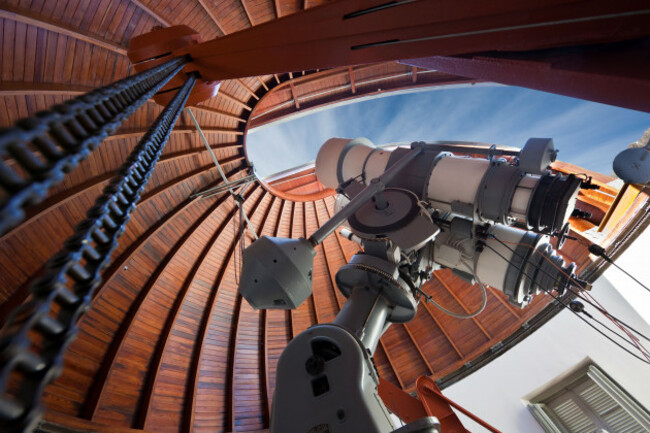
Sitdown Sunday: Scanning the heavens with the Pope's astronomer at the Vatican Observatory

Settle down in a comfy chair with some of the week’s best longreads.

IT’S A DAY of rest, and you may be in the mood for a quiet corner and a comfy chair.

We’ve hand-picked some of the week’s best reads for you to savour.

1. The Pope’s astronomer

vatican-observatory-of-castel-gandolfo-lazio-italy The Vatican Observatory of Castel Gandolfo. Alamy Stock Photo Alamy Stock Photo

You might be surprised to learn that the Vatican has its own observatory. Rebecca Mead went to see how the research institution operated by the Holy See works, and met the Michigan-born Jesuit who runs it. 

(The New Yorker, approx 25 mins reading time)

Guy Consolmagno believes in the big bang, at least as a provisional explanation of the universe’s origins, and also in a creator God who exists before and beyond the big bang. In his understanding, the spheres of science and religion do not entirely overlap. Rather, they “live together—the one doesn’t replace the other,” he told me. “Using science to prove religion would make science greater than religion. It would make your version of God subservient to your understanding of the universe. And not only does that make for a pretty weak God, but it is also crazy, because in a thousand years’ time the scientific questions that people ask are going to be very different. Science goes obsolete—it doesn’t progress otherwise.”

2. Ukraine’s stolen children

Over 19,500 children taken to Russia following the invasion of Ukraine have yet to be returned. Simon Shuster reports on the fight to get them back. 

(TIME, approx 14 mins reading time)

Of all the children on the list Putin saw, perhaps the best-­documented case is that of Margarita Prokopenko, who was only a few months old when the Russian invasion began. Abandoned at birth by her mother, Margarita was the youngest of several dozen children living in a home for orphans and kids with disabilities in the city of Kherson. In early March 2022, Russian troops overran that city and installed a puppet government to run it. Many of those who showed open resistance to the occupation were arrested or killed. A member of the Russian parliament, Igor Kastyukevich, soon arrived from Moscow to help cement the Kremlin’s control, and he began making frequent visits to the orphanage that spring. Kastyukevich, who represents Putin’s political party, would often arrive in the company of armed men, dressed in camouflage, and bring food and other supplies for the children, according to videos he posted online to document the visits. Early that fall, Kastyukevich and other Russian officials began taking the children away, they said, to ensure their safety. Margarita, the youngest, was among the first. 

3. The Badwater 135

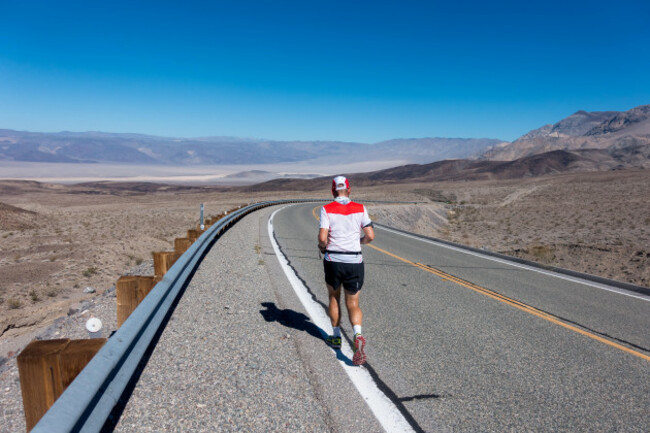
lone-runner-in-death-valley-during-badwater-135-miles-ultramarathon-running-in-the-afternoon-sun A lone runner in Death Valley during the ultramarathon in 2016. Alamy Stock Photo Alamy Stock Photo

Billed as the toughest footrace on Earth, the ultramarathon takes place over 135 miles in the scorching heat of Death Valley in California. Devin Kelly speaks to those who make up the support crew to help the runners along the way. 

(Outside, approx 18 mins reading time)

As the race director, Chris Kostman, announced at the athlete briefing, “Seven times more people have summited Mount Everest than have completed this race.” The race begins at the lowest point in North America, the Badwater Basin, which sinks 282 feet below sea level, and where temperatures routinely top out above 120 degrees. (This year, with reported temperatures ranging from 116 to 118 degrees, was labeled a “cool year” by seasoned racers.) From there, the race summits two mountain passes before climbing to the top of Whitney Portal Road, where it finishes above 8,000 feet, right at the base of the hiking trail that climbs to the top of the continental United States’s highest peak.

The race begins at nightfall. Runners emerge into morning light somewhere near the mile 42 checkpoint at the small waypoint of Stovepipe Wells, where, in 1926, the first hotel was built in Death Valley, just a few miles from a stovepipe that a thoughtful, considerate prospector shoved into a much-needed well so that travelers could find water that once was perpetually hidden under the valley’s sandy dunes. From there, racers begin a day of running that offers no shade and no respite from the sun. They suffer along a long and lonely road that warps with twirling mirages of heat, where even the wind feels less like a breeze and more like swallowing the inner workings of an oven that has been burning for centuries.

4. TikTok detectives

Amid a boom in online shaming, private investigator influencers are tracking down cheaters and posting all about it on social media – and their followers are eating it up. 

(Wired, approx 12 mins reading time)

All of the PIs interviewed for this piece have completed the relevant training in their local jurisdiction, but certification requirements differ across states and countries—some, like Idaho, don’t require any. And while PIs like Stephanie and Allen-Stell don’t market themselves as influencers, they do utilize popular TikTok formats in their posts. Stephanie often posts rundowns of her meals when she’s tailing suspects in restaurants or does her skin care routine in her car, noting, “Everyone seems to love it.” In her recent videos, Allen-Stell demonstrates how to sweep a hotel room for hidden cameras and talks about the HydroJug cup she’s “obsessed” with, taking it on stakeouts and flights. Taken as a whole, their channels offer a mix of authority and accessibility—a marked shift from the PIs of old, or at least our collective perception of a PI. Philip Marlowe and Jake Gittes never broadcast from the front seat of their car wearing a Yankee’s hat and under-eye masks, but for Stephanie, it’s her preferred stakeout attire.

5. Hyperemesis gravidarum

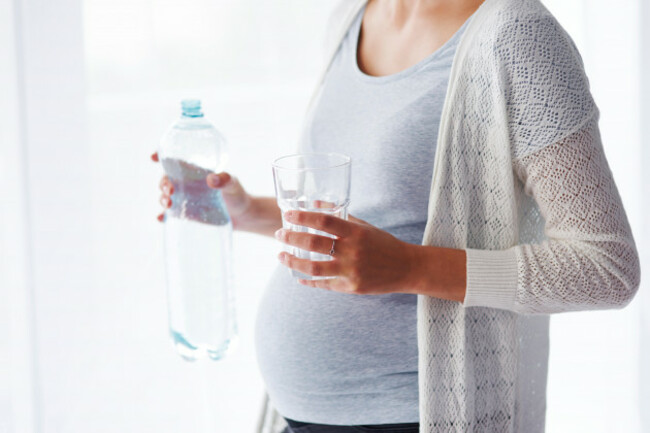
unrecognizable-pregnant-woman-drinking-water Alamy Stock Photo Alamy Stock Photo

Abi Stephenson shares her own experience of the debilitating condition that is known as a severe form of morning sickness, which can last for the duration of a pregnancy, the medicalised misogyny she encountered and the drug that could offer a solution. 

(The Guardian, approx 18 mins reading time)

If one hasn’t experienced it, it is hard to imagine the physical and psychological impacts of starvation and relentless vomiting – up to 50 times a day, for nine months. So studies fill in the gaps: bedsores, atrophied muscles, torn oesophagi, fractured ribs, detached retinas, intracranial haemorrhage, Wernicke’s encephalopathy, broken teeth, collapsed lungs, liver dysfunction, lost jobs and relationships, sterilisations to avoid future pregnancies, long-term PTSD and depression. And death. In 2022, Jessica Cronshaw, a 26-year-old primary school teacher from Lancashire, took her own life when 28 weeks pregnant. Her much-wanted daughter was delivered via C-section and died four days later. In the inquest report, the assistant coroner said the case “should serve as a reminder to healthcare professionals about the critical importance of addressing the wide-ranging impacts of hyperemesis gravidarum, including its mental health aspects.” According to a recent study, as many as 4.9% of women with HG have terminated a wanted pregnancy and more than a quarter have considered suicide as their only option to obtain relief. That’s a staggering number of women, year on year.

6. Fooling the Frick

Matthew Christopher Pietras donated millions of dollars to New York’s museums like the Met and the Frick, earning him a reputation as a wealthy philanthropist. Then he was found dead in his apartment, and it turned out the money was stolen. 

(Intelligencer, approx 23 mins reading time)

Andrew decided to give him another chance. In March 2020, after seeing a variety show at 54 Below, Pietras called an Uber and abruptly invited Andrew over to his place. But instead of heading north toward the Pierre, the car pulled up to an unremarkable brick building on 39th Street. Pietras took Andrew up an elevator and showed him into a small studio apartment. Since they began dating, Andrew had found Pietras to be almost obsessively neat. On a trip they took to London a few weeks earlier, Pietras instructed the bellman to store his empty luggage lest it clutter the closet. But inside Pietras’s apartment, every inch was given over to designer items. Suits, jackets, and coats hung from rows of racks. The floor, counters, and tables were covered with boxes of bags, shoes, and cosmetics. “He was hoarding luxury goods. There’s no other way to describe it,” Andrew says. Pietras’s explanation for living in the studio did nothing to help Andrew better understand the situation. “He told me the rent was reasonable,” Andrew says. “I watched you order a $6,000 bottle of wine, and you like the reasonable rent. What?”

…AND A CLASSIC FROM THE ARCHIVES…

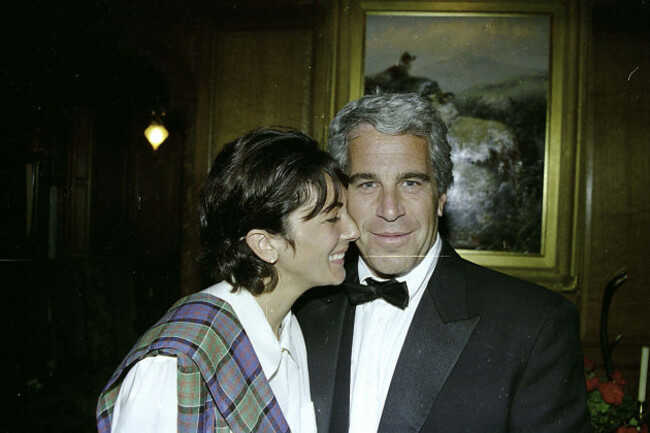
december-10-2021-the-us-attorneys-office-has-released-images-during-the-trial-of-ghislaine-maxwell-59-who-faces-six-federal-charges-relating-to-accusations-in-the-sexual-exploitation-of-girls-wit Ghislaine Maxwell and Jeffrey Epstein. Alamy Stock Photo Alamy Stock Photo

Ghislaine Maxwell was back in the news this week amid the furore over Donald Trump and the Epstein Files. Here’s a 2020 longread about her year on the run before she was convicted of child sex trafficking.

(Vanity Fair, approx 37 mins reading time)

By the time the friend ran into her on the plane, Maxwell and one of Epstein’s victims, Virginia Roberts Giuffre, had settled a lawsuit in which Giuffre accused Maxwell of recruiting her as a “sex slave” for Epstein and Prince Andrew, among others, when she was only 17. Now Maxwell was in the process of quietly withdrawing from the life she had made for herself. She shuttered the ocean-protection charity she had founded, the TerraMar Project, which left her with debts of $549,093. She even gave up her name, sometimes introducing herself to new acquaintances only as “G.” Yet here she was, on a commercial flight from Miami to New York.

For a moment, as the two friends chatted, the old Maxwell burst through: the Oxford-educated, knows-everybody-and-everything Maxwell, the woman who wanted to save the oceans but couldn’t seem to save herself from the men in her life. “Where are you living, Ghislaine?” the friend asked. “I lost touch with you.” Maxwell suddenly went blank. “Oh,” she replied, “a little bit everywhere.” “But where?” her friend pressed. Maxwell wouldn’t answer. “Looking back,” the friend says now, “I personally think she knew that the shit was really about to go down.”

Note: The Journal generally selects stories that are not paywalled, but some might not be accessible if you have exceeded your free article limit on the site in question.

Readers like you are keeping these stories free for everyone...
A mix of advertising and supporting contributions helps keep paywalls away from valuable information like this article. Over 5,000 readers like you have already stepped up and support us with a monthly payment or a once-off donation.

Close
21 Comments
This is YOUR comments community. Stay civil, stay constructive, stay on topic. Please familiarise yourself with our comments policy here before taking part.
Leave a Comment
    Submit a report
    Please help us understand how this comment violates our community guidelines.
    Thank you for the feedback
    Your feedback has been sent to our team for review.

    Leave a commentcancel

     
    JournalTv
    News in 60 seconds