We need your help now

Support from readers like you keeps The Journal open.

You are visiting us because we have something you value. Independent, unbiased news that tells the truth. Advertising revenue goes some way to support our mission, but this year it has not been enough.

If you've seen value in our reporting, please contribute what you can, so we can continue to produce accurate and meaningful journalism. For everyone who needs it.

Sitdown Sunday: A murder that haunted an Oregon town was almost solved - then came a twist

Settle down in a comfy chair with some of the week’s best longreads.

IT’S A DAY of rest, and you may be in the mood for a quiet corner and a comfy chair.

We’ve hand-picked some of the week’s best reads for you to savour.

1. The Candy Cane Park killing

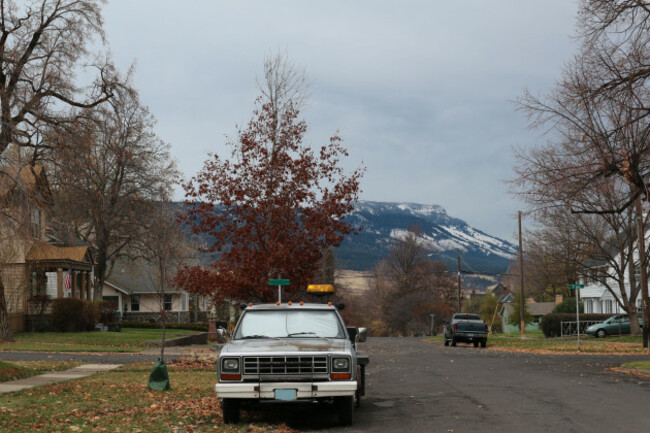
a-chilly-crisp-fall-day-in-a-small-town-in-us-looking-down-a-street-with-an-old-truck-fall-colored-trees-and-the-mountain-with-snow-creeping-down La Grande in Oregon. Alamy Stock Photo Alamy Stock Photo

The body of 21-year-old bartender Dana DuMars was found in Candy Cane Park in Le Grande, Oregon in 1983. She had been murdered. The case went cold and after a long and mismanaged investigation, it was finally getting somewhere this year – until the investigation had to stop. 

(The New York Times, approx 12 mins reading time)

Candy Cane Park, named for its red-and-white-striped swing set, was covered in “a decade-old veil of darkness,” an article in The La Grande Observer said in 1992. In the early 2000s, the town removed the merry-go-round from the park’s playground — partly because residents reported seeing ghosts spinning it violently, according to local lore. “A wavering fragment of weirdness does linger,” the newspaper noted in 2015, revisiting the case. Today, some kids still grow up hearing from their parents that they should avoid playing in the park. “It was so out of our ordinary, and what you count on in a small town is kids being able to walk home from school,” said Tammy Jane Greenwell, 57, who was a student at La Grande High School, less than a mile from Candy Cane Park, when the murder happened. She remembers changing her route home from school to avoid passing the park. “I don’t think you go to that park as a member of our generation and it doesn’t cross your mind,” she said.

2. Breast cancer

Melissa Dahl’s thought-provoking piece highlights the stories of women with breast cancer who undergo mastectomies and then must decide if they want to have reconstructive surgery, and how complicated and difficult that process can be. 

(The Cut, approx 22 mins reading time)

When you have breast cancer and need a mastectomy, well-meaning friends and family will often make the same well-intentioned joke: Hey, at least you get a free boob job! Many patients, too, assume at first that breast reconstruction will be just like breast augmentation. I asked Wilkins how often he has heard patients conflate the two. “Oh gosh. Constantly,” he said. “But it’s understandable, and even sophisticated, well-educated consumers don’t, or at least can’t initially, tell the difference.” Many patients who had undergone mastectomy told me they got this idea, at least in part, directly from their plastic surgeons. In consultations, their surgeons often used language that the patients associated with cosmetic procedures.

Kerrin Engebretson, who’s 42 and lives in Elk Grove, California, was excited about the idea of a flap reconstruction — with a tissue transfer from her thighs — after hearing her plastic surgeon describe it. “She told me, ‘This will end up really helping the contour of your thighs, because it’ll tighten them up,’” said Engebretson, who had the first surgery for her reconstruction immediately following her prophylactic double mastectomy in January 2024. “And I was like, Oh, okay — kind of like getting a thigh-lift at the same time.” Engebretson is happy with her results now, but she first had to get through five reconstruction-related surgeries, including multiple hospital stays and one incision infection that nearly put her into sepsis. For her, the comparison to a cosmetic procedure obscured the fact that many flap reconstructions require corrective surgeries.

3. The ban

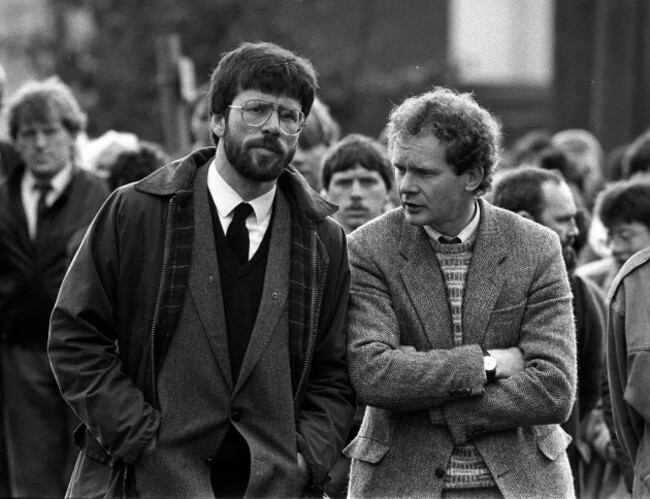
president-of-sinn-fein-gerry-adams-and-west-belfast-mp-martin-mcguinness-right-at-the-funeral-of-patrick-kelly-30-the-reputed-ira-commander-in-east-tyrone Gerry Adams and Martin McGuinness in 1987. Alamy Stock Photo Alamy Stock Photo

A short documentary on how banning the voices of Sinn Féin and IRA representatives backfired on the British government of the time, led by Margaret Thatcher. 

(The New Yorker, approx 26 mins viewing time)

Broadcasters soon discovered a loophole in this ban: they began hiring actors to produce voice-overs for interviews with Sinn Féin leaders and others affected by the restriction. In the six years that the ban lasted (like the Irish ban, it ended in 1994), while watching interviews on the British news channels, you tried to guess which actor was doing the dubbing. I was in Dublin then, and it was a time when the booming presence of Mrs. Thatcher loomed large. I wondered what cause she believed these voice-overs served, other than providing glee for the nation. For example, did she listen to Stephen Rea playing Adams?

Of all the actors, Rea stood apart. Because he was married to a former I.R.A. bomber, there were objections to his presence on air. But the real problem was that he could embody any role that he took on with consummate and uncanny skill. Onstage he had played Lord Haw-Haw (who broadcast for Hitler); he had played Brendan Bracken, Churchill’s propaganda minister; he had played Clov, in Samuel Beckett’s “Endgame”; he had played Oscar Wilde. Now he was one of the actors who voiced Adams. Sometimes, he even sounded better than Adams—less self-satisfied and sanctimonious. As Adams himself points out in “The Ban,” Rea’s performance “was a great improvement on my monotone.”

4. Twenty four minutes

That’s how long Budimir Šobat, a Croatian professional freediver, can hold his breath for. It’s longer than anyone else in history. Sean Williams’ profile dives into how he learned to do it, and why it stems from giving up drinking to care for his daughter.

(Outside, approx 23 mins reading time)

First, Šobat tried to calm himself actively, to think himself into sleep mode. But it didn’t work. His mind would always wander to Saša—whether they had the money to pay for her therapy, what they’d buy her, or when they could take her to the sea—and it jolted his heart rate. Then he tried thinking about sex. Same problem. Yoga was a nonstarter. Nothing seemed to work. And then it hit him. He’d been getting himself into that state for over a decade with Saša. Waiting for her to acknowledge a question, craving a conversation with her, or a hug; for her to live in his world, for once. It was love, but it was suffering, too. In those moments with Saša, Šobat says, “I’m completely out of my body. I’m looking at myself from outside.” He transferred the feeling to the pool. The effect was almost instantaneous, like turning a key in a lock.

5. Annabelle

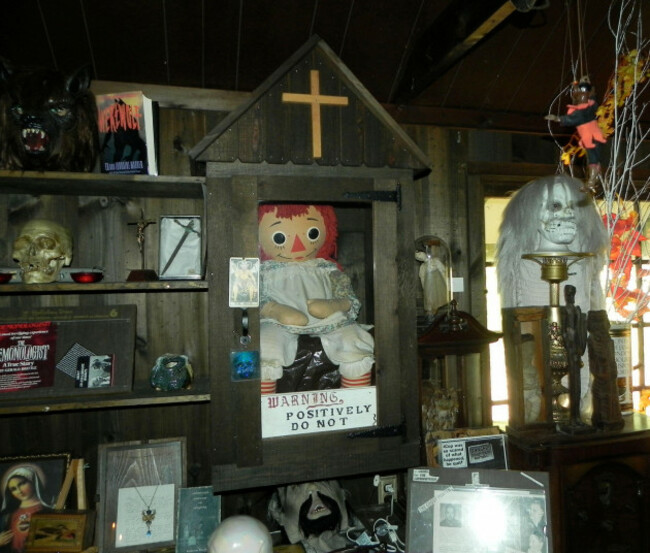
the-annabelle-raggedy-ann-doll-sits-in-a-case-in-the-warrens-occult-museum-jessica-moorehartford-couranttns The Annabelle Raggedy Ann doll sits in a case in the Warren's Occult Museum. Alamy Stock Photo Alamy Stock Photo

The history of the real-life doll that has inspired a number of horror films in recent years, the people that travel to see her, and how she has affected the family that discovered her. 

(Esquire, approx 18 mins reading time)

Tens of thousands of people are paying around fifty dollars—on top of the cost to enter the convention—to stand mere feet away from Annabelle, locking eyes with this girlish manifestation of devilry. “It was electrifying, like encountering a renowned celebrity,” says Haley Michelle, a paranormal influencer who brought her own haunted doll, Cynthia, along to meet Annabelle in Maine. “I felt a mix of excitement and nervous anticipation as I approached her, sensing an aura of mystique surrounding her.” It’s wholesome if creepy fun for the whole family, but behind the scenes Annabelle has left a trail of destruction in her wake. More than fifty years after she materialized, the doll is at the center of a bitter disagreement that’s torn apart the surviving family of the Warrens, splintered paranormal research groups, and unleashed personal demons into public view. She truly is a cursed object.

6. Benevento 

How an Italian town became known as the city of witches.  

(Smithsonian, approx 11 mins reading time)

Where the witchiness of Benevento, a city of over 55,000 with a Roman theater and Arch of Trajan from ancient times, may be most felt is in the traditions of its residents, many of whom still hold close these passed-down superstitions. Depending on whom you ask, a curse of the evil eye must still be warded off with a specific ritual involving oil and water and a traditional prayer. Leaving a broom at your door is a good way to ensure the local witches, known as the Janare, won’t sneak under the threshold—they’ll be too distracted counting the strands of straw. And if you wake to find that your horse’s mane has been braided, a Janara must have taken it for a late-night ride. Even now, when Maria Scarinzi, an anthropologist and head of education programs at Janua, Benevento’s Museum of Witches, interviews older residents about their beliefs, she finds that they hesitate to share everything for fear of retribution.

…AND A CLASSIC FROM THE ARCHIVES… 

BBC News / YouTube

Prince Andrew – or, the Andrew formerly known as prince – was stripped of his titles this week by his brother King Charles over the ongoing controversy surrounding his friendship with the late sex offender Jeffrey Epstein.

Here’s a look at how his car crash Newsnight interview with Emily Maitlis in 2019 came about. 

(The Guardian, approx 9 mins reading time)

Fast-forward three decades and Sam McAlister, a guest booker on Newsnight, receives an email from a PR company offering an interview with Prince Andrew about his charity work. She declines on the grounds that it sounds like a puff piece, but the exchange prompts months of negotiations about a more wide-ranging interview, which is again rejected by McAlister because the palace has a single stipulation: all questions about convicted paedophile and financier Jeffrey Epstein are off the table. But then Epstein is found dead in his New York prison cell. Until that point, the man Newsnight’s Emily Maitlis describes as “America’s Jimmy Savile” had been a peripheral figure in the public consciousness: now he is centre stage, and the prince’s friendship with him is under the media’s microscope. Eventually, Andrew’s team change their minds. McAlister – whose book Scoops: The BBC’s Most Shocking Interviews from Steven Seagal to Prince Andrew, was the inspiration for this documentary – can barely believe her luck.

Note: The Journal generally selects stories that are not paywalled, but some might not be accessible if you have exceeded your free article limit on the site in question.

Readers like you are keeping these stories free for everyone...
A mix of advertising and supporting contributions helps keep paywalls away from valuable information like this article. Over 5,000 readers like you have already stepped up and support us with a monthly payment or a once-off donation.

Close
Comments
This is YOUR comments community. Stay civil, stay constructive, stay on topic. Please familiarise yourself with our comments policy here before taking part.
Leave a Comment
    Submit a report
    Please help us understand how this comment violates our community guidelines.
    Thank you for the feedback
    Your feedback has been sent to our team for review.

    Leave a commentcancel

     
    JournalTv
    News in 60 seconds