We need your help now

Support from readers like you keeps The Journal open.

You are visiting us because we have something you value. Independent, unbiased news that tells the truth. Advertising revenue goes some way to support our mission, but this year it has not been enough.

If you've seen value in our reporting, please contribute what you can, so we can continue to produce accurate and meaningful journalism. For everyone who needs it.

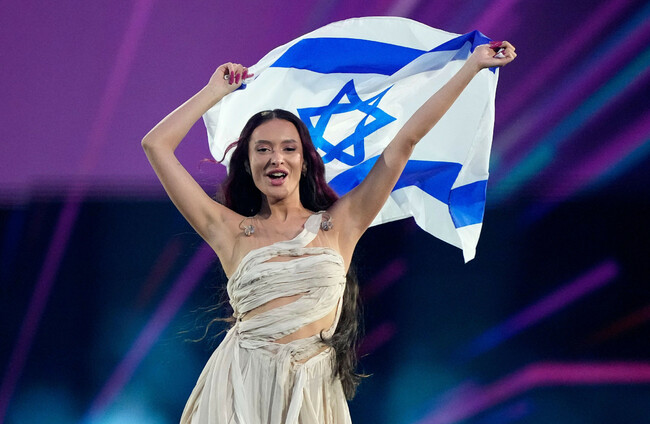
Eden Golan, who represented Israel in 2024 in Sweden. Alamy Stock Photo

Eurovision: Spain becomes third country to confirm it will withdraw if Israel stays in contest

The EBU says contest organisers are now assessing the “potential impacts and consequences of either decision”.

LAST UPDATE | 16 Sep

THE SPANISH PUBLIC broadcaster RTVE has confirmed the country plans to withdraw from next year’s Eurovision Song Contest if Israel is allowed to compete. 

The move follows similar statements last week by RTÉ and the Dutch public broadcaster AVROTROS. 

Contest organisers are now assessing the “potential impacts and consequences of either decision”.

Spain is the first of the ‘Big Five’ Eurovision countries to threaten withdrawal.

Along with broadcasters from the UK, Germany, France and Italy, RTVE put up a greater proportion of funding for the contest each year compared to broadcasters from the other Eurovision nations.

Big Five countries are allowed a direct route to the final as a result and don’t compete in the weekday semi-final shows. 

RTVE’s board of directors met this morning to agree the move. The decision was made by an absolute majority, a statement said. 

The matter of Israel’s participation had been expected to come to a head at the next General Assembly of contest organisers the European Broadcasting Union (EBU), scheduled to be held in early December – however pressure for an early resolution to the standoff will only ramp up as more broadcasters join the planned boycott. 

RTVE said in its statement that Benidorm Fest, which is typically used to select Spain’s Eurovision song, will go ahead as normal. 

The broadcaster’s statement also emphasises the need for the EBU to find a solution before its December meeting. 

Eurovision director Martin Green said in response to today’s news that the organisation understands “the concerns and deeply held views” around the ongoing conflict in the Middle East.

“We are still consulting with all EBU Members to gather views on how we manage participation and geopolitical tensions around the Eurovision Song Contest.

“Broadcasters have until mid-December to confirm if they wish to take part in next year’s event in Vienna. It is up to each Member to decide if they want to take part in the Contest and we would respect any decision broadcasters make.”

Identical comments by Green were issued in the wake of the statements from RTÉ and AVROTROS last week. 

The head of Slovenia’s national broadcaster has also said the country, a regular participant in Eurovision, would likely withdraw if Israel participates. Similar comments have been made by the head of Iceland’s national broadcaster.

Tánaiste and Foreign Affairs Minister Simon Harris was asked at the National Ploughing Championships today about RTE’s decision and he said he fully supports it.

He was also asked if this decision has come too late: “ When we look at this period of history, I think people will say this; everything happens too late and that’s not a criticism of RTE.”

“The world, every part of it, could have acted quicker.”

Dubrovnik meeting 

A meeting of the Eurovision Song Contest Reference Group, the competition’s governing body on which representatives from participating broadcasters sit, is meeting today in the Croatian city of Dubrovnik.

According to a spokesperson for the EBU the meeting “has taken note of the concerns expressed by several broadcasters regarding the pending decision of the EBU and the General Assembly on Israeli participation” in the next contest. 

“It is the role of the Reference Group to enforce the rules of the Contest; however, the current circumstances go beyond its mandate. For this reason, the matter was escalated to the EBU Executive Board in June.

“The Group is being kept informed about the consultations currently being conducted with all broadcasters and relevant global organisations by an independent expert appointed by the EBU.

The statement adds: “Together with the Host Broadcaster, the Reference Group is assessing the potential impacts and consequences of either decision, to ensure these can be anticipated in advance.

“The Reference Group understands that the decision-making process is ongoing, with a final decision expected in December. In its role as guardian of the Eurovision Song Contest brand, the Group will formulate an assessment for the Executive Board, focusing on the consequences of both possible outcomes.”

Reports emerged in Israeli media in recent days suggesting that the EBU had quietly put proposals to national broadcaster KAN giving a choice to either compete under a neutral flag or to temporarily withdraw for a year. 

The EBU, however, has insisted that no such proposals have been made.

Readers like you are keeping these stories free for everyone...
A mix of advertising and supporting contributions helps keep paywalls away from valuable information like this article. Over 5,000 readers like you have already stepped up and support us with a monthly payment or a once-off donation.

Close