Sign in. It’s quick, free and it’s up to you.
An account is an optional way to support the work we do. Find out more.
Sign in. It’s quick, free and it’s up to you.
An account is an optional way to support the work we do. Find out more.
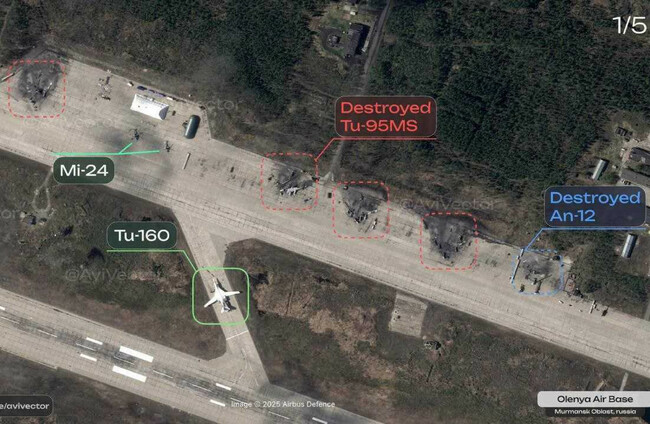
DESPITE BEING OUTNUMBERED and outgunned, Ukraine managed to use inexpensive drones to destroy Russian nuclear-capable bombers worth billions of dollars last weekend, in an operation carried out after months of planning.
The operation targeted dozens of strategic air bases and delivered a major blow to Moscow’s long-range bomber fleet.
US news outlets described the attack as “stunning” and “audacious”, UK press said it was “unprecedented” and “broad” – and all of them agreed that the major attack on Russia’s nuclear-capable strategic bombers highlighted Ukraine’s strategic savvy against its much larger invader.
Codenamed “Spider’s Web” – or simply “Web” – the operation was named for its wide geographic coverage across remote Russian locations previously thought to be beyond the reach of Ukraine’s long-range drone capabilities.
Some military commentators and pro-Russian bloggers even called it the country’s “Pearl Harbour”.
The strikes seem to have got to Putin – with Donald Trump admitting this week that the Russian leader “very strongly” told him he “will have to respond” to the drone attack.
Russia has since launched large-scale drone and missile strikes on Ukraine’s capital and other parts of the country in an apparent retaliation.
Planning for the operation began over 18 months ago. Ukrainian agents secretly smuggled about 150 small strike drones, modular launch systems, and 300 explosive payloads into Russia using covert routes.
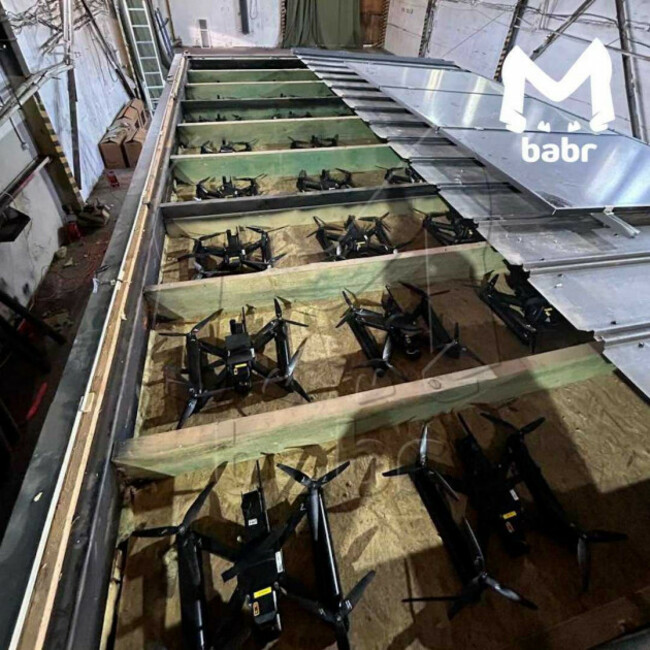
The drones were hidden inside wooden cabins, which were then loaded onto ordinary cargo trucks.
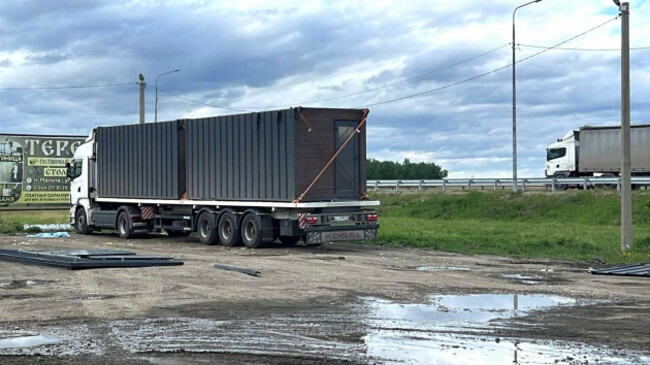
A key part of the plan relied on covert logistics within Russian territory, involving unwitting Russian civilians – the Security Service of Ukraine (SBU) reportedly recruited Russian truck drivers to transport the mobile drone launchers disguised as regular cargo.
These drivers were instructed to arrive at specific times and park at preselected spots near strategic Russian air bases, such as fuel stations and remote roadside areas.
At the appointed time last weekend, the roofs of the cabins were remotely opened, and drones launched directly from inside the trucks.
Footage of a Ukrainian FPV strike drone rising from a cargo truck and heading towards Russia's Belaya Airbase.
— OSINTtechnical (@Osinttechnical) June 1, 2025
The drone launch and airbase hit were over 4000 km (2500 mi) from Ukraine. pic.twitter.com/XU7bCzV5QJ
This allowed the drones to strike from very close range, bypassing Russia’s layered air defenses – including Pantsir and S-300 systems – before they could respond.
Russian sources confirmed the drones launched just outside airfields, from places like fuel stations and roadside laybys.
After launch, the trucks exploded, triggered by self-destruct mechanisms.
Ukrainian leaders, including President Zelensky and SSU chief Vasyl Maliuk, were reportedly involved in planning and real-time coordination.
In total, 117 drones were launched, striking at least 41 aircraft.
Ukraine’s SBU put the estimated cost to the Kremlin at $7 billion.
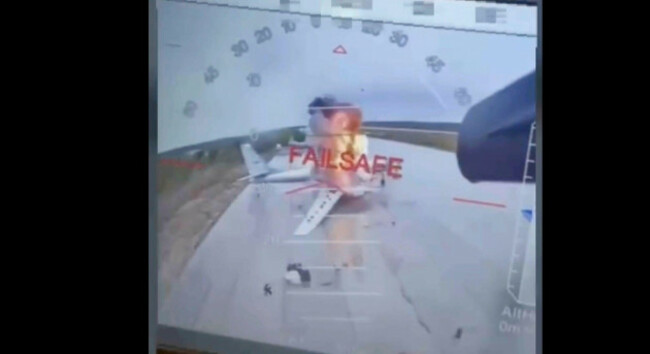
Ukrainian estimates claim this damaged 34% of Russia’s strategic cruise missile platforms, including some of the few remaining A-50 early warning aircraft critical for Russia’s air surveillance and targeting.
Russia’s major losses include strategic bombing, aviation, and airborne early warning and control aircraft.
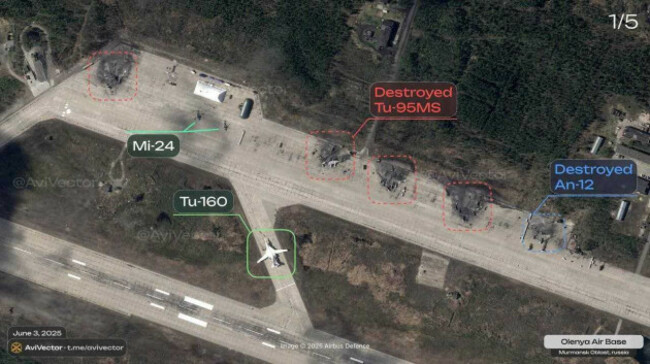
The Russian Defence Ministry confirmed the attacks had occurred in five regions of Russia – Murmansk, Irkutsk, Ivanovo, Ryazan and Amur – but stated planes had been damaged only in Murmansk and Irkutsk, while in other locations the attacks had been repelled.
One of the air bases impacted by the strikes was 2,500 miles behind Russian borders, deep in Siberia.
Yohann Michel, a researcher at the French university Lyon 3, said the loss of the aircraft was “a serious blow to Russian offensive capabilities”.
7 млрд. доларів США. Така орієнтовна вартість стратегічної авіації ворога, яка була вражена сьогодні в результаті спецоперації СБУ «Павутина».
— СБ України (@ServiceSsu) June 1, 2025
Вражено 34% стратегічних носіїв крилатих ракет на основних аеродромах базування рф.
Слава Україні! Героям Слава! 🇺🇦 pic.twitter.com/XvCXNxv0TJ
“The main impact could be felt in several weeks’ time with a reduction in the number of sorties by the rest of the fleet” due to difficulties in finding spare parts for the Soviet-era planes, which are no longer in production, he said.
Maxim Starchak, a fellow at the Centre for International and Defence Policy at Queen’s University in Canada, said it would take Russia a long time to replace the lost aircraft.
“Russia is extremely slow and inefficient in developing new aircraft for its nuclear forces,” he explained.
Michael Shurkin, a former CIA officer, said Ukraine’s operation was likely to have struck fear into militaries across the world, adding that potential targets for such drone attacks could include refineries, ballistic missile silos or military bases.
“This technology is akin to stealth technology: The threat is difficult to detect both because it emerges near the target and is too small and too low to be picked up by sensors designed to catch aircraft or missiles,” said Shurkin, director of global programs for the consultancy 14 North Strategies.
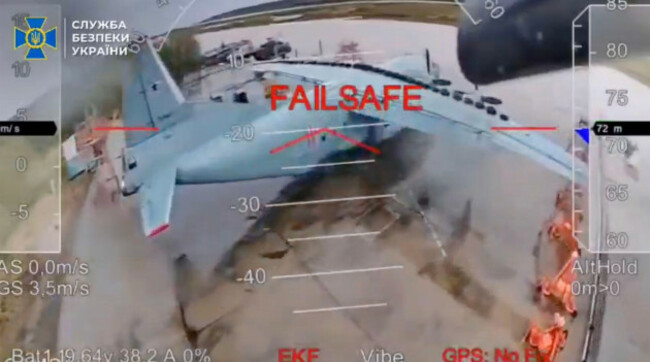
Ukrainian military analyst Oleksii Kopytko said anyone delivering a pizza or driving a horse-drawn cart could present a danger.
“The organisers and main perpetrators are essentially untraceable,” he said.
A French arms manufacturing executive said Ukraine could even have trained AI algorithms to recognise aircraft or guide the drones in case of jamming.
“New tools are forcing us to completely rethink defence systems and how they are produced,” said the executive, who asked not to be named.
“It opens up possibilities that we hadn’t even imagined.”
Zelensky “just proved that he and Ukraine are more than able to pull aces out of their combat fatigue sleeves,” said Timothy Ash, an emerging market economist focused on Russia.
Additional reporting from AFP

To embed this post, copy the code below on your site












have your say