Sign in. It’s quick, free and it’s up to you.
An account is an optional way to support the work we do. Find out more.
Sign in. It’s quick, free and it’s up to you.
An account is an optional way to support the work we do. Find out more.
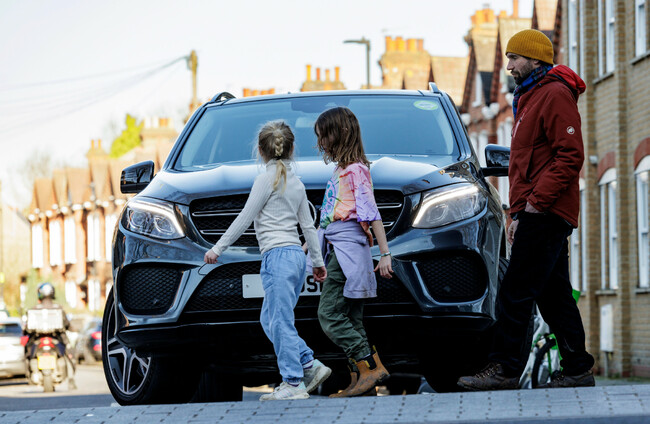
THE HEAD OF the gardaí’s road policing unit has urged drivers of heavier cars such as SUVs to take care as these large vehicles do more damage in crashes.
Earlier this week, a Dublin TD called for SUV-free zones to be established in urban areas across Ireland, after a major study revealed that children are 82% more likely to be killed if hit by one than by a regular car.
A British study found that pedestrians and cyclists are 44% more likely to die if they are hit by an SUV or similar-sized vehicle rather than by a traditional car – and that figure rises to 82% for children.
Jane Humphries, Chief Superintendent of the Garda Roads Policing unit, said SUVs are more dangerous because of “simple physics”.
“The force that you are hit with is literally the weight of the vehicle times the acceleration,” Humphries told reporters.
“That means that the faster you’re going, the more damage you’re going to do, and the heavier the car is, the more damage you’re going to do.”
Paul Murphy, a People Before Profit TD for Dublin South-West, described the statistics from the UK study as “alarming” and said SUVs are not built for busy city environments.
Research shows that the higher front ends of SUVs strike adults in the pelvis and children in the head, increasing the risk of severe injury.
Humphries added that it’s “up to the local authorities” whether or not they bring SUV-related regulations in.
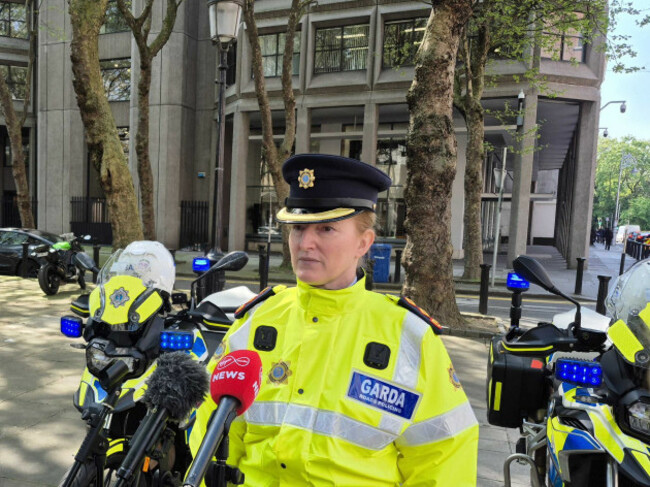
Gardaí, along with the Road Safety Authority (RSA) urged the public to be particularly careful when driving over the bank holiday weekend – including by not drinking and driving and by keeping mobile phones out of reach while on the road.
Gardaí have said that they will step up roadside enforcement this weekend, with a significant number of drink and drug testing checkpoints, speed cameras and unmarked garda vehicles to be rolled out over the coming days.
The appeal to drivers comes just two weeks after the previous bank holiday weekend over Easter, when three people died on Irish roads and 12 more were seriously injured.
During the same period, 149 people were arrested for drink and drug driving.
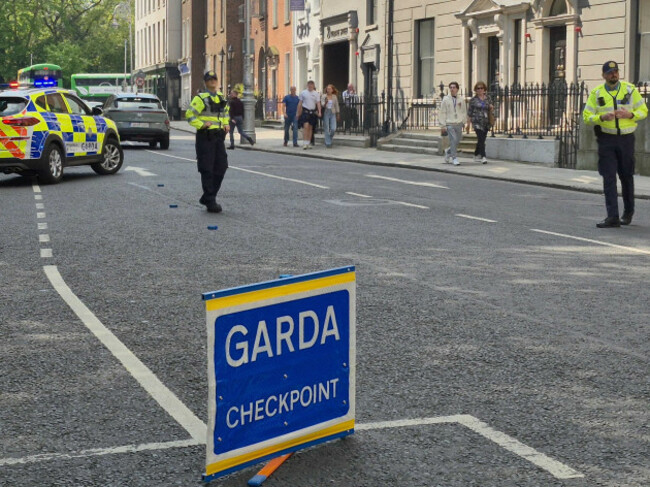
Asked whether further fatalities were expected, Humphries said that she “doesn’t like forecasting”.
“Behind every fatality there is a family that has been absolutely ripped apart by what has happened, and their lives will never, ever be the same again,” Humphries said.
I have seen very few fatal and serious collisions which were inevitable. These are preventable.
“We know what causes collisions, and it’s everybody’s responsible to change the driving behaviour and everybody to work together to bring those numbers down,” she added.
Sarah O’Connor of the RSA said that the May bank holiday will bring heavy traffic on the roads and additional risk.
She called on people to slow down, never drive while tired or distracted by their phone, and to always wear a seatbelt.
In a separate warning ahead of the May bank holiday, Water Safety Ireland, the Coast Guard, and the RNLI urged the public to prioritise safety on or near water, including by wearing lifejackets on boats and always informing someone of travel plans.
The water safety groups also urged those planning to swim, surf or sail to check the weather and tides before taking part in water-based activities.
Linda-Gene Byrne of the RNLI said one in three people “don’t know what to do” if they get into trouble in the water.
“The RNLI is reminding everyone to remember ‘float to live’ if they find themselves in trouble in water: tilt your head back with ears submerged and try to relax and control your breathing,” Byrne said.
“Use your hands to help you stay afloat and then, once you are through the initial shock, call for help or swim to safety if you can.”

To embed this post, copy the code below on your site












have your say