Sign in. It’s quick, free and it’s up to you.
An account is an optional way to support the work we do. Find out more.
Sign in. It’s quick, free and it’s up to you.
An account is an optional way to support the work we do. Find out more.

TÁNAISTE MICHEÁL MARTIN today visited a Guinness brewery in Nairobi, Kenya to learn about how the company is making its production more sustainable and expanding across the African continent.
Guinness Foreign Extra Stout has been brewed in Kenya since 1965 and the country is now the fifth-largest market for the brand across the globe.
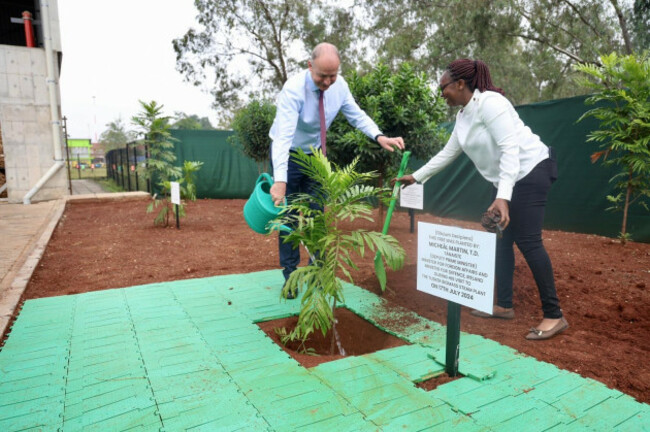
Martin was given a warm welcome to the facility today where he toured the brewery and planted a tree on the grounds alongside Irish Ambassador to Kenya Catríona Ingoldsby.
The bio-gas facility in Kenya’s capital Nairobi is Irish designed and operated by Michael Stone’s engineering firm Designer Group on behalf of East African Breweries, a subsidiary of Diageo.
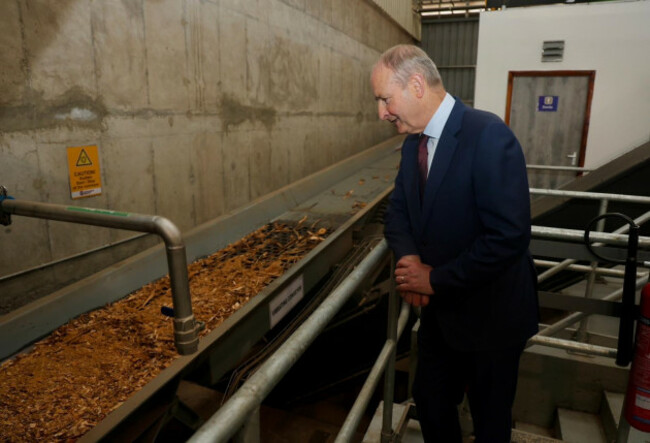
Part of what makes the facility unique is that it uses agriculture waste products – like woodchips, macadamia shells, sawdust and pine cones – to produce power instead of fuel oil.
East African Breweries CEO Jane Karuku welcomed Martin to the operation alongside Stone who thanked him for Ireland’s commitment to supporting trade and enterprise in the region.
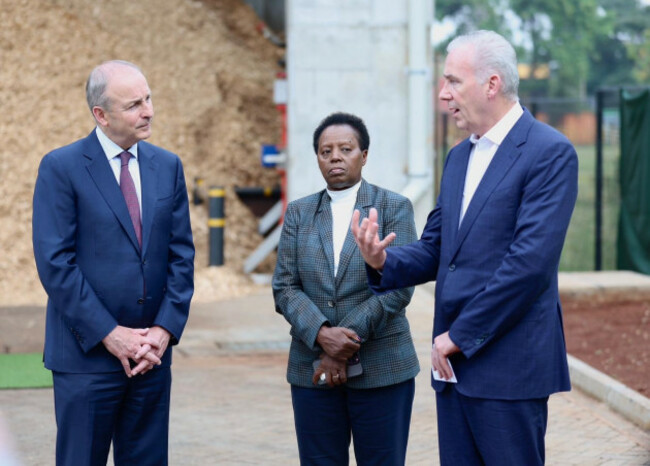
Stone told Martin that when the company first set up roots in Nairobi the majority of staff were brought over from Ireland but they quickly realised this was unsustainable. Today 98% of the staff working in the brewery are locals.
As well as touring the facilities, the Tánaiste was given an overview of Guinness’s history in Africa by Waterford woman Joanne Looby who is Head of Beer for the East African Breweries company.
Looby told the Tánaiste about the social impact work the company does in the region, including funding a football team – Tusker FC who finished second in the Kenyan League last year.
Addressing staff and dignitaries in a short speech, the Tánaiste joked about the strength of Guinness in Africa – where it is 6.5% abv compared to 4.2% in Ireland.
“We in Ireland would hear stories anecdotally about how Guinness in Africa was stronger. Sometimes we were envious, if somewhat nervous,” he said.
The reason for the difference is that the Guinness Foreign Extra Stout was brewed for the overseas market and as Looby explained “a completely different drink”. Indeed, it’s even slightly fizzy.
While brewed in Africa, Looby proudly told the Tánaiste that every bottle has a “flavour extract” from Ireland included.
“The secret sauce,” was his response.
Conservation and Climate change
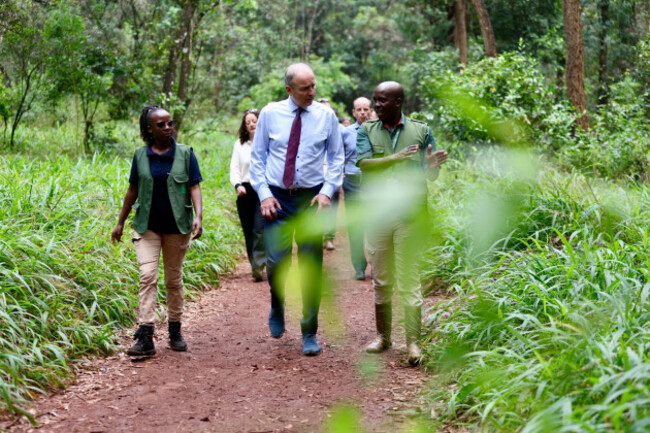
Later in the afternoon, the Tánaiste visited Karura forest to learn about conservation efforts in the area that attracts 70,000 visitors monthly.
Following this he visited the Kenya Climate Innovation centre where he spoke to participants in the Irish-funded Climate Launch Pad project. Companies participating in the programme showcased their businesses all of which have a focus on climate solutions.
Speaking at the event, the Tánaiste emphasied the urgent need to address climate change through innovative and collaborative efforts.
Climate change represents the major threat to our society, to our communities, to our future prosperity, security and even our very survival.
“Every storm, every flood and drought is a reminder of this. While we are seeing the effects of climate change across the world, including in Ireland, we know that in the Horn of Africa, it is particularly having a profound and complex impact and represents a significant challenge.
“And here in Kenya communities have seen successive seasons of serious drought, followed by this year serious floods.
“Addressing climate change requires radical transformations but also as I see this morning, a solution driven approach can yield many good results,” the Tánaiste said.

To embed this post, copy the code below on your site











have your say