We need your help now

Support from readers like you keeps The Journal open.

You are visiting us because we have something you value. Independent, unbiased news that tells the truth. Advertising revenue goes some way to support our mission, but this year it has not been enough.

If you've seen value in our reporting, please contribute what you can, so we can continue to produce accurate and meaningful journalism. For everyone who needs it.

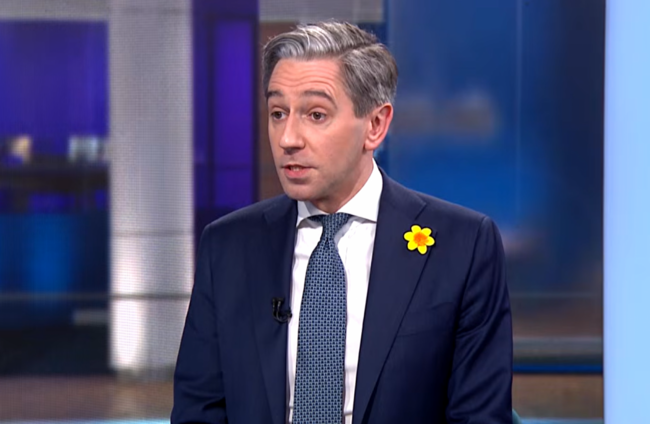
Tánaiste and Finance Minister Simon Harris speaking on RTÉ's Six One News this evening. RTÉ

Tánaiste hints at excise duty cut next week to help alleviate rising fuel costs

Simon Harris told RTÉ News that cutting excise can be done quickly and passed on quickly.

TÁNAISTE AND MINISTER for Finance Simon Harris has indicated that the government will move to cut excise duty next week as part of a series of measures aimed at reducing fuel prices. 

It comes amid the escalating US-Israel war in Iran, with the head of the International Energy Agency today warning that the conflict is “the greatest global energy security threat in history”.

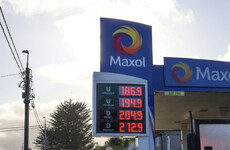
Fuel prices have surged in recent weeks amid global market disruption linked to the conflict in the Middle East, with diesel now surpassing €2 per litre at many forecourts and petrol close behind.

Brent crude oil, the international standard, rose to $112.66 (€97) today, up 3.69% from the previous day and more than 47% since the start of the war. 

The government measures, which could also include an enhanced diesel rebate scheme for hauliers, are expected to be announced after Cabinet next Tuesday

Taoiseach Micheál Martin had strongly hinted earlier this week that excise duty could be cut to alleviate fuel costs.

Speaking on RTÉ’s Six One News this evening, Harris said the government would finalise the planned measures over the weekend. 

“We’re going to need to do something to help people with the cost at the pumps, with petrol and diesel,” he said.

“We’re going to have to do something to help those most in need, those most vulnerable to things like fuel poverty, and we’re going to need to take action to try and help key parts of the Irish economy.”

‘It can be done quickly’

While he would not confirm a cut in excise duty, Harris said: “To be blunt, excise is probably the most effective way we’ve used in the past to alleviate some pressure.

“It can be done quickly, it can be passed on quickly, and it has been done in the past.”

The Fine Gael leader stressed that he believes any initial measures taken should be “for the short-term” because it is “impossible to predict where things will be in six days, six weeks, let alone six months”.

“I think we have to put in place measures that are effective and help people here and now, but give ourselves the flexibility as a country to respond to change, to revise measures, should the situation change.”

This is a moment of real, existential economic challenge globally, and we have to be nimble in our response.

Harris said it may well be that the government would have to extend any short-term measures, “and that’s okay”. 

“It may equally be that the situation drastically changes, maybe even improves, de-escalates – I accept that doesn’t look likely – or indeed, that the challenge gets deeper.”

Ireland in ‘positive of economic strength’

When asked if the government was considering universal credits, he said the best way to help people “at the moment” is at the pump, though he did not rule out introducing credits at a later date. 

“Energy credits require primary legislation, they take longer. I think the most effective way to help people is those three ways that I’ve outlined in the first instance.”

Harris also said that while Ireland is not immune to the economic impact of the war in Iran, the country is in “a position of relative economic strength”.

“We often get criticised for running budget surpluses. This is the reason you do that, so that you can respond if there’s an energy shock.

“I’d rather be in our position with surpluses, with an ability to respond, to take action, than a country running a deficit. We will get through this together.”

Earlier today, Sinn Féin leader Mary Lou McDonald accused the coalition parties of “waltzing off into the weekend” without introducing supports for people. 

“Fuel prices continue to skyrocket. We saw diesel increase by another seven cent overnight.  It will increase again tonight,” she said.

“Petrol is expected to follow suit. The price of home heating oil has doubled. Fianna Fáil and Fine Gael’s slowness to respond leaves households under enormous pressure.”

McDonald said the government would not get away with bringing forward “half measures” and called for taxes on home heating oil, petrol and diesel to be cut “in a way that ensures working people see real relief”.

Readers like you are keeping these stories free for everyone...
A mix of advertising and supporting contributions helps keep paywalls away from valuable information like this article. Over 5,000 readers like you have already stepped up and support us with a monthly payment or a once-off donation.

Close
97 Comments
This is YOUR comments community. Stay civil, stay constructive, stay on topic. Please familiarise yourself with our comments policy here before taking part.
Leave a Comment
    Submit a report
    Please help us understand how this comment violates our community guidelines.
    Thank you for the feedback
    Your feedback has been sent to our team for review.

    Leave a commentcancel

     
    JournalTv
    News in 60 seconds