We need your help now

Support from readers like you keeps The Journal open.

You are visiting us because we have something you value. Independent, unbiased news that tells the truth. Advertising revenue goes some way to support our mission, but this year it has not been enough.

If you've seen value in our reporting, please contribute what you can, so we can continue to produce accurate and meaningful journalism. For everyone who needs it.

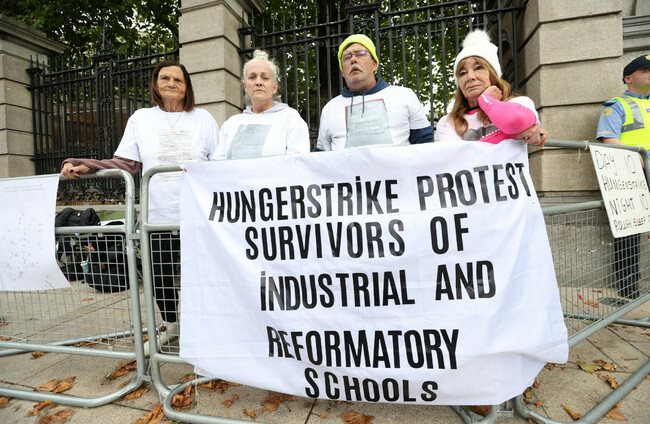
Mary Greene with Mary O'Dovonan (left) were among the survivors of industrial and reformatory schools who went on hunger strike last year RollingNews.ie

Taoiseach to make State apology to survivors of industrial school abuse

While some supports for survivors had been approved in 2023, these did not come with a formal apology.

THE GOVERNMENT HAS agreed to formally apologise to survivors of industrial and reformatory schools, after years of campaigning for proper State recognition of their suffering.

It comes after a 51-day hunger strike by survivors concluded in November once the Taoiseach and the then Minister for Education entered a mediation process.

The government today agreed on a package of additional supports, including better access to health, education, housing and funerals.

While supports for survivors were approved in 2023, these did not include HAA cards or pension-type payments.

Such payments are available to survivors of mother-and-baby homes and the Magdalene Laundries.

Micheál Martin has now also agreed to make a formal apology in the Dáil on behalf of the government.

In a statement, a spokesperson said he the Taoiseach will continue to consult with the Attorney General about the matter.

“The apology will build on the 1999 apology to victims of institutional abuse; take into consideration parts of the 2021 apology to survivors of mother and baby homes, and will address issues relating to criminal records,” the statement said.

“The date for the apology will be scheduled as soon as possible.”

Impact of abuse

Mary Donovan, a member of Survivors of Residential Institutional Abuse (SRIA), previously told The Journal that they asked for a pension as it would recognise the unpaid labour many of them did while in institutions or boarded out as children.

She also said many survivors have health issues and this money would give them the “opportunity to manage their own affairs in order to have a better quality of life before they die”.

Donovan spent her childhood in the Pembroke Alms House Industrial School in Tralee in Co Kerry. She is an intergenerational survivor – her mother Margaret Mary Finn spent years in several different institutions.

The RIRB was set up in 2002 to give compensation and support to people who, as children, were abused while resident in industrial schools, reformatories and other institutions. The State has paid around €1 billion to survivors through the scheme.

In addition, the State sought contributions from the relevant religious congregations following the publication of the Ryan Report which detailed widespread sexual and physical abuse in many institutions.

This €98 million collected from religious orders was given to around 6,000 survivors via Caranua.

Catherine Coffey O’Brien, who spent time in Bessborough in the 1980s, said survivors need better medical support as many of them have health issues.

“We have an awful lot of conditions, there’s PTSD, anxiety, cancer is rampant, and mental health is a very, very big deal,” she said.

Readers like you are keeping these stories free for everyone...
A mix of advertising and supporting contributions helps keep paywalls away from valuable information like this article. Over 5,000 readers like you have already stepped up and support us with a monthly payment or a once-off donation.

Close
JournalTv
News in 60 seconds