Sign in. It’s quick, free and it’s up to you.
An account is an optional way to support the work we do. Find out more.
Sign in. It’s quick, free and it’s up to you.
An account is an optional way to support the work we do. Find out more.
OVER THE PAST year, The Journal’s flagship podcast, The Explainer, has explored everything from Dublin’s new transport plan to Israel’s attacks on peacekeepers and the rise of AI slop.
The podcast’s mission is to break down one big news story each week, making complex topics easy to understand while focusing on the facts.
Many episodes this year focused on the range of protracted crises the world is facing, from war to natural disasters. We examined what was happening on the ground through the eyes of those working to ease the suffering caused.
We spoke to aid workers and civil protection experts across a series of episodes with the European Union’s Department for Civil Protection and Humanitarian Aid Operations.
Unlike organisations like Unicef or charities closer to home like Goal and Concern, EU Civil Protection and Humanitarian Aid doesn’t take a boots-on-the-ground approach, and instead partners with organisations like these to provide funding.
It also operates the EU Civil Protection Mechanism (UCPM), which was established in 2001. Covering all 27 EU member states, as well as 10 other countries, it pools resources in the event of a disaster.
Its nerve centre is the Emergency Response Coordination Centre (ERCC), which coordinates requests for help and voluntary contributions of assistance, meaning countries in need of urgent help have a single point of contact.
The War in Ukraine will soon enter its third year.
Some citizens have found refuge in other countries, but many are trying to eke out some kind of normal life.
This isn’t easy in a country where swathes of its healthcare infrastructure have been destroyed. Some people need urgent or specialised medical care that local services simply cannot provide.
As part of the EU’s overall response to the conflict, a mechanism was set up to allow these people to travel abroad for treatment.
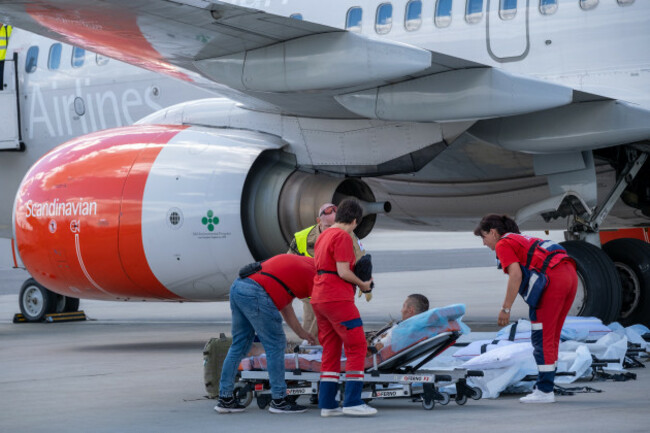
The ERCC coordinates the medical evacuations of these patients. First, they are transferred through Ukraine to what is known as the Medevac hub in the Polish city of Rzeszów, near the Ukrainian border.
A team of medical professionals are on hand there to provide initial treatment and psychosocial support while assessing patients before they are flown out to a hospital in another European country. Countries like Norway often help with this latter element due to their transport abilities. So far, more than 3,800 patients have been transferred to 22 countries for treatment.
“The majority of patients we have now are trauma patients, both soldiers and civilians injured in the war,” ERCC duty officer Eric Adrien told the podcast. “We also have quite a few cancer or chronic disease patients.”
“The war has really affected the entire healthcare system. No healthcare system is established to address the needs of a full-scale war.”
https://embed.acast.com/66f2a0897a3d63d20ff54509/66f2a08e2f380b4f2f176f98
During August 2023, Europe faced two climate-related emergencies: flooding in Slovenia, and wildfires in Cyprus.
This led to the first time the UCPM was activated twice in one day.
Slovenia received specialised equipment for clearing debris, evacuation transport, and temporary bridges, as EU coordination meant 11 countries provided assistance, including more than 300 personnel. Meanwhile, Cyprus received help from Greece, who flew two firefighting planes to the island to help bring the fires under control.
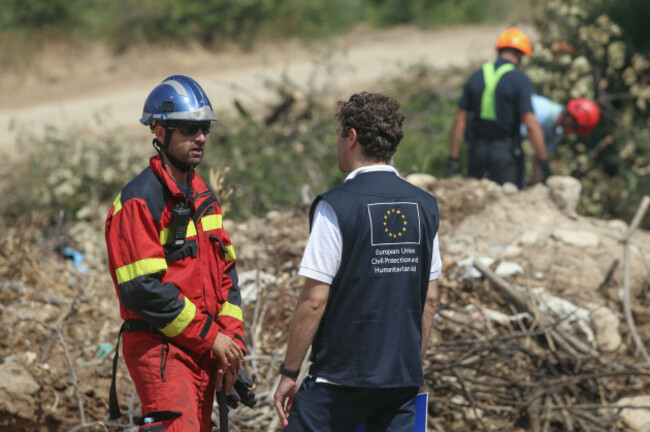
This is a clear example of how the ERCC can respond to an emergency, but there is also a proactive role here.
“We were in close contact with Slovenia for at least the two days leading up to that activation,” Johanne La, ERCC deputy team leader, said. “We were monitoring the situation.”
Esther El Haddad, analyst and duty officer with EU Civil Protection, explained how they use the wealth of analytical information at their disposal to help on the ground. This could be through providing mapping assistance, analysing weather forecasts.
The ERCC actively monitors the situation on the ground to provide the ‘big picture’ to rescuers. They can then prepare for what needs to be done next, or to be aware of how the situation might evolve.
https://embed.acast.com/66f2a0897a3d63d20ff54509/66f2a08e2f380b4f2f176f90
In Sudan, more than 700,000 children are severely and acutely malnourished as a result of disruption caused by the country’s ongoing civil war.
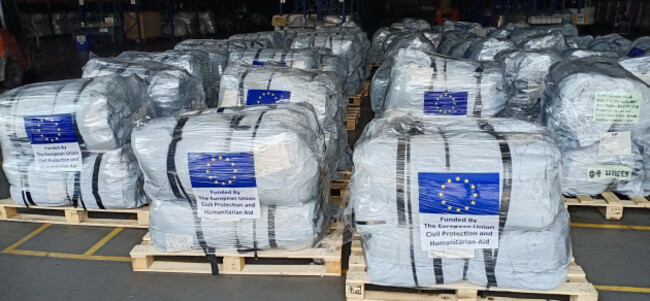
The EU’s Department for Civil Protection and Humanitarian Aid Operations works with the United Nations Children’s Fund (Unicef) to provide health, nutrition, and medical supplies to people in need.
“Sudan is one [of the conflicts] with the highest impact on human population to date,” Jean-Paul Jemmy Ghomsi, a health expert working with EU Humanitarian Aid, told the podcast.
“It is a bit forgotten. One thing that [people] that don’t realize is that in this conflict alone, 10 million people, more or less, are on the move. They need access to food, water, resources and access to care. This population is relying on external support and food and input and aid to survive.”
He spoke to the podcast about how health emergencies of this scale are tackled, and what EU-funded aid organisations can do to reach the most vulnerable.
https://embed.acast.com/66f2a0897a3d63d20ff54509/66f2a08e2f380b4f2f176f7e
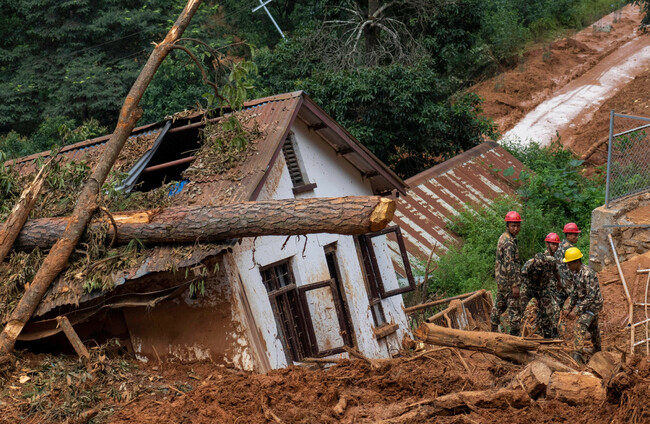
Nepal is prone to earthquakes — both devastating, like what was witnessed in 2015, and also much smaller tremors — and damaging landslides.
The Explainer spoke to experts about a project led by People in Need (PIN) with EU Humanitarian Aid funding.
It helps rural communities to protect themselves against these threats by providing education on the early signs of a landslide, developing early warning systems and creating response plans.
“What people talk about is the fear of noise that they can hear at night, like a cracking sound, which is generally an indication that an earthquake or potentially a landslide is happening,” Davide Zappa, a regional thematic expert on disaster preparedness with EU Humanitarian Aid, said.
“They talk about this creating stress. They talk about having difficulty sleeping. Mothers talk about the challenge of waving goodbye to their children in the morning, knowing that perhaps they cannot come back home because [the path to] their house perched on the hills might be destroyed or compromised by a landslide.”
Sanchita Neupane works in the field of disaster risk reduction with PIN, and told the podcast that her organisation works with local communities to spot the early signs of a landslide: such as tilting of trees, the sudden emergence and disappearance of water springs, noises coming from the ground.
“It’s about people being aware of their surroundings and helping the communities with the science of geo-hazard assessments, so that they become aware that these are [in] high-risk areas.
“Then, when there are changes in meteorological conditions, the community themselves can be alert of what is happening in the surrounding and they start reporting to the local government, and then can take evacuation decisions”
https://embed.acast.com/66f2a0897a3d63d20ff54509/670cf2c44973799246bda50c
This article was supported by the European Union’s Department for Civil Protection and Humanitarian Aid Operations.

To embed this post, copy the code below on your site











have your say