Sign in. It’s quick, free and it’s up to you.
An account is an optional way to support the work we do. Find out more.
Sign in. It’s quick, free and it’s up to you.
An account is an optional way to support the work we do. Find out more.
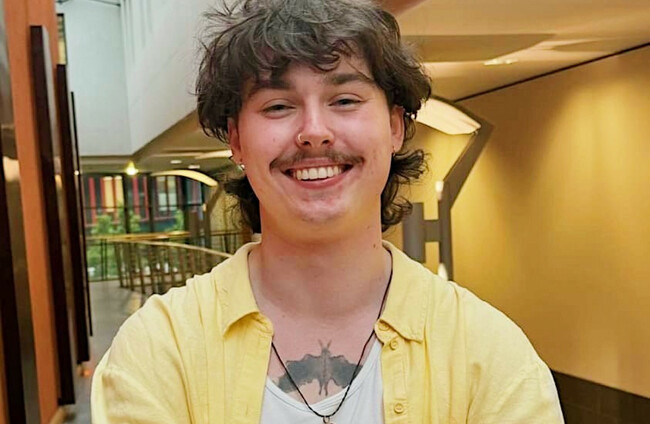
TATTOOS CAN BE more than decorative ink on a body, they can have therapeutic effects for cancer survivors, a researcher at Dublin City University says.
Adam Daly, a psychology researcher at Dublin City University is examining the practice of therapeutic tattooing for cancer survivors.
Daly said such tattoos can fulfill a “psychological purpose” as well as being an aesthetic choice.
Therapeutic tattoos can be medical or non-medical, decorative or reconstructive.
Medical tattoos are on skin that has scarring, or skin that is damaged. Decorative tattoos would create “something new” while reconstructive is recreating something that was lost or has been diminished.
One example of a reconstructive, non-medical tattoo would be the “battle brow”. After chemotherapy cancer survivors may have lost their eyebrows, and would get them tattooed on again.
Daly said some tattoos chosen by cancer survivors include a phoenix, a hummingbird coming out of a cannon, dragons on the chest, and a zipper over a scar on a survivor’s head. Each of those tattoos had varying levels of significance to the survivor.
Daly said therapeutic tattooing has the potential to help and to harm. It can aid cancer survivors to regain body confidence or to reinvent or reclaim their identities following the tattooing. But it can also harm the cancer survivor if the tattoo is not done properly on scarred skin.
Daly said it is “incredibly empowering” for cancer survivors to make the decision to get these tattoos, as during their cancer journey there are things happening to them that are outside of their control.
Daly said the human body is “always communicating something to ourselves and to others”.
“I think sometimes when our story and our body is changed, it can be really difficult to turn the page onto something new,” he said.
“Therapeutic tattoos give these cancer survivors the opportunity to decide what their story is, what that next page looks like.”
Cancer survivors also make decisions on whether therapeutic tattoos are publicly visible or not.
Daly said: “You might have a cancer ribbon on your hand, and you might want other people to see that and to know your cancer survivor, and to have that moment of connection and to share your experience with other people. You might find that really empowering.”
“In the same way, you might want to have that hidden, maybe on your chest or on your leg, and that might communicate to you that you’re strong.”
Daly was inspired to pursue this research after his mother and sister were diagnosed with cancer when he was younger, and by his love of tattoos. He recently published research interviewing tattoo artists and their experience tattooing cancer survivors.
“Tattoos are right there. They’re loud, they’re different, they’re conscious,” he said.
To embed this post, copy the code below on your site















have your say