Sign in. It’s quick, free and it’s up to you.
An account is an optional way to support the work we do. Find out more.
Sign in. It’s quick, free and it’s up to you.
An account is an optional way to support the work we do. Find out more.
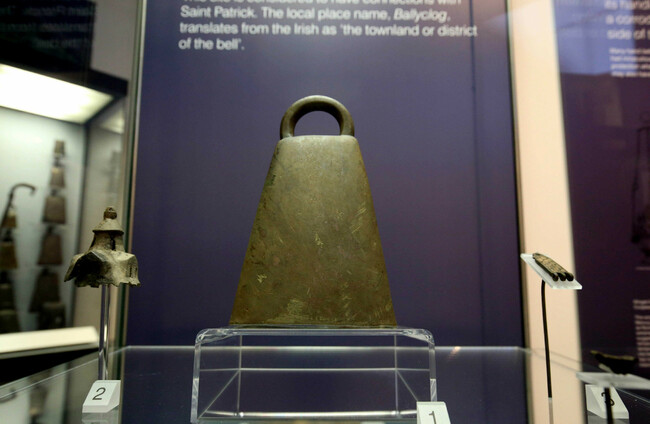
A THOUSAND-YEAR-OLD bronze handbell believed to have a link to Saint Patrick has gone on display in the Ulster Museum.
The bell dating back to the 9th or 10th Century was discovered in Co Tyrone in Ballyclog, which translates as townland of the bell.
Curators at the Ulster Museum believe that the find points to the existence of an early church site near Stewartstown.
Dr Greer Ramsey, Curator of Archaeology at National Museums Northern Ireland said that the bell was found along with other unique objects, including fragments of a shrine used to house the relics of a saint.
“Along with religious books and the hooked staff or crozier carried by a bishop, bells became potent symbols of the Christian faith and even feature on stone carvings from this period,” Dr Ramsey said.
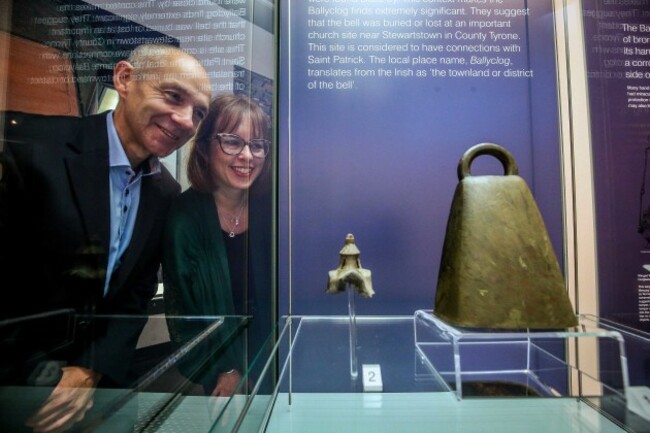
Bells played a large role in monastic life when a monk’s daily routine revolved around prayer and devotion. These set times were indicated by the ringing of a bell, according to Dr Ramsey.
However, the Ballyclog bell is now silent as the iron clapper which struck the side to make it ring has corroded.
Dr Ramsey explains that many handbells were believed to have connections to early saints so it was common for people to believe bells like this had miraculous powers.
“Offering protection when taken into battle; they could ward off evil, cure the sick and of course tolled for the dead at funerals.
“They may also have been rung as a warning in times of danger as during the Viking raids,” Dr Ramsey said.
The Ballyclog bell is on display in the Ulster Museum in the Saints and Scholars gallery.

To embed this post, copy the code below on your site














have your say