Sign in. It’s quick, free and it’s up to you.
An account is an optional way to support the work we do. Find out more.
Sign in. It’s quick, free and it’s up to you.
An account is an optional way to support the work we do. Find out more.
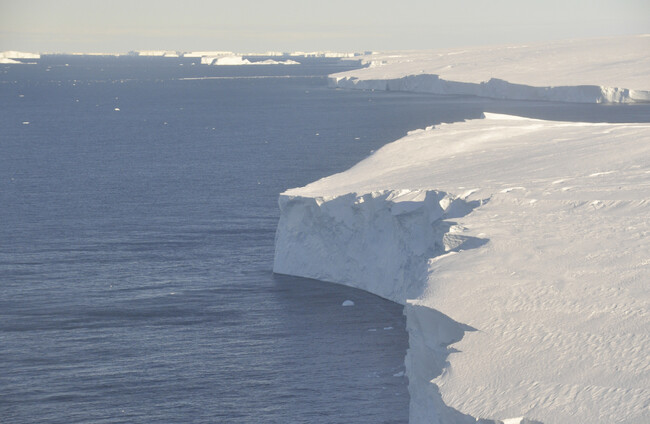
ONE OF THE biggest glaciers in Antarctica is retreating rapidly and facing the risk of collapse because of warming oceans, new research has found.
Thwaites glacier, which is larger than England, Wales and Northern Ireland combined, is undergoing major changes as warming waters melt its ice from all sides, including directly from beneath.
The glacier currently contributes 4% of annual global sea level rise. If it did collapse, global sea levels are forecast to rise by several feet, leaving millions of people who live in coastal areas at risk of extreme flooding.
The findings were announced at a press conference held by the International Thwaites Glacier Collaboration (ITCG) on Monday.
Glaciologist Professor Ted Scambos, who is US lead coordinator for the ITGC, said: “Thwaites is the widest glacier in the world. It’s doubled its outflow speed within the last 30 years, and the glacier in its entirety holds enough water to raise sea level by over two feet.
And it could lead to even more sea-level rise, up to 10 feet, if it draws the surrounding glaciers with it.
The international team of nearly 100 scientists are engaged in a five-year project to study the vulnerable glacier and the surrounding ocean.
The investigations have revealed major changes in the ice, the surrounding water, and the area where it floats off the bedrock below.
The team say the eastern shelf of the glacier is likely to be shorn from its ridge in the coming years, leaving it destabilised. Massive fractures have also formed in the glacier and are accelerating its demise.
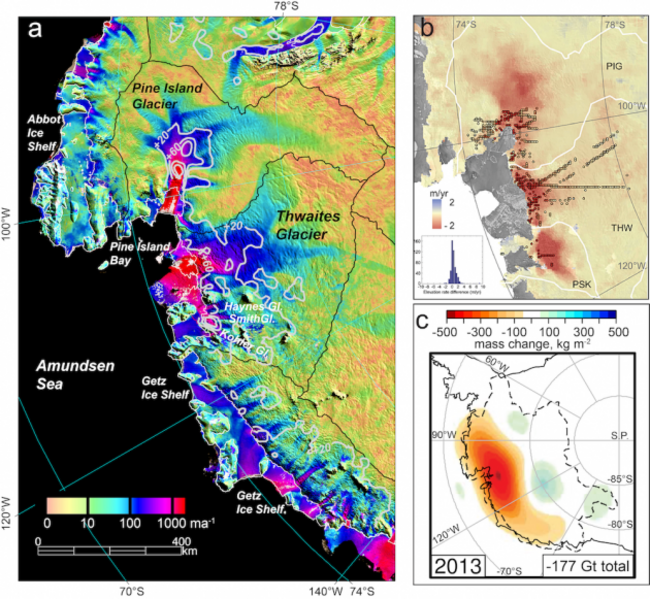
As Thwaites retreats, modelling predicts it may form very tall ice cliffs at the ocean front. These cliffs can then break off into the open ocean, resulting in the glacier rapidly decreasing in size.
“If Thwaites were to collapse, it would drag most of West Antarctica’s ice with it,” Professor Scambos said. “So it’s critical to get a clearer picture of how the glacier will behave over the next 100 years.”
In its latest monthly global climate report, the US National Oceanic and Atmospheric Administration (NOAA) announced this week that last month was the fourth-warmest November in 142 years of climate records.
The Northern Hemisphere also experienced its warmest land temperatures on record for meteorological autumn.

To embed this post, copy the code below on your site













have your say