We need your help now

Support from readers like you keeps The Journal open.

You are visiting us because we have something you value. Independent, unbiased news that tells the truth. Advertising revenue goes some way to support our mission, but this year it has not been enough.

If you've seen value in our reporting, please contribute what you can, so we can continue to produce accurate and meaningful journalism. For everyone who needs it.


Child in Tusla care reported missing 274 times in a single year

Records obtained by The Journal Investigates reveal how there have been almost 7,000 recorded incidents of children going missing from State-run care homes in the last five years.

A CHILD LIVING in State care was reported missing 274 times in just one year, new figures obtained by The Journal Investigates reveal.

The data, released by Tusla under the Freedom of Information Act (FOI), shows a pattern of repeated disappearances from Ireland’s State-run residential centres, with some young people going missing dozens of times every year.

Internal records reveal that children in Tusla-run homes were reported missing on nearly 7,000 occasions from January 2020 to September 2025.

In 2022 alone, 69 children accounted for 1,523 separate “missing from care” incidents, including one young person who vanished 274 times.

In 2023, another child disappeared 102 times, while last year, one child was reported as missing 197 times.

Tusla confirmed that 2025 has already seen 866 incidents of children being reported missing up to mid-September, involving 61 individual children. One of those children was reported missing on 110 separate occasions during that time.

In a statement to The Journal Investigates, a Tusla spokesperson said most missing reports do not indicate that a child has vanished for an extended period, but reflect brief absences recorded under a strict reporting protocol agreed with gardaí.

The figures come in the wake of a series of serious incidents involving children known to Tusla, including the alleged sexual assault of a 10-year-old child who had gone missing from a State care facility hours prior to the alleged attack.

Screenshot 2025-11-13 at 10.40.08 Almost 8,000 missing reports were made to gardaí in the last five years concerning children housed in State-run care homes. Rollinnews.ie Rollinnews.ie

Investigations like this don’t happen without your support… Impactful investigative reporting is powered by people like you.

Repeated disappearances 

The FOI data relates specifically to Tusla-operated residential centres – including general, high-support and special care units – where children are placed when other forms of care are considered unsuitable or unsafe.

The agency said “missing from care” refers to any case where a child’s whereabouts are unknown for 15 minutes or longer and where there are concerns for their safety, though most are located within 24 hours.

Over the past six years, between 56 and 82 individual children have gone missing from these homes annually, with many disappearing multiple times.

In 2024 alone, 19 young people were reported missing more than 10 times, while others were recorded as missing on two to five occasions.

Tusla’s figures also show that the highest number of missing reports for an individual child remained in the hundreds every year between 2020 and 2025.

Between 2020 and 2025, the number of annual “missing from care” reports has ranged from 1,048 to 1,523, totalling 6,972 reports.

Tanya Ward, chief executive of the Children’s Rights Alliance, said the issue is “very complex” and requires deeper analysis.

“When Tusla is in that corporate parental role, they don’t have the same ability to restrict movements that a parent might have,” she told The Journal Investigates.

“Tusla is not allowed to use locks on doors and HIQA [Health Information and Quality Authority] has picked them up on that, in terms of safeguarding and children’s rights.

“It’s something that does need to be looked at, and also looking at why children go missing. What research has been commissioned to understand why that is?”

Exploitation fears

Ward said that while some incidents may involve minor absences, others carry serious risks.

“Where there is concern is where children go missing, and they are exploited or harmed by other adults in that period,” she said.

“That can happen very quickly, in one night, or over a longer period. Tusla obviously notifies the gardaí, but Tusla doesn’t really have much power to do much more than that.”

A spokesperson for the Child and Family agency said it has a joint protocol with An Garda Síochána in place to respond when a child goes missing.

“Under the protocol, An Garda Síochána are notified once a young person is deemed missing and after Tusla and the young person’s carers have made all reasonable efforts to locate them,” they said.

“Once a young person has been reported missing, An Garda Síochána have primary responsibility for investigating the young person’s whereabouts.

“Throughout the investigation, the young person’s social worker and carers continue to make enquiries and all information is passed on to gardaí.”

Tusla also said “most” young people reported as missing return to their placement after a “brief” period of time and “remain in a safe and caring environment”.

Others who do not return as quickly “remain in contact” so Tusla is aware of their whereabouts, they said.

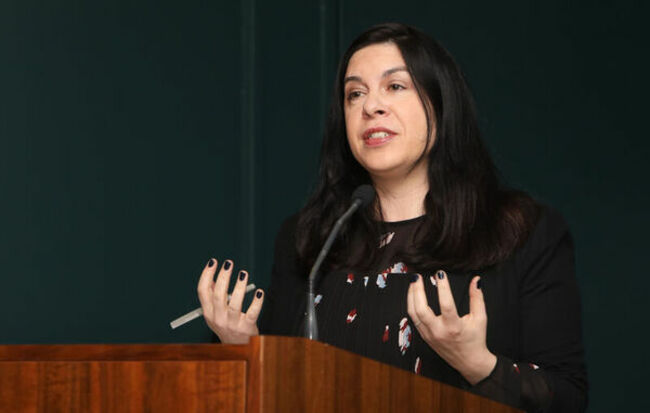
0984 Rights for Children_90528749 Tanya Ward of the Children’s Rights Alliance said more needs to be done to find out why children in State care are going missing. Rollingnew.ie Rollingnew.ie

Therapeutic approach needed in State care

Caroline Strong, chief operations officer with the Irish Association of Social Workers (IASW), said while the care system has robust processes for missing children, the figures reflect wider pressures across the system.

The rapid expansion of Tusla’s service, she said, has created challenges in maintaining consistency and training across some residential homes.

“Some homes are running really, really well with well-trained staff, but because of the volume of children coming into care, others just don’t have the same level of expertise.”

What is missing, Strong said, is therapeutic services that can really have an impact on a child’s time in care, and prevent those at risk from absconding or running away.

“It’s a given that every child that goes into care has trauma, because they’re going into care,” she said.

Even if their parents are still involved, there’s a rupture there, and they are struggling with trauma.

She said the IASW has long called for mandatory therapeutic assessments for all children entering care, noting that only those in crisis often receive specialist attention.

“Unless they’re in a very significant level of distress and probably headed for special care, they may not access an assessment team,” she said.

“That’s the piece that’s missing, understanding why they’re running away or putting themselves at risk.”

Calls for a national strategy

Strong also explained the complexities surrounding a child in the care of the State.

“Every child that’s in care has what’s called an absence management plan,” she said.

“That plan is drawn up by anyone involved with the child – their parents, if they’re still engaged, the children’s care home, social workers, and guardians ad litem [an independent person who represents a child's best interests in court care proceedings]. The level of risk if they go missing is agreed in that plan.”

For some young people, there is limited flexibility around curfews, Strong said.

“Say, for example, you have a 16-year-old who’s fairly well adapted. They might have some free time from their children’s home, which is right and proper and age-appropriate,” she said.

“If they’re due back at eight o’clock and haven’t returned by half eight, they’re reported missing to Gardaí. For younger children or those at significant risk, there’s zero leeway – the minute they’re missing, they’re missing.”

Strong said the process is at a “much lower level of tolerance than your normal teenager”, however, it is deliberately cautious for those children deemed at higher risk.

“Parents in normal housing estates don’t call the guards when their child comes home late,” she said.

“But a child going missing from care 274 times potentially means that child is putting themselves at very high risk, so every absence triggers an immediate report.”

The social worker welcomed the Department of Health’s ongoing review of Ireland’s alternative care strategy, saying it offers an opportunity to strengthen support systems and introduce a more uniform therapeutic model across the country.

She added: “The Department is actively seeking submissions from professionals and different bodies to ask, what do we want for children going into care?”

“So there is some movement, which is really good, but I suppose that therapeutic piece that’s been called for, it’s not happening fast enough.”

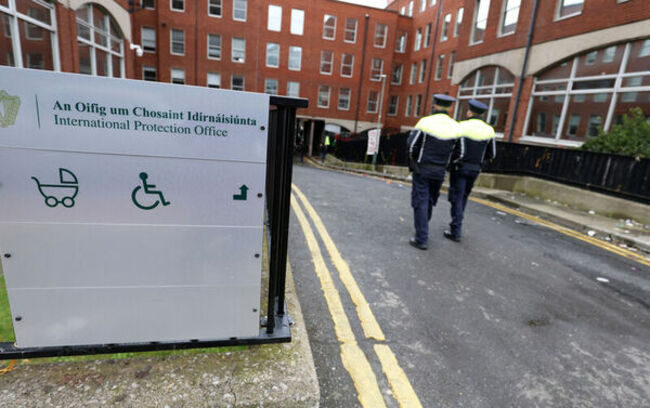
698Refugee Tents_90701259 The International Protection Offices in Dublin, which deals with cases of separated children arriving in Ireland who are put into the care of the State. Rollingnews.ie Rollingnews.ie

Some missing children never found

Separate FOI records provided to The Journal Investigates also show that a number of children who went missing from care have never been found.

In 2023, 52 children were reported missing from State care, with 16 still listed by the child and family agency as “unaccounted for”.

A further 46 children were listed as missing in 2024, with 21 of them eventually reaching the age of 18 without being located.

Tusla told The Journal Investigates that most of these recorded cases involve separated children who have arrived in Ireland seeking international protection, and who are “predominantly 16 to 17-year-old males”.

“Some communicate their intention to travel to the UK or other EU countries to join family members, and indicate it was never their intention to stay in Ireland,” Tusla said.

A previous investigation by Noteworthy uncovered how 62 asylum seeking children have disappeared from Irish State-care  after arriving alone in Ireland.

Tanya Ward said that prevention and relationships are key to protecting vulnerable children.

“When you deal with missing children, the strategy has to be about prevention,” she said.

“It looks like a social worker that can build a good relationship quickly with a child, safe accommodation, and carers that build trust.

Children in the care system are always very vulnerable to sexual exploitation – these guys will target them.

Ward added that the State needs a more sophisticated response to high-risk cases.

“There’s no doubt there’s a need to look at what that kind of support should be,” she said.

“We don’t have a national response to how we protect children from criminal gangs or people who want to exploit them.

“We need a more sophisticated response to some of those threats that Tusla is trying to manage.”

The Journal Investigates

Reporter: Patricia Devlin • Editor: Noel Baker  • Social Media: Cliodhna Travers • Main Image Design: Lorcan O’Reilly

Investigations like this don’t happen without your support...
Impactful investigative reporting is powered by people like you. Over 5,000 readers have already supported our mission with a monthly or one-off payment. Join them here:

Close
JournalTv
News in 60 seconds