Take part in our latest brand partnership survey

We need your help now

Support from readers like you keeps The Journal open.

You are visiting us because we have something you value. Independent, unbiased news that tells the truth. Advertising revenue goes some way to support our mission, but this year it has not been enough.

If you've seen value in our reporting, please contribute what you can, so we can continue to produce accurate and meaningful journalism. For everyone who needs it.

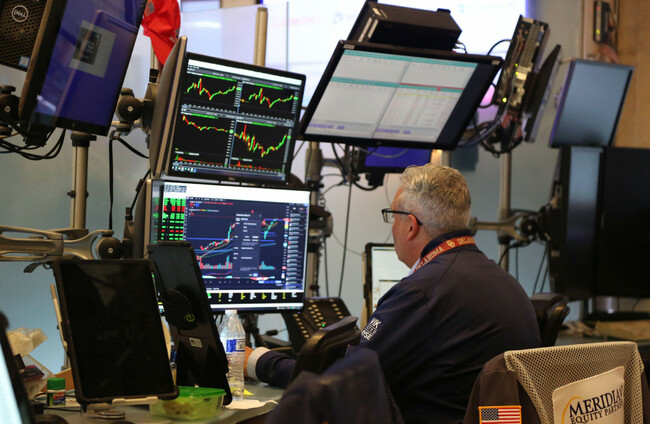
Companies in New York are delayings investments and consumers are putting off major purchases. Alamy, file

US inflation and unemployment rates may increase under tariffs, says New York banks regulator

The President of the New York Federal Reserve has warned that American inflation rates could increase to 4%.

ECONOMIC GROWTH, EMPLOYMENT and falling inflation rates in the US are all at risk under tariffs issued by President Donald Trump, according to the latest analysis from New York’s top financial regulator.

President of the New York Federal Reserve John Williams has warned that American inflation rates could increase to 4%, unemployment rates may rise and growth in the economy may slow under increases tariffs imposed on other nations by the US.

Trump has moved to pause the vast majority of tariff measures placed on a large number of countries this week, but a trade war with China – the US’ largest trading partner and competitor – has deepend.

Government leaders and ministers in Ireland have repeated the claim that uncertainty in the economy is leading to multinational companies and people putting off major financial decisions until a clearer picture of the future of global markets prevail.

Williams today said that very similar discussions are taking place in New York, where he acts as the chief regulator to some of the world’s largest financial institutions, as companies delay investments and consumers put off major purchases.

file-in-this-oct-30-2015-file-photo-john-williams-president-of-the-federal-reserve-bank-of-san-francisco-is-interviewed-by-the-associated-press-in-washington-williams-was-officially-announced-o President of the New York 'Fed' John Williams said US tariffs and trade policy is the top reason for uncertainty. Alamy, file Alamy, file

He said, in his speech titled ‘Uncertain Times’, that while uncertainty can arise from a “multitude” of reasons, tariffs and trade policy is at “the top of the list”. While the US economy started in a strong position this year, the future it is unknown, he said.

Williams estimated that American GDP growth could fall to 1% this year, adding that “when households and businesses cut back on spending, economic growth slows”.

He said that it is “hard to know with any precision” how the economy will evolve, but expects unemployment rates to increase from 4.2% to between 4.5% to 5% this year.

Williams added that businesses – particularly manufacturing companies and firms that rely on imported products – should expect increases in costs in the coming months.

While global regulators sought to reduce record-high inflation rates to 2%, following the Covid-19 pandemic and Russian invasion of Ukraine in 2022, Williams believes that progress towards that goal in the US may begin to flatline.

Consumer inflation could “boost” to 3.5 to 4% this year, he said.

Readers like you are keeping these stories free for everyone...
A mix of advertising and supporting contributions helps keep paywalls away from valuable information like this article. Over 5,000 readers like you have already stepped up and support us with a monthly payment or a once-off donation.

Close
49 Comments
This is YOUR comments community. Stay civil, stay constructive, stay on topic. Please familiarise yourself with our comments policy here before taking part.
Leave a Comment
    Submit a report
    Please help us understand how this comment violates our community guidelines.
    Thank you for the feedback
    Your feedback has been sent to our team for review.

    Leave a commentcancel

     
    JournalTv
    News in 60 seconds