We need your help now

Support from readers like you keeps The Journal open.

You are visiting us because we have something you value. Independent, unbiased news that tells the truth. Advertising revenue goes some way to support our mission, but this year it has not been enough.

If you've seen value in our reporting, please contribute what you can, so we can continue to produce accurate and meaningful journalism. For everyone who needs it.

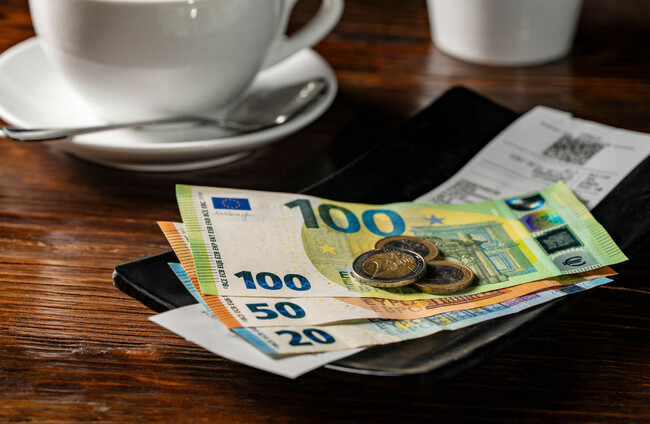
Restaurants wanted a tax break and got one. Alamy Stock Photo

Big chains are the winners from the poor targeting of Ireland’s hospitality VAT rate cut

With insolvencies declining, is a €681 million VAT cut really the best way to support hospitality?

IRELAND’S HOSPITALITY VAT rate cut kicked in this week, with no shortage of spicy controversy.

The move is set to cost the state €681 million in foregone tax revenue per year by lowering the rate businesses in the sector charge from 13.5% to 9%.

It is an enormous amount of money. And it comes at a time when economists are pleading with the government to keep the tax base as broad as possible.

The aim is to wean ourselves off our reliance on massive corporate tax receipts from about 10 big US companies. The VAT cut goes directly against those efforts, and could prove to be giving up a badly-needed source of funds if anything was to happen to our multinational golden goose

Proponents say the VAT cut is needed to help struggling small companies. Critics say the evidence is muddy, and it is poorly targeted.

Let’s have a look.

Before we jump in, it’s always helpful to give a brief reminder on how VAT works.

VAT (value added tax) is a charge levied on essentially all goods sold in the country. The normal rate is 23%.

If you buy something costing €1.23 that is subject to the 23% VAT rate, 23 cents goes to the State as VAT and €1 goes to the business.

Companies in the food sector already had a lower rate of 13.5%. This will now drop to 9%. The measure also applies to hairdressers.

It has been designed as a way to essentially give extra money to businesses. A small number of food companies have said they will use the lower VAT rate to lower their prices.

However, the vast majority intend to pocket the 4.5% difference.

Since the measure was essentially confirmed about a year ago, various media outlets have wondered whether the VAT cut would be passed onto the consumer in the form of reduced prices.

This was never the intent. The Restaurants Association of Ireland (RAI), which ran an extraordinarily effective lobbying campaign for the move, has explicitly said this multiple times.

Government ministers have also said the same for the last year or so. And Tánaiste and finance minister Simon Harris outlined the point yet again during the week, stating: “The primary purpose of this measure is to reduce the cost for business.” Pretty clear.

The question then, is do hospitality businesses need a tax break?

The argument for cutting VAT

The main argument in favour comes from industry bodies, who say that rising costs risk pushing restaurants out of business.

In the run-up to Budget 2026’s publication last October, the RAI warned that over 300 businesses in the food services sector closed in the first seven months of 2025.

It warned that ‘unsustainable costs’, such as minimum wage increases and mandatory pension contributions, would cause “mass closures” across the sector.

That was one key argument in favour. The other was around how employment in the sector had dropped. Peter Burke, the Tourism Minister, said in October 2025 that there had been a 4.2% fall in the number of people working in the sector over the previous quarter.

These were the two main points of evidence used to justify the VAT cut. How do they stack up?

What the data actually shows

Regarding restaurants going under, here at The Journal we previously pointed out that the RAI did not track the number of new restaurant openings alongside closures.

This meant that while hundreds of businesses in the sector may shut each year, hundreds more may take their place. After all, hospitality is a famously competitive sector. About 60% of new restaurants close within their first year of operation.

On top of that, multiple figures published during the week show that the number of hospitality insolvencies – essentially, companies running out of money – has dropped.

Deloitte reported that the number of hospitality insolvencies is down 14% compared to this time last year. Meanwhile, PwC reported that insolvencies in the sector have dropped by 26%.

Both stats point to the fact that businesses in the sector do not seem to be struggling as much as interest groups have indicated.

The government’s reaction to the figures is also notable. Last year when arguing in favour of the VAT cut, Minister Burke directly cited the rise in insolvencies as a reason for introducing the measure.

When journalists questioned the government about the drop this year, Simon Harris largely dismissed it and said the VAT cut is needed to provide support before “it’s too late for intervention”.
But what about the other argument – that employment in the industry is down?

There the figures do say something different.

In May, the RAI pointed to a 20,000 drop in the number of people employed in the sector.

It warned that this is due to rising labour and operating costs, and said that many operators are reducing trading hours or closing altogether on slow days.

Their claim is backed up by data from the CSO (Central Statistics Office) covering ‘Accommodation and food service activities’, which is often used to measure the hospitality sector.

As of the first quarter of 2026, some 169,600 people were employed in this area. This was down from 186,500 during the same period in 2025. It is worth noting that hospitality employment tends to rise during the summer months, so it may be better to wait for second and third quarter figures for 2026 to get a more accurate picture.

Taken together, the evidence for the VAT cut appears mixed. While some restaurants may be reducing staff hours, there is little evidence of ‘mass closures’ beyond what is normal in the industry. It remains hard to justify foregoing almost €700 million in tax revenue on the back of this – a point which multiple economists have argued.

The €681 million question

The employment stats indicate that smaller, less profitable businesses could be genuinely struggling. However, many commentators have pointed out that a VAT cut is not a smart way to help them.

The reason is that big companies will disproportionately benefit. While the VAT cut is the same for everyone, businesses with the largest sales receive the largest euro gain. The likes of McDonald’s and Supermac’s were already making tens of millions of euros in profit per year even before the rate was reduced.

They will now be the biggest beneficiaries of the reduction. The likes of the Department of Finance have pointed this out, saying that the measure is poorly targeted and will come with a “significant amount of deadweight”. Meaning, lots of money will go to businesses who don’t need the help.

This same point has actually cropped up in the UK. Hospitality groups in Northern Ireland have said they need a tax cut to compete with their neighbours across the border. They’re pushing for a bigger reduction, from 20% to 10%.

But critics have again said that the move would favour multinationals. For example, a think tank estimated that McDonald’s would retain an extra £432 million (€504 million) from the move.

It goes back to the key worry around the VAT cut – that it is just too broad. Instead of cutting the rate for the entire sector, many have argued for supports to be targeted at smaller companies. For example, by giving tax rebates to businesses under certain turnover or profitability thresholds.

But while that could be a way to better ensure that the money is going where it is needed, it is one the government seems to have little interest in. The VAT cut seems here to stay, with large chains and multinationals emerging as big winners.

Readers like you are keeping these stories free for everyone...
A mix of advertising and supporting contributions helps keep paywalls away from valuable information like this article. Over 5,000 readers like you have already stepped up and support us with a monthly payment or a once-off donation.

Close
24 Comments
This is YOUR comments community. Stay civil, stay constructive, stay on topic. Please familiarise yourself with our comments policy here before taking part.
Leave a Comment
    Submit a report
    Please help us understand how this comment violates our community guidelines.
    Thank you for the feedback
    Your feedback has been sent to our team for review.

    Leave a commentcancel

     
    JournalTv
    News in 60 seconds