Sign in. It’s quick, free and it’s up to you.
An account is an optional way to support the work we do. Find out more.
Sign in. It’s quick, free and it’s up to you.
An account is an optional way to support the work we do. Find out more.
WHAT FORECASTERS ARE describing as a ‘cool anomaly’ in the North Atlantic played a significant role in creating our cool, unsettled summer.
And according to Met Éireann’s head of forecasting, Gerald Fleming, it may not be going away anytime soon either.
So what is a cool anomaly?
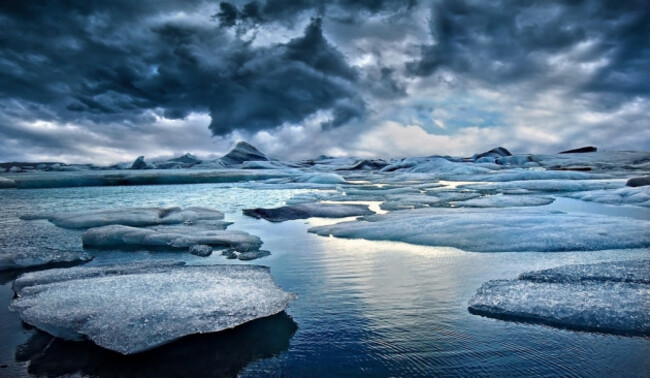
Speaking to TheJournal.ie this week, Fleming explained that the anomaly was essentially “a pool of cooler than average water on the surface of the Atlantic”.
It’s been in a large area south of Greenland and Iceland for ”a year now or more”.
“This is an area where a lot of our weather is generated from,” he explained
“The winds that blow over that part of the water, you would expect that they would have some influence on our weather.”
So what’s it been doing to our weather?
“I felt myself with that cool anomaly that we were unlikely to get a very good summer,” Fleming said.
“As it happens we didn’t get a very good summer – whether that was just luck or good forecasting on my part is a matter of conjecture.”

Will it be going away anytime soon?
“It has been sampled by some research ships and is reasonably deep so it will eventually move away or warm up or whatever but that will happen only slowly,” Fleming explained.
Whether it will be gone be summer 2016 it’s “a bit too early to say,” he said, adding:
“Certainly while it’s there I would not be optimistic for a warm summer.
“Having said that, we had two reasonably good summers back-to-back. Two a decade is about what we get, so you wouldn’t want to raise your hopes too much in any case.”
Asked how he would describe the influence of the cool anomaly, he said it “probably has been significant”.
Where did it come from?
Melting Arctic ice, as you may have imagined, is a factor here – as Fleming explains:
“There’s the question on how much of this has developed as a result of the melting Arctic ice.
“We know that the Arctic – around about this time of year now – reaches its minimum ice cover for the year, generally mid-to-late September, and then the ice starts building back up again for the winter.
“But year-on-year almost for the last decade, the amount of ice that’s been measured at this minimum has been less and less.”
Asked whether the recent trends indicated the cool anomaly could be a factor again next year, Fleming said:
“It’s certainly a worthwhile conjecture, let’s put it that way.”
At least someone will be happy…

To embed this post, copy the code below on your site















have your say