Sign in. It’s quick, free and it’s up to you.
An account is an optional way to support the work we do. Find out more.
Sign in. It’s quick, free and it’s up to you.
An account is an optional way to support the work we do. Find out more.
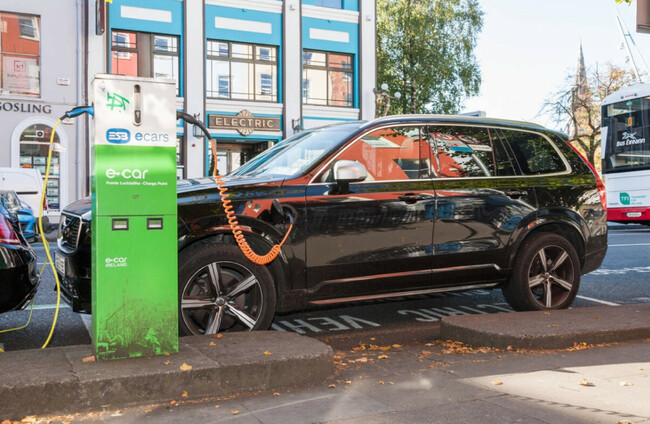
A WEIGHT-BASED TAX could be on the cards for SUVs and large cars according to briefings for the government ahead of the Budget.
The Tax Strategy Group, an expert advisory panel at the Department of Finance, has said that a new levy would be a way of offsetting the losses from the existing tax bases due to people switching to electric vehicles.
It has previously been reported that the electrification of the fleet is costing €1.5 billion per year in lost motor tax, VAT, and petrol and diesel excise receipts.
In its annual reports ahead of Budget 2026, which is expected to be announced in October, the tax experts said that as the
composition of the vehicle fleet in Ireland changes and the Irish transport network electrifies, “existing tax bases will be eroded” and a way to plug the hole needs to be found.
The tax group cited data from the International Council on Clean Transportation which said the average weight of passenger vehicles in Ireland increased by approximately 28% between 2001 and 2022.
It said this weight upsurge was “concerning for several reasons” as the heavier vehicles require greater energy and resource
consumption and because there there are claims that a heavier vehicle fleet “creates further challenges in terms of traffic congestion, road infrastructure degradation, air pollution, road space and road safety”.
“The growth in EV sales will inevitably see a reduction in motor tax, fuel excise and VRT receipts in the years ahead,” the officials siad.
“To maintain Exchequer receipts, tax structures must be amended over time in line with the changing vehicle composition.”
It also explored similar schemes in other EU member states such as France, which has introduced the scheme as an additional charge, on top of motor tax, with a cap of €50,000 and an exemption for EVs.
France has introduced weight-based taxes for every petrol or diesel car that went over the permitted 1,800 kilogram allowance. This works out to €10 for every additional kilogram.
According to the Tax Strategy Group, there is “scope to replicate” the French tax, as it is designed to be “minimally distortive while also incorporating desired” environmental objectives.

To embed this post, copy the code below on your site












have your say