We need your help now

Support from readers like you keeps The Journal open.

You are visiting us because we have something you value. Independent, unbiased news that tells the truth. Advertising revenue goes some way to support our mission, but this year it has not been enough.

If you've seen value in our reporting, please contribute what you can, so we can continue to produce accurate and meaningful journalism. For everyone who needs it.

How Catherine Connolly was able to beat the establishment and storm the presidency

A huge win but how did the Galway independent do it.

PastedImage-6001 Catherine Connolly will be inaugurated as president on 11 November. Instagram Instagram

CATHERINE CONNOLLY HAS been elected as the 10th president of Ireland

It is a stunning win for the Independent candidate who amassed 914,143 first-preference votes and now enters the Áras with a huge mandate. 

Connolly’s victory came after disorderly contest during which Fine Gael were forced to change its candidate at a late stage and Fianna Fáil lost theirs altogether. 

Amid the tumult, Connolly maintained her composure and slowly – and then very quickly – built towards today’s victory. 

So how did she achieve it? 

Irish people know what they want in a president

The presidency and what people want from it has changed in the post-Mary Robinson era. One poll during the campaign showed that what people want most from a president is someone that will “play an active role and speak on issues”. 

On that question, Connolly was far more convincing than her opponent who struggled to articulate when she has spoken out for people or against her party’s line. 

The Irish presidency has taken on the role of being a kind of conscience of the nation. For someone to occupy that role, people at least need to know what a president’s values are and Connolly was clearer in articulating hers.

Connolly nailed the campaign

Connolly’s campaign built momentum in the weeks leading up the vote that created an aura of inevitability that became irresistible to the undecideds. 

Connolly was the first candidate on the pitch in July and gave lie to the argument that getting in the race too soon leaves a candidate open to fizzling out or becoming bogged down in controversy. 

Connolly had no shortage of controversies in the traditional sense but they were addressed so frequently and so early in the campaign as to become almost priced in. 

She was so unflappable in her responses to the controversies that she came to use each of them as an example of her values. 

Journalists may have gotten frustrated with a lack of straight answers from Connolly but she was clear that her answers were there to be judged by the people and not the media. 

It was a gamble that paid off. 

All the while, Connolly was picking up the backing of the Social Democrats, Labour, various independents and ultimately Sinn Féin. The rolling nature of the endorsements created a momentum that was also spilling over into support on the ground. 

Fine Gael ran a general election campaign with a fill-in candidate

There is some mitigation for Fine Gael’s loss in that Humphreys was not supposed to be their candidate. But for Mairead McGuinness’ unfortunate withdrawal for health reasons, she would have remained in retirement. 

Be that as it may, the party panicked after McGuinness’s withdrawal and looked to Humphreys, someone who Tánaiste Simon Harris described on the eve of the vote as “a safe pair of hands”

Humphreys may have been the go-to for a whole host of ministries during her 10 years at the Cabinet table but picking someone to do a job in government is different than picking someone to compete for the presidency. 

The fatal mistake the party made in its strategising was not understanding that difference. 

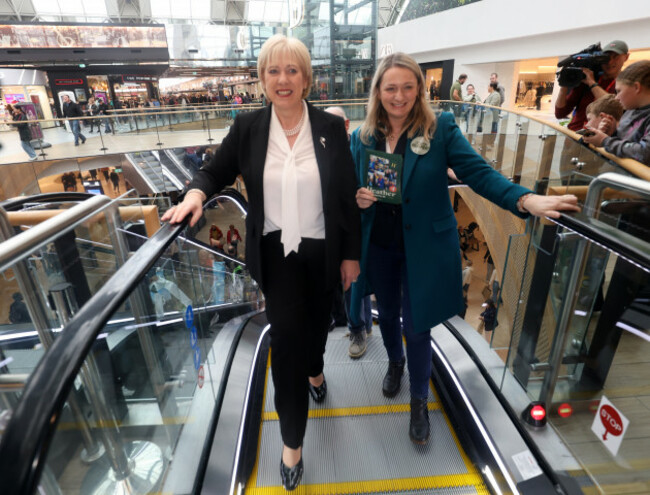
049Heather Humphreys campHeather Humphreys Blanchardstown_90736357 Heather Humphreys (L) canvassing at Blanchardstown Centre in Dublin. Leah Farrell / RollingNews.ie Leah Farrell / RollingNews.ie / RollingNews.ie

There was an effort at the start of the campaign to position Humphreys, or Heather as per their branding, as a kind of mother or grandmother of the nation. 

That was the primary message, with the secondary one being about competency and experience. 

As the campaign wore on and Connolly became the frontrunner, Fine Gael defaulted to the general election messaging of being pro-business and anti-Sinn Féin. 

Instead of using the term Sinn Féin, Humphreys used “far-left” as a catch all. 

The tactic may work to galvanise your base in a general election but it doesn’t build the coalition of voters needed to win a two-horse presidential race. 

It doesn’t help either that a general election campaign wasn’t matched with a general election giveaway budget.

Humphreys didn’t help herself either, being unable to create any distance between her own views and those of the Fine Gael governments of which she was a part. 

Fianna Fáil-shambles

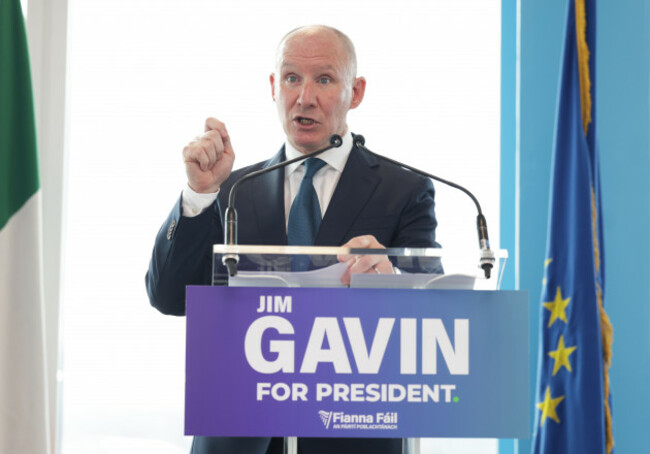
JIM GAVIN LAUNCH 7156_90734995 Rollingnnews.ie Rollingnnews.ie

There is little new to say about Fianna Fáil’s Jim Gavin fiasco but it obviously had a major influence on the result. 

Even though Connolly was leading by nine points before Gavin dropped out of the race, Humphreys was in with a strong chance in a three-horse race owing to the potential to benefit from Gavin transfers in a closer-run contest. 

When Gavin dropped out, that liferaft evaporated and the person who was already leading the race benefited more from his erstwhile votes. 

If Gavin had stayed in of the race we may have had a closer contest but based on the scale of Connolly’s win it probably wouldn’t have been the saviour for Humphreys. 

When he withdrew from the contest Gavin was already leaking votes and his transfer share may not have been enough to bridge the gap.

The Fianna Fáil imponderable is what would have happened with a candidate more suited to the white heat of a presidential race. That question is the one that will continue to fester in the party for a while to come

The united left remained united

PastedImage-3179 An image shared by Ivana Bacik online last week. X X

The impetus for the left parties to come together and support a joint candidate came primarily from Labour leader Ivana Bacik. 

Earlier this year, Bacik wrote to leaders of the Social Democrats and the Green Party suggesting they should unite under one candidate.

At the time, Sinn Féin leader Mary Lou McDonald said she was open to the idea but over the summer teased the idea of running herself.  In the end, Sinn Féin came on board five weeks to polling day after promising a “game-changing” decision. 

Eyes were rolled at the latter pronouncement but it was clearly a significant moment in the campaign. It added to the momentum the Connolly campaign was already building and super-charged Connolly’s social media reach

More fundamentally, the three parties along with the Greens and People Before Profit all sung from the same hymn sheet throughout the campaign presented a cohesive choice for the people. 

Even when contentious histories around Paul Murphy and former Labour leader Joan Burton were raised during the course of the campaign there were no distractions from the message. 

Yes, there were some dissenting voices from the likes of Labour’s Alan Kelly and some former Green Party TDs, but they were almost viewed as being voices from the past rather than the present or future.  

Smear the bejaysus 

Since he was a candidate himself, Ivan Yates has never been as central to an election campaign as this one

The former Fine Gael minister-turned-bookmaker-turned-pundit made headlines when he told Newstalk’s Calling It podcast that Fine Gael’s only chance to catch Connolly was to “smear the bejaysus” out of her

His comments did seem to go beyond his usual commentary and were seized on by the Connolly side, both elected politicians on her and supporters online.

Yates defended himself and seemed annoyed that Connolly’s side was suggesting that he was somehow advising his former colleagues. 

The reason the comments were so devastating though was because Fine Gael had already ramped up the negative campaigning when he made them and their efforts were somewhat neutered thereafter.

Connolly genuinely did build a movement

Eyes generally roll when a candidate refers to their political campaign as a movement.

In this case, the moniker is justified as Connolly managed to build a diverse coalition that extended beyond the combined support of the parties supporting her. 

Connolly’s command of the Irish language, which she emphasised was learned in adulthood, allowed her to connect to not only Irish speakers but also to the growing number of young people with a grá for the language. 

It also allowed her to connect to Irish culture more generally.  

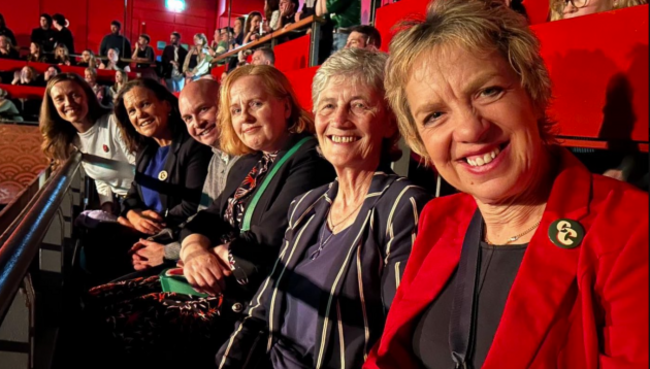
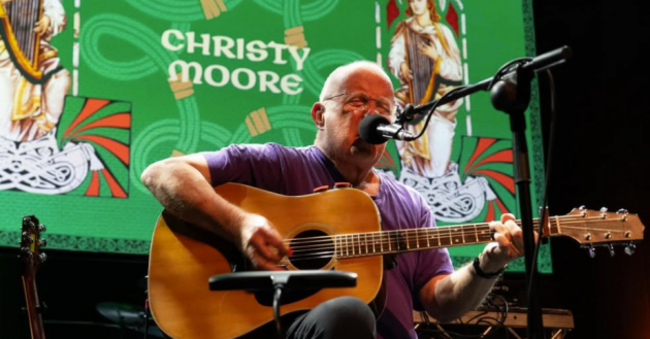
PastedImage-26060 Christy Moore at the Ceol for Connolly event in Dublin last week. Instagram Instagram

Connolly’s campaign literally packed out Vicar Street as musicians like The Mary Wallopers and Christy Moore came out to support her. This is not normal for Irish politics and it may prove to be a once off but it worked here. 

On social media, Connolly’s backers were just so much more visible than what Humphreys could muster up. And this extended to real-life canvasses and ultimately translated to voters in polling stations.

The question for those who have joined the campaign is what next, where does that energy go and can the parties of the left benefit?

Readers like you are keeping these stories free for everyone...
A mix of advertising and supporting contributions helps keep paywalls away from valuable information like this article. Over 5,000 readers like you have already stepped up and support us with a monthly payment or a once-off donation.

Close
18 Comments
This is YOUR comments community. Stay civil, stay constructive, stay on topic. Please familiarise yourself with our comments policy here before taking part.
Leave a Comment
    Submit a report
    Please help us understand how this comment violates our community guidelines.
    Thank you for the feedback
    Your feedback has been sent to our team for review.

    Leave a commentcancel

     
    JournalTv
    News in 60 seconds