We need your help now

Support from readers like you keeps The Journal open.

You are visiting us because we have something you value. Independent, unbiased news that tells the truth. Advertising revenue goes some way to support our mission, but this year it has not been enough.

If you've seen value in our reporting, please contribute what you can, so we can continue to produce accurate and meaningful journalism. For everyone who needs it.

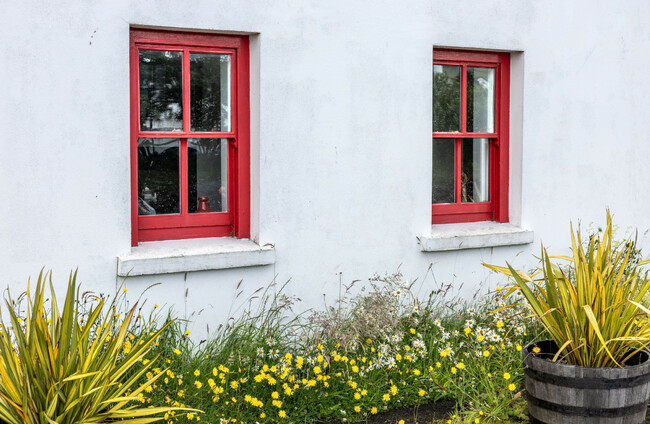
The grants for windows go up to €4,000. Alamy Stock Photo

Just one in six homes eligible for new windows and doors grants

There has been enormous interest in the new grants, with windows firms inundated with enquiries.

JUST ONE IN six homes are likely to qualify for new windows and doors energy efficiency grants, the agency administering the scheme has indicated.

There has been massive interest in the grants of up to €4,800 for new windows and doors since they were announced by the government in January. The grants became available through the Sustainable Energy Authority of Ireland (SEAI) earlier this month.

A number of windows companies told The Journal this week that they have been inundated with enquiries, but have had to advise would-be customers to go back and check their Building Energy Rating (BER) certificates or talk to a BER assessor.

In practice, homeowners hoping to get government support to replace single-glazed or older double-glazed windows, as well as draughty doors, are likely to need to have had insulation work done already to qualify, providers explained.

The SEAI told The Journal that up to 350,000 homes are likely to meet its criteria. There were over 2.1 million homes in Ireland at the last census in 2022.

The criteria are that a property must meet a particular “heating loss indicator” or have attic and wall insulation assessed as “good” or “very good” on their BER cert. The property must have been built and occupied before 2011.

The new grants start at €1,500 for windows for apartments and go up to €4,000 for detached houses, with an additional €800 available for a maximum of two doors per property.

Previously, windows and doors grants were only available from the SEAI as part of a deep retrofit on an entire property to B2 standard under the BER system. However, deep retrofits are very expensive, and many homeowners prefer to insulate their homes piecemeal, making the new windows and doors grant an attractive option.

About 59,000 Irish homes had undergone a deep retrofit by the end of 2024. SEAI One Stop Shop data indicates homeowners face a bill of between €16,400 for an apartment and €42,900 for a detached house for a deep retrofit.

Retrofit debate

There has been considerable debate over retrofitting in recent weeks after an ESRI report spelled out the very high costs to homeowners and slow uptake of deep retrofits.

The research institute also warned that the energy savings from retrofitting are likely to be less than promised.

The SEAI and the Department of Energy have defended the state’s retrofitting programme, arguing that all energy efficiency upgrades contribute towards Ireland’s climate targets.

However, the Climate Change Advisory Council, the state’s climate watchdog, told The Journal that the residential sector is not on track to stay within the 2026-2030 carbon budget and more measures will be needed to get back on track.

The Department of Energy acknowledged that ”we must do more” to meet the next carbon budget.

It said the next five years of home retrofits will see the programme ramp up, with a focus on lower income households. It said the government is taking “decisive action to provide warmer, more comfortable homes”. It said it’s important to remember that energy efficiency upgrades bring health benefits and make bills more affordable.

The SEAI said Ireland is three quarters of the way towards its 2030 residential emissions reduction target.

It acknowledged that, when it comes to retrofitting, “in some cases, expected energy savings may not fully materialise”. This is likely to be due to homeowners heating their homes more once they are upgraded – or, viewed another way, underheating them before they become better insulated.

“Energy upgrades are very much worth it for the homeowner. Firstly, they have a warmer, more comfortable, and healthier home. Home values increase as BERs improve, and getting into the B range can open access to green mortgage products,” the SEAI argued.

This is a very compelling array of benefits, way beyond what any other home improvement project might yield.”

Fossil fuels

It criticised the argument put forward by the ESRI that Ireland should connect more homes that rely on oil or solid fuels for heat to the gas network as a quicker and cheaper way of cutting emissions. Over a third of Irish homes use fuel oil, with a further 3% reliant on solid fuels such as coal. Burning gas causes less CO2 than oil.

“Ultimately, we need to electrify homes and shift them away from burning fossil fuels, not from one fossil fuel to another,” the SEAI said.

Heat pumps are a real alternative for many homes, with generous supports available to bring a home up to the required performance level if not there already. They make real sense even at today’s electricity prices.”

For their part, the ESRI researchers told an Oireachtas committee this week that their suggestion to expand the gas network and to increase usage of liquid petroleum gas or biofuels for home heating were “potential additional, supplementary measures to consider, alongside and in tandem with continued energy efficiency and electrification”.

These measures could all form part of a “broader policy mix” to drive decarbonisation, in which heat pumps and retrofitting can also play a role, the ESRI researchers said.

Readers like you are keeping these stories free for everyone...
A mix of advertising and supporting contributions helps keep paywalls away from valuable information like this article. Over 5,000 readers like you have already stepped up and support us with a monthly payment or a once-off donation.

Close
JournalTv
News in 60 seconds