We need your help now

Support from readers like you keeps The Journal open.

You are visiting us because we have something you value. Independent, unbiased news that tells the truth. Advertising revenue goes some way to support our mission, but this year it has not been enough.

If you've seen value in our reporting, please contribute what you can, so we can continue to produce accurate and meaningful journalism. For everyone who needs it.

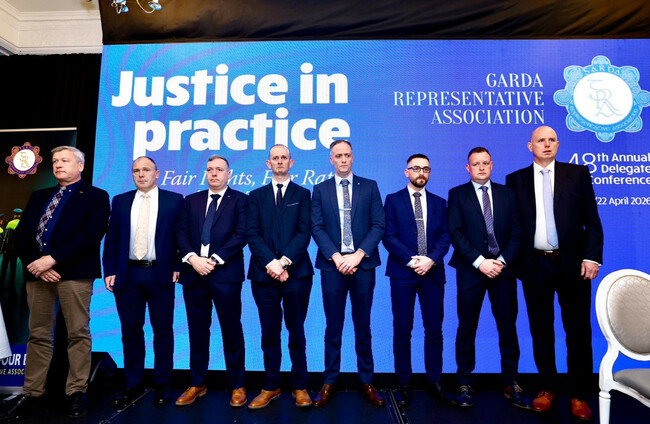
Det Gda Eamon Cunnane, Gardaí Niall Deegan, John Shanahan, ex garda Peter O'Donnell, Gardaí Paul Baynham, Alan Griffin and Tom McGlinchey. GRA

'A shameful stain': 'Bikegate' garda goes public and gets standing ovation at GRA conference

Eamonn Cunnane stood with seven other gardai who were “wrongly suspended for years” from Limerick.

LAST UPDATE | 21 Apr

THE DETECTIVE GARDA who was at the centre of the ‘bikegate’ scandal and seven gardaí from Limerick who were pursued over the termination of tickets have received a standing ovation at the Garda Representative Association (GRA) conference this morning in Westport.

Eamonn Cunnane, who is the garda who was wrongly accused of stealing a bike, suspended for three years and later cleared of all allegations, stood with the seven other gardai who were “wrongly suspended for years” from the county Limerick and County Clare.

Frank Thornton, a Limerick GRA representative described their treatment as a “living nightmare” that has left “morale on the floor” among the force. 

He claimed it was caused by an intransigence in garda management. 

Five of the Limerick gardaí were charged with perverting the course of justice for using their power of discretion to terminate road traffic tickets. Two of the members from the mid-west were never charged, having been cleared of wrongdoing by the Director of Public Prosecutions. However, they continued to be suspended.

Thornton said the impact goes further than the gardaí who were subject of the NBCI investigation.

“There’s no trust there and there couldn’t be,” he said. 

“We did our jobs diligently, professionally as society wanted. They want discretion. They wanted the guard to use their discretion, and that’s what we did. But somebody somewhere decided that was never going to happen anymore.

“Now society doesn’t want that, so it’s policing with deaf ears then, and it’s management with deaf ears, and that’s not acceptable,” he said. 

The GRA voted unanimously for a motion calling for a public inquiry to examine the garda handling of the cases. 

 The men who stood alongside him were accused of perverting the course of justice in relation to road incidents.

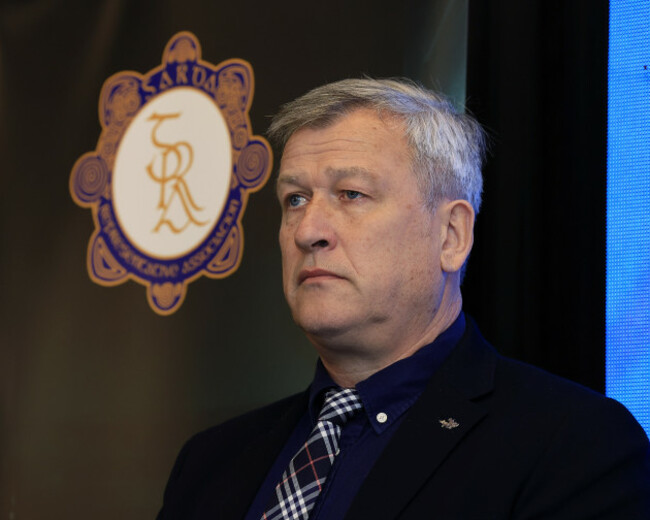
justice-in-practice-gra-48th-annual-delegate-conference-garda-representative-association Eamon Cunnane, the garda at the centre of Bikegate. CONOR Ó MEARÁIN CONOR Ó MEARÁIN

Michael Ryan, a Westmeath GRA representative, said that all of these men endured “severe trauma” and he led a motion calling for An Garda Síochána to introduce an independent appeals process for members who face suspension.

This is the first time that the garda at the centre of the bike case has been publicly identified, and he and his colleagues received a standing ovation from colleagues as they took to the stage.

On Cunnane’s behalf, Ryan told the full story of his suspension, the criminal investigation he was placed under, and the toll it took on him and his entire family.

“This is the story of a garda who, during Covid-19, loaned a bicycle to a member of the local community at a time when so many people were isolated.

He said that it was an act of “kindness, goodwill and community policing at its best” and that the “understanding was straightforward” and that the bike would be returned to the station when normal life “resumed” after the pandemic.

Ryan added that Cunnane “was and is an honourable man” with over 30 years of service.

He said that what Cunnane was subjected to next was a “shameful stain” on the reputation of An Garda Síochána.

On a June morning in 2020 “a loud bang” was heard at Cunnane’s front door, and six members of the National Bureau of Criminal Investigations (NBCI) were there with a court-issued warrant to seize Cunnane’s phone for examination.

Ryan said Cunnane has not known he was under investigation prior to this, adding that his wife Jackie had to Google who the NBCI were as she had no idea who the officers who remained at her home “for two hours” were.

Ryan said Cunnane explained where the bike was – in a neighbour’s house – and offered to go and retrieve it – which he then did accompanied by NBCI officers.

Cunnane was subsequently suspended “and left languishing for three years” despite the Director of Public Prosecutions directing that no charges should be brought against him after 10 months.

At that time his mother had been diagnosed with a terminal illness, and he was her main carer.

Ryan said that during the final weeks of Cunnane’s mother’s life, he was placed under “immense” stress, and he lost “precious time with her” that “can never be recovered”.

He further said that when Cunnane was allowed to return to work in 2023, he was hidden away from the public and not allowed to resume normal duties.

Ryan said that comments then made by former Garda Commissioner Drew Harris which suggested that the “full” story of the bike scandal had not been made public once again cast a shadow over Cunnane.

He said that the entire suspension system is “seriously flawed” and urgently needs to be reviewed.

The Journal / YouTube

‘Landscape change’

Speaking at the conference this afternoon Commissioner Justin Kelly reiterated previous comments that the practice of suspending a garda is “not taken lightly”. 

He added that he is willing to listen to the GRA and any suggestions they have to change the suspension policies.

For a time Kelly was the Assistant Commissioner overseeing Serious and Organised Crime – that officer oversees the NBCI.

In response to a question about his time in that role and criticism by the GRA this morning the Commissioner said that it is for the Director of Public Prosecutions to take the decision to prosecute and that gardaí are merely investigating. 

The Commissioner stressed that system have changed now with new legislation – he said that cases like Bikegate and the Limerick case would now be handled by Fiosrú, the independent Garda Ombudsman and not the NBCI. 

“Our current system, Fiosrú the police ombudsman deal with many of these investigations now, so if incidents like this, we become aware of them now, with the new legislation, we refer all these as incidents of concern to Fiosrú, and Fiosrú sometimes take these investigations and sometimes they don’t.

“So I think that whole landscape since that particular case you’ve spoken about has changed quite considerably,” he added. 

Also speaking to reporters in Mayo Justice Minister Jim O’Callaghan again maintained his view there should be no public inquiry into the garda handling of the cases and suspensions. 

Sources have said that behind the scenes such an inquiry would require an investigation into all garda regions and how they handle their discipline cases. The argument being made against a judge led tribunal is that such a probe would take years. 

O’Callaghan said that it was the criminal justice system “operating effectively” but said that there is no evidence to suggest to him that there is a need for an external enquiry. He added that he has “no problem” with an internal garda review of the garda investigations.

“If there is evidence, if somebody presented me with prima facie evidence that this prosecution had been built on malice, and that there was no sufficient evidence for it, and that the people were targeted, well, then that’s obviously an issue that would be a public concern to me.

“No evidence to that effect is being presented to me. And if individuals have issues in respect of the prosecutions that were brought, and whether or not they believe they were malicious prosecutions, which is.

“In effect, I don’t know if they’re saying that, but that’s what you’re suggesting to me. Well, they have a remedy through their solicitors, but it doesn’t. I don’t have any evidence to suggest to me that these prosecutions were malicious. They failed the prosecutions. But that doesn’t mean that there should be a public enquiry,” he said. 

Readers like you are keeping these stories free for everyone...
A mix of advertising and supporting contributions helps keep paywalls away from valuable information like this article. Over 5,000 readers like you have already stepped up and support us with a monthly payment or a once-off donation.

Close
JournalTv
News in 60 seconds