Sign in. It’s quick, free and it’s up to you.
An account is an optional way to support the work we do. Find out more.
Sign in. It’s quick, free and it’s up to you.
An account is an optional way to support the work we do. Find out more.
LAST UPDATE | 3 May 2025
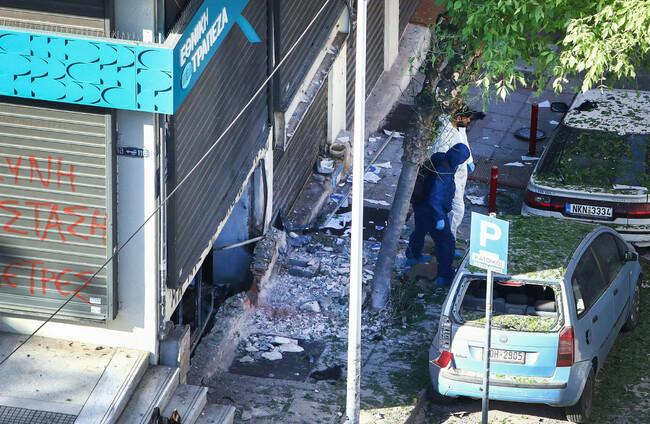
A WOMAN HAS died in the northern Greek city of Thessaloniki after a bomb she was carrying exploded in her hands.
The 38-year-old woman was apparently carrying the bomb to place it outside a nearby bank at around 5am this morning, police said.
Several storefronts and vehicles were damaged by the explosion.
Police said the woman had a criminal record related to drugs and prostitution and had been involved in at least one robbery and thefts in the past.
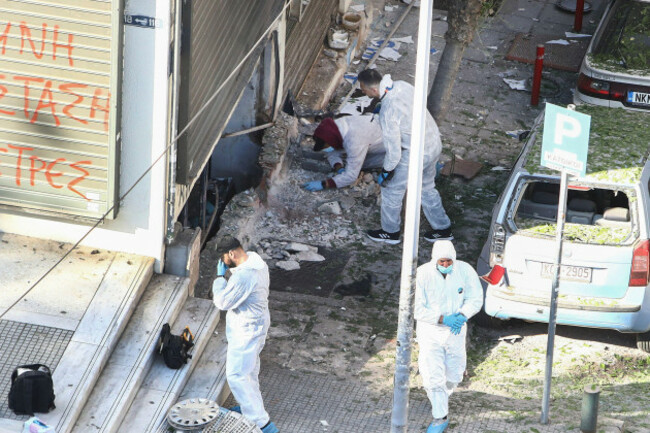
The Greek police’s division for organised crime was investigating the incident while authorities were also looking into whether the woman might have ties to extreme leftist groups.
Greece has seen occasional bombings, as well as targeted killings, attributed to various organised crime groups.
The country also has a long history of politically motivated violence dating back to the 1970s, with domestic extremist groups carrying out small-scale bombings that usually cause some damage but rarely lead to injuries.
While the groups most active in the 1980s and 1990s, whose preferred targets tended to be politicians, foreign businesses and diplomats, have been dismantled, new small groups have emerged.
Last year, a man believed to have been trying to assemble a bomb was killed when the device he was making exploded in a central Athens apartment. A woman inside the apartment was severely injured. It was unclear what their intended target might have been.
The blast prompted minister of citizen protection Michalis Chrisochoidis to warn of an emerging new generation of domestic extremists.
In April, a new group calling itself Revolutionary Class Struggle claimed responsibility for a bomb that exploded in central Athens near the offices of Hellenic Train, Greece’s main railway services operator, and the planting of another bomb near the Labour Ministry in early February.
The explosion near the train offices resulted in limited damage to the building and no injuries. It had been preceded by an anonymous call to local media 40 minutes before the blast warning about the device, leading police to evacuate and cordon off the area.
The group that claimed responsibility said the bombing was part of an armed struggle against the state.
The bombing at the train offices came shortly after the second anniversary of Greece’s worst railway disaster, in which 57 people were killed and dozens more injured when a freight train and a passenger train heading in opposite directions were accidentally put on the same track.
The deadly accident sparked widespread anger and exposed severe deficiencies in Greece’s railway system, including in safety systems.
Some of the relatives of the victims led mass protests against the country’s conservative government on the occasion of the accident’s second anniversary.

To embed this post, copy the code below on your site












have your say