Sign in. It’s quick, free and it’s up to you.
An account is an optional way to support the work we do. Find out more.
Sign in. It’s quick, free and it’s up to you.
An account is an optional way to support the work we do. Find out more.
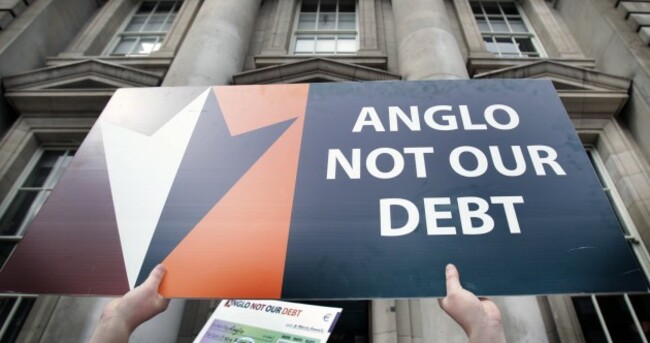
PROMISSORY NOTES ARE high on the news agenda at the moment with the government seeking a deal to avoid paying the €3.06 billion due on 31 March, while a court last week ruled against a businessman who challenged their legality.
The government is staking much of its credibility on securing a deal to avoid paying out €3.06 billion of the €30.06 billion promissory notes issued in respect of primarily Anglo Irish Bank three years ago. But significant doubts remain about the likelihood of securing an agreement with the European Central Bank.
As well as that last week the High Court said that businessman David Hall’s challenge to the ‘prom’ notes’ legality was not valid as he was not a TD. He may yet appeal to the Supreme Court and a number of TDs could take their own case.
But as it stands, on 31 March Ireland will give €3.06 billion to the Central Bank and this money will be destroyed.
How and why has it come to this?
Last week we asked for your questions and we had a few of our own that we wanted answered, so we asked the experts including the Department of Finance, the independent TD Stephen Donnelly, and the financial blogger Namawinelake. Here’s what we found out.
What is a promissory note?
A promissory note is an IOU. Some of you may be used to writing your friends or family IOUs for say a tenner or similar amounts, but governments and banks deal in much bigger amounts with slightly more complex arrangements.
However the fundamentals are similar. Usually promissory notes will carry conditions such as agreeing to pay back a specific sum at a fixed date in the future with interest and crucially, distinguishing them from actual IOUs, they contain a specific promise to pay the money.
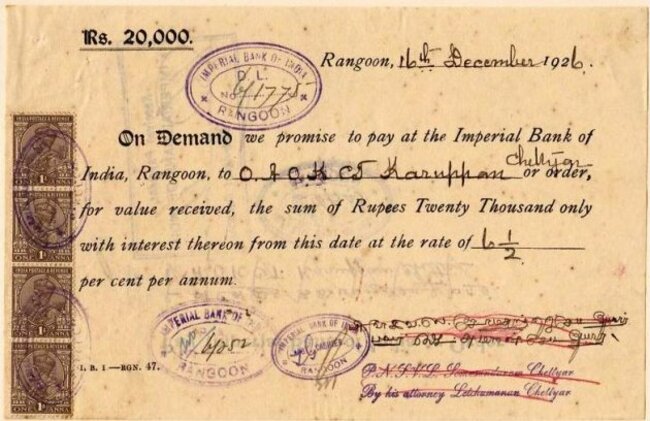
Here’s an old promissory note made out to the Imperial Bank of India in 1926:
Pic: Wikimedia Commons
Why was a promissory note issued for Anglo?
In 2010 the banks that were then Anglo Irish Bank and Irish Nationwide (now Irish Bank Resolution Corporation or IBRC) required around €30.06 billion in additional cash from the State because of their perilous state in the aftermath of the collapse of the property market.
Ireland had already exhausted all other avenues of funding: “We had already raided the pension fund and borrowings on the sovereign bond markets – which we were priced out of – in 2010,” Namawinelake explains so the option considered to be the best in the circumstances was to issue a promissory note.
How was this done?
Finance minister Brian Lenihan wrote a promissory note to the IBRC – basically saying “We owe you €31 billion” – which the bank used as collateral to borrow from the Cental Bank of Ireland’s emergency liquidity assistance (ELA) fund. Under the agreement, the State agreed to pay €3.06 billion every year to the IBRC until 2023 and smaller payments after that to satisfy the principal and the interest.
Instalments were scheduled for repayment annually from March 2011 to March 2031 with the interest on the principal varying from year-to-year, according to the Department of Finance. A comparatively smaller amount of around €250 million in promissory notes were issued in respect of Educational Building Society (EBS).
The repayment works like this: The government pays the money to IBRC, which gives it to the Central Bank of Ireland, which then destroys this money. This is done electronically in case you were thinking they were burning a huge wad of €100 notes on Dame Street.
Why is the money destroyed?
When Brian Lenihan drew up the promissory notes he effectively created the cash which the Central Bank gave to IBRC (Remember the State didn’t have the money to pay the Anglo/Irish Nationwide debt). IBRC uses this money to pay off bondholders (yep those guys) and plug the gaps created by the massive losses it has taken on property loans gone sour.
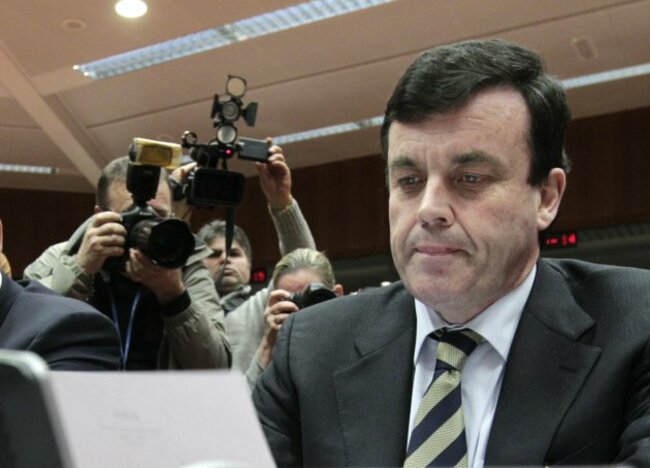
Former Minister for Finance Brian Lenihan at a summit of EU finance ministers on the dayIreland officially entered a bailout programme. Pic: AP Photo/Yves Logghe.
But creating cash or monetary financing is a no-no as far as the European Central Bank (ECB) is concerned. Its founding principles – the Maastricht Treaty – dictate that EU member states cannot finance their public deficits by printing money. The ELA – which is ironically the cheapest yet apparently the most troublesome part of Ireland’s debt – is seen as a temporary measure by the ECB and the financial markets.
It was created for Ireland at a time when we didn’t have the eurozone’s permanent bailout fund (the European Stability Mechanism). So in the ECB’s eyes if the Central Bank was to keep hold of the money instead of destroying it it would equate to it having printed money, breaking the rules which govern the EU. This why getting a deal that avoids having to pay €3.06 billion ever year is proving so difficult.
Did we have to do this?
Given that the government didn’t have the money to lend the banks the complete collapse of Anglo in particular – having been one of the biggest lenders in the State – would have had a contagious effect on other troubled banks throughout Europe potentially leading to their collapse and a full-blown banking crisis across Europe.
As Stephen Donnelly, who has been vehemently opposed to the promissory notes, points out: “[It] would certainly have run a foul of Europe’s two directives: That no European bank would fail and that the potential losses and lost profits of senior investors would be paid in full by the public.”
So all this talk of ‘a deal’ on the notes, what’s that about?
The government has been telling us for some months now that it is in ‘long, complex, detailed, technical’ discussions with the ECB to work out an alternative to paying back the promissory notes as the current arrangement is too burdensome. It says and you’d probably agree that Ireland deserves a break for the considerable amount of taxpayer money that has gone into the banks.
One of the options put on the table by Ireland has been to swap the notes for a long-term government bond – possibly sourced from the ESM – with the repayments spread over 40 years. What’s all this about? Well our dear Taoiseach Enda Kenny probably describes it best when he recently said it would be like switching “from a serious overdraft to a long-term, low-interest mortgage”.
The Department of Finance has also suggested that some relief on the interest rate paid on the principal would “translate into significantly improved deficits in the short-term, especially in 2013 and 2014″.
But all of this requires approval from the ECB and its governing council. That’s hard to get as Donnelly explains: “There is a general tone that Ireland created this mess, it allowed Anglo and INBS (Irish Nationwide) to happen, it decided to issue a blanket guarantee, it paid out the money, it issued the promissory notes and so Ireland needs to clean up its own mess.”
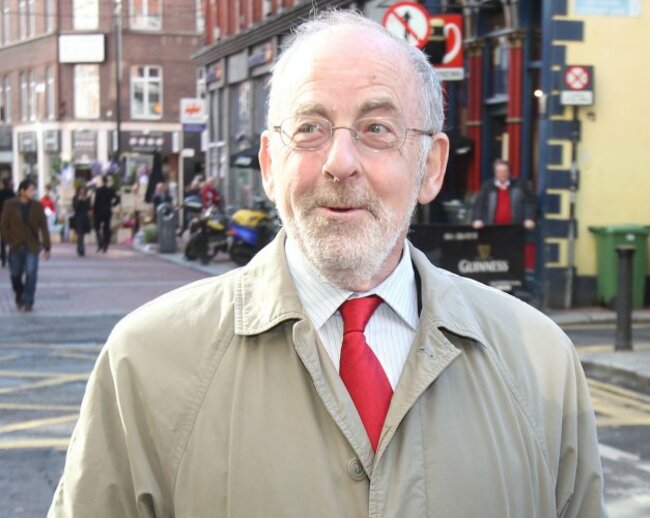
Patrick Honohan is pushing the case for a deal for Ireland as a member of the ECB’s governing council. Pic: Niall Carson/PA Wire
Didn’t we do something last year which meant we didn’t pay it? Can’t we do this again?
When Communications Minister Pat Rabbitte said in December that we didn’t pay the €3.06 billion last year he wasn’t entirely accurate. In fact what happened was that the government issued a bond to IBRC which was temporarily financed by NAMA (the state’s bad bank) before a longer term loan was agreed with Bank of Ireland. Under the terms of this deal BoI agreed to loan the State the money to pay the note for one year and in June of this year we are expected to repay it to BoI.
Confused? Well the main point is that theoretically it could be done again but it’s not viewed as a good idea. Namawinelake explains: “Bank of Ireland might agree to give us another loan for last year’s bond. But it is highly unlikely that Bank of Ireland will agree to continue to lend us €3 billion for last year’s bond plus another €3 billion for this year’s bond. It’s becoming a big exposure for that bank.”
Donnelly adds: “Last year’s five card trick - designed to give the Government something to confuse the public with – actually costs us more money. It results in no write-down on the total amount owed, but just hands the costs of the payment to future generations.”
The option is not among those currently being considered by the government, according to the Department of Finance.
Could we take a ‘haircut’ on promissory note repayments, in the way that haircuts were applied NAMA loans?
Theoretically yes but in reality, no. As we established earlier, the principal of the promissory note is that you agree to repay the amount in full. The ECB would take an extremely dim view on any discount.
What if we just didn’t pay it? What would happen?
In the words of the Department of Finance it “would be tantamount to a sovereign default, which would set Ireland apart as a country that had defaulted”. The government and its advisors thinks not paying would have an extremely negative impact on businesses and individuals and would ramp up the cost of borrowing for Ireland, which has been steadily declining since recently as evidenced by recent forays into the bond markets.
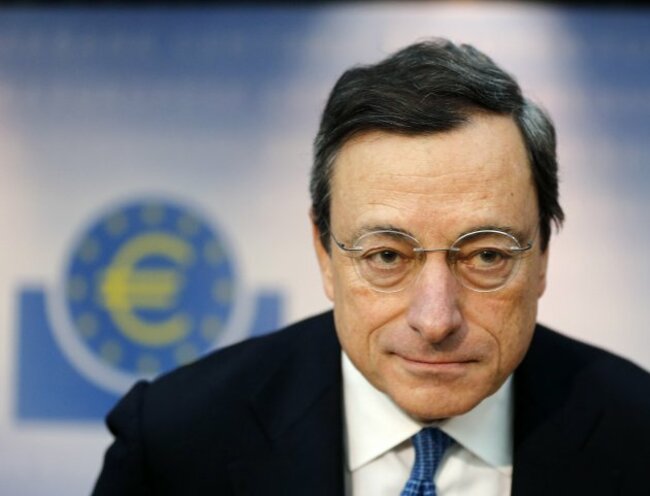
President of European Central Bank Mario Draghi. Pic: AP Photo/Michael Probst.
Donnelly takes a slightly different view. He says he asked the Minister for Finance for clarification on whether IBRC needs the €3.06 billion payment in March in order to meet its obligations. No response was forthcoming, he claims.
The Wicklow deputy also identifies a number of positive outcomes from not paying: Ireland’s sovereign debt would immediately fall by €28 billion and go towards making public debt sustainable and the link between bank and sovereign debt would be weakened – an ultimate aim of the eurozone leaders. It would also free up a lot of money to boost the economy.
What are those opposed to paying it proposing we do instead of paying the full amount?
Default. As Donnelly outlines above this would arguably have a number of positive effects although he’s not naive to the possible negative impact of default and we know a bit about what it did to Argentina – high interest rates and lawsuits. “There may be serious consequences for doing so,” he says, adding that his ultimate preference is for a “multilateral agreement which fairly shares the burden of bailing out Anglo and INBS with the rest of the Eurozone”.
He explains: “Ireland did not benefit from the promissory notes, but the eurozone as a whole did, through greater financial stability. Recent Eurostat analysis shows that Ireland has paid more than any other country towards the economic crisis – when you adjust their analysis for an error…the omission of the NPRF (National Pension Reserve Fund) contribution.
Donnelly claims that if the burden were to be shared equally across the eurozone, the amount owed by Ireland would fall to less than €1 billion. But he would accept “substantial burden sharing” in the form of the €31 billion debt being reduced to “no more than €10 billion”.
This is all pretty big stuff. Was there a Dáil vote on this?
The Dáil did vote through legislation relating to banks in 2008, 2009 and 2010 including the Credit Institutions Financial Support Act 2008 and the Credit Institutions Stabilisation Act 2010 which established the grounds for a promissory note being issued.
The latter is the only piece of legislation in the Irish statute book which contains the term ‘promissory note’ and the voting record shows that most of the current Cabinet voted against it.
The Dublin businessman David Hall argues that the notes are invalid under the Constitution and specifically should have been approved by a Dáil vote but last week the High Court disagreed with that claim and said in its verdict that only a member of the Dáil could challenge their legality.
In that case the State argued that bank legislation allows the Minister for Finance to spend money from a central fund without Oireachtas approval for where that money goes.
Hall is considering a Supreme Court appeal while Donnelly is among the TDs said to be considering a possible legal action. We asked the Department of Finance specifically why there was not a Dáil vote on the promissory notes and received no response.
Didn’t I read something about the ECB rejecting an Irish proposal to issue a long-term bond?
You did. Reuters and various other sources since then have said that the ECB ruled this out because it was in violation of the aforementioned Maastricht Treaty. Essentially it amounted to monetary financing which the ECB says is illegal under EU laws.
But more than illegality the ECB appears concerned that issuing a bond for Ireland would create a dangerous precedent. Namawinelake explains: “If the ECB changed its stance then next month, you might have Spain issuing €1 trillion of bonds which it markets to its banks, and the banks use those bonds to obtain cash from the ECB, and in that way Spain would have an extra €1 trillion”.
The ECB would lose control over the supply of money and that could create chaos in the markets. The bank’s view is that the promissory note arrangement is okay: IBRC can be funded up to the point where it is wound down, as is intended, and no rules are broken.
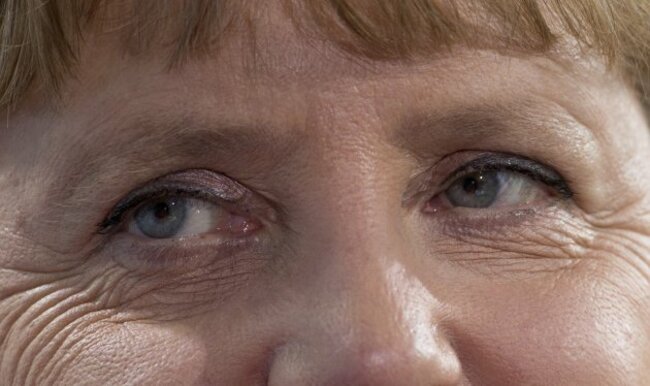
Much rides on the view of German chancellor Angela Merkel. Pic: Gero Breloer/Press Association
But the problem for Ireland is that it means paying back €3.06 billion every year for the next ten years, and that’s an awful lot of money. The government argues that Ireland is ‘a special case’ and Angela Merkel said as much last October.
The Department of Finance told us: “There is an understanding of the very great challenge placed on the backs of Irish taxpayers. Recent public comments by political leaders of other. Ministers for Finance, the European Commission, the IMF and other influential actors have recognised this sacrifice. Ireland has been recognised as a ‘special case’ and it is a case of following through on that recognition.”
“The Taoiseach has stated that solidarity works both ways. We’ve made painful sacrifices in successive budgets to hold up our part of the bargain. Now we’re looking for the support committed to us.”
So then, are we going to get a deal?
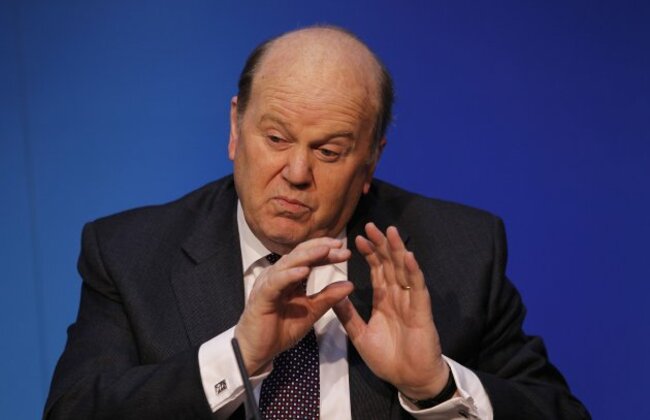
There are four meetings of the ECB governing council between now and 31 March so there is still time to put together a proposal that satisfies the bankers in Frankfurt. Finance Minister Michael Noonan told the Dáil last week: “I remain confident that an agreement can be reached.”
The government has a lot of credibility riding on getting a deal of some sort although it has never gone into specifics beyond the “long-term mortgage” Enda Kenny has talked about. It may yet give us more detail in a Dáil debate on the matter taking place this coming week.
Noonan was adamant last week that Ireland will not default though the government’s budget advisory council believes there is a 39 per cent chance this will happen while the Troika said little about the payment to Donnelly.
In short, everyone has an opinion but no-one can say for certain if a deal will be reached. So now we wait.

To embed this post, copy the code below on your site












have your say