Sign in. It’s quick, free and it’s up to you.
An account is an optional way to support the work we do. Find out more.
Sign in. It’s quick, free and it’s up to you.
An account is an optional way to support the work we do. Find out more.

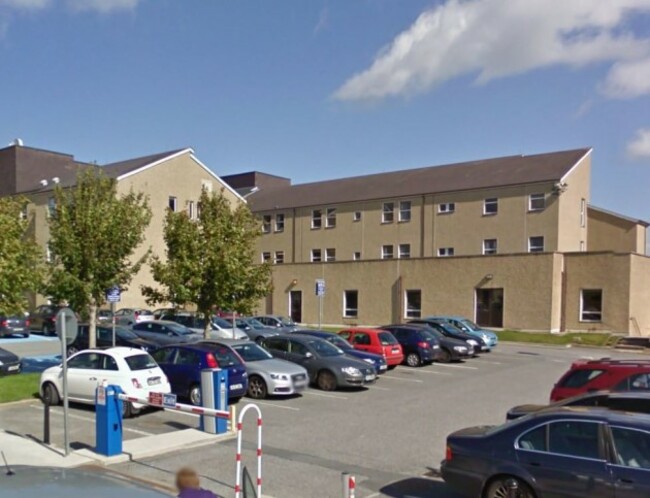
WE’RE SOME WEEKS removed from the grand standoff between the government and independent minister John Halligan concerning the provision of cardiac services at University Hospital Waterford (UHW).
But if anything the situation has gotten murkier.
It is now being alleged that the reduction of a key monthly risk rating regarding the hospital’s services during August from a level of 20 to 16 had a pronounced impact on the findings of independent expert Dr Niall Herity regarding the hospital’s services.
In particular focus is Herity’s decision not to recommend that a second cardiac catheterisation laboratory be installed on site.
On Saturday last at least 2,000 people (and the organisers, who claim the march was deliberately apolitical, say many more) gathered in the rain for a march on the hospital to protest the situation and call for a meeting with Health Minister Simon Harris to air their concerns concerning the Herity report.
Halligan was one of those present.
“It’s absolutely appalling that people have to take to the streets to beg for something that we should already have,” says Hilary O’Neill of the South East Patient Advocacy Group, which organised Saturday’s march.
Risk rating
The fact that the risk rating of the hospital was reduced during August first came to light two weeks ago.

Now, local campaigner (and former Fianna Fáil MEP candidate) Kieran Hartley, who claims to be in possession of a copy of the risk rating held at UHW during August, says that the situation is one that needs to be presented to the gardaí for investigation, something he intends to do in due course.
“The fact that the rating was reduced begs some simple questions,” Hartley says. “Who changed the register, and for what reason?”
It’s clear to me with the information that I have to hand that interference at UHW has led to the structured downgrading of the hospital and its vital services.
The HSE did not immediately respond to a request for comment regarding the alleged reduction of the hospital’s risk rating.
O’Neill meanwhile says that Herity’s assertion that UHW serves a catchment area of 276,000 is in direct contravention of suggestions made by hospital management as recently as April that the actual figure is nearly double that.
People have been saying this is a parish-pump political issue, it’s not. This is an issue for the whole southeast.
Protest
At Saturday’s protest at UHW, John Halligan told RTÉ that conversations were going on behind the scenes with a view to government ministers meeting with consultants based at the hospital concerning the Herity review and the provision of cardiac services.

“Look, successive governments have said that Waterford needs a second lab,” he told TheJournal.ie. “That is beyond dispute at this stage.”
This has moved beyond politics. The Herity review is fatally flawed.
Regarding the reduction of UHW’s risk rating, Halligan says that there are suggestions that was carried out by “someone in the Cork area”.
“We need to know in absolutely minute detail why they changed it, what analysis they did prior to changing it, and how did they actually do so,” he says.
We’ve put in a number of questions to the HSE, but the point remains that we need to have an analysis of the entire review.
What happens next
Meanwhile, the controversy rumbles on.
Hartley claims that at least one senior consultant at UHW is close to resigning over the situation.
“People go on about parish pump politics. The Minister himself has said the Herity review was ‘not a Simon Harris review, but an independent clinician’s review’,” he says.
Well now the danger is that any clinician who signs off on these figures cannot be fully satisfied that a clinical decision they have made has not been tampered with.
“It calls into question the very ethos of the HSE,” he adds.
We’ve all seen what happened in the financial and insurance industries when risk ratings were tampered with.
The difference in this situation is that a clinical risk rating has a direct impact on life-or-death situations.

To embed this post, copy the code below on your site













have your say