TheJournal.ie uses cookies. By continuing to browse this site you are agreeing to our use of cookies. Click here to find out more »
Dublin: 11 °C Wednesday 22 May, 2013

Censored: The 274 books and magazines still banned in Ireland today

How To Drive Your Man Wild in Bed is still banned in Ireland. Here’s why.

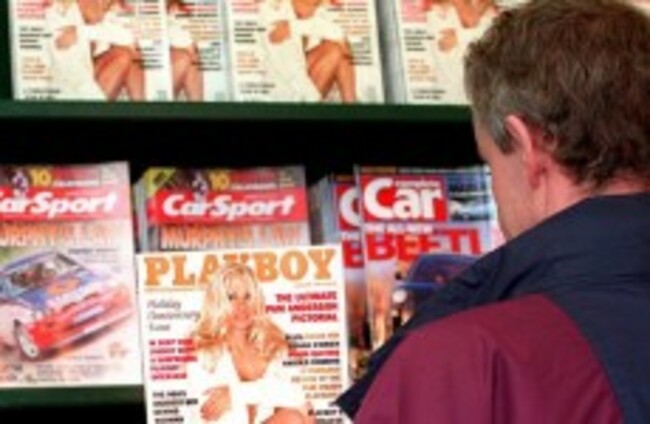
A Dublin man checks out the newly-uncensored Playboy magazine in 1995
Image: PA/PA Archive/Press Association Images

IRELAND HAS NEVER had a great track record when it comes to censorship.

From Monty Python’s Life of Brian to Baise-moi, from A Clockwork Orange to Natural Born Killers, many of Ireland’s film and book censors – especially in the first four decades after independence – used their role to enforce strict and at times draconian morals on the public.

The role has changed a lot in the past decade: the film censor has been rebranded as the film classification office and focuses more on what rating to give films than whether they should be banned, while the book and magazine censorship board now receives a tiny number of complaints from the public and rarely – if ever – bans anything.

But the legacy of the harsh censorship regime remains in the list of books and magazines that are still banned in Ireland. There are 274 books and magazines banned in Ireland today – but some have been fighting back.

What books are banned in Ireland now?

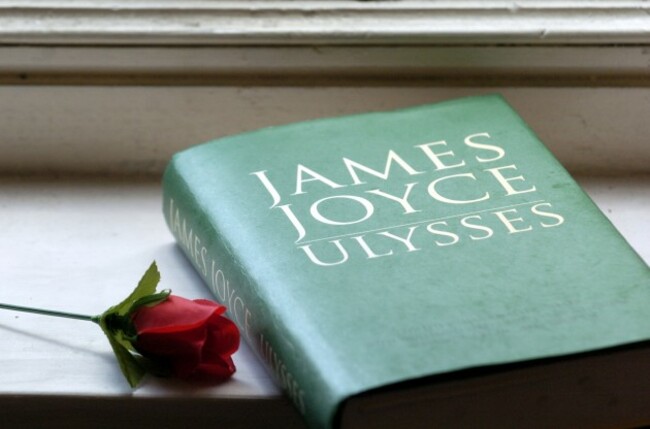
Blooms Day 2005

(Photo:Graham Hughes/Photocall Ireland)

Books can be banned for two different reasons in Ireland:

  • For being indecent or obscene
  • For advocating the procurement of abortion or miscarriage, or the use of any method, treatment or appliance for the purpose of procuring an abortion

The Censorship of Publications Board, made up of five people appointed by the Minister for Justice, is in charge of deciding whether a book can be banned or not, but it can’t act on its own accord – it has to receive a complaint before it can assess whether a book should be added to the list of prohibited publications.

Right now, there’s a grand total of zero books banned for being indecent or obscene. Books about abortion, on the other hand, are a different matter.

Eight books are currently banned in Ireland for providing information on how to procure abortion. Three of the books are explicitly about abortion: Abortion Internationally (banned since 1983), Abortion: Our Struggle for Control (also banned in 1983) and Abortion: Right or Wrong (banned seventy years ago in 1942).

Unexpectedly, four of the other five are sex guides. How to Drive Your Man Wild in Bed has been banned in Ireland since 1985, while The Complete Guide to Sex has been banned since 1990 because they appear to contain information about the procurement of abortion. Make it Happy: What Sex is All About, The Book of Love, and the slightly more medical The Love Diseases have all been banned since the early 1980s.

The books banned under the abortion rule have fallen foul of a strange loophole.  All eight of the books were banned before the 1992 referendum which made it legal for information about abortion in other countries to be made available in Ireland (through books, pamphlets, etc), so technically they should be permissible. However while most books are unbanned 12 years after they were first banned, the legislation governing censoring books brought in a different rule for abortion books which means the 12 year rule doesn’t apply. Because of this, all eight of the books will remain banned indefinitely until someone appeals the banning.

Despite much talk to the contrary, Ulysses by James Joyce was never actually banned by the Censorship of Publications Board. Instead, the government used a customs loophole which prevented it from being allowed into Ireland.

What magazines and periodicals are banned in Ireland?

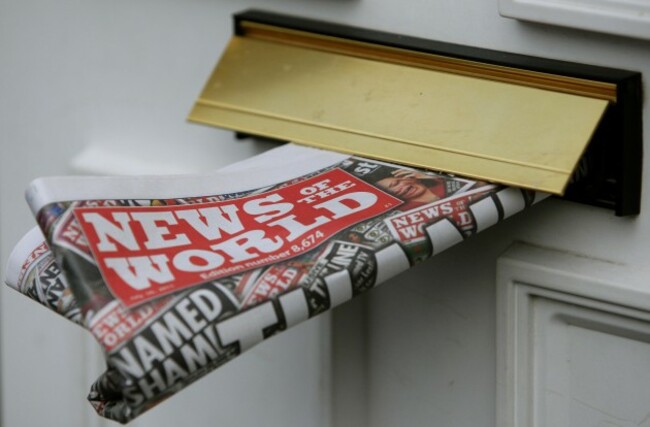
Phone hacking claims

(Photo: Dave Thompson/PA Wire)

Far more magazines than books are banned in Ireland, but for much more varied reasons. 266 magazines are currently banned in Ireland; a strange mixture of hardcore pornography, crime magazines from the 1950s and 60s, and ones which inexplicably fell foul of the censor at the time (Broadway and Hollywood Movies, Eye: People and Pictures, and Health and Efficiency magazines are all banned).

Some of the bannings are unexpected: the British edition of the News of the World was technically banned up until it was closed down by Rupert Murdoch last summer. Ireland’s Daily Sport, including the Daily Sport, was banned in 1995, as was its weekend version. Hustler magazine has been banned since 1981 and Playgirl has been banned since 1974.

A large number of the banned magazines are about crime, with many of the titles sounding somewhat quaint now.  Amazing Detective Cases was banned in 1958, as was Detective Weekly, while Famous Crime Stories was banned in 1959.  All were banned for having “an unduly large proportion of space for the publication of matter related to crime”.

Meanwhile Big Ones International  (banned 1997), Man’s Conquest (1960), Romp (1981) and Scamp Magazine (1963) remain sadly unavailable on Irish shelves. Some magazines have managed to get around the ban by bringing out different versions: so while magazines like Hustler are banned, spin-off magazines with similar titles can get around the ban.

Others have started to fight back. Late last year, a distributor of porn magazines successfully appealed against the banning of five magazines, which led to them being taken off the list of prohibited publications.One of the magazines, Razzle, had been prohibited in Ireland since 1935 before the ban was overturned.

Unlike with books, where bans last for 12 years before they expire, magazines remain banned indefinitely.

More recent bannings and the introduction of Playboy

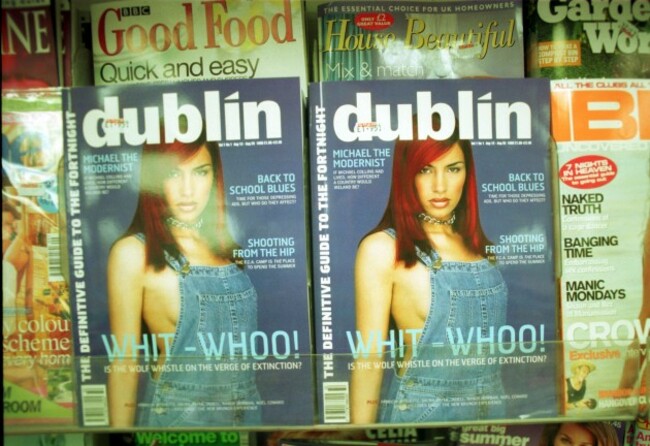
Dublin magazines

(Photo: Photocall Ireland)

Banning publications isn’t all in the distant post: In Dublin magazine was banned by the Censorship of Publications Board in 1999 after a complaint about the explicit nature of the advertisements for massage parlours which populated the back pages of the listings magazine. The Board banned the sale and distribution of the magazine for six months for being “unusually or frequently indecent or obscene”, in a move that caused huge outcry over censorship and lack of accountability.

The High Court lifted the ban when it came to court and said that the publishers of the magazine should have been given an opportunity to state their case before the Board before the ban was implemented.

At the other end of things, Playboy magazine was unbanned in Ireland in January 1996 (and quickly become the highest-selling men’s title in the country).

“Morals have changed,” said a spokesperson for the Censorship of Publications Board. “What was considered obscene in the 1940s is very different to what is considered obscene today”.

Read: The full list of publications banned in Ireland (PDF)

Previous explainers: Ireland and abortion: the facts >

Ireland is becoming a hub for Islamic finance – but what exactly is it? >

Read next:

Comments (36 Comments)

  • Pointless banning stuff because people can find it on the Internet

    Reply
  • interesting playgirls banned but not playboy

    Reply
  • Yeah, until they start censoring t’internet.

    Reply
  • Great article, and a timely reminder – as we discuss Irish Internet regulations – that Ireland has a historically heavy handed approach to censorship.

    Reply
  • If memory serves correct, Madonna’s SEX book from the mid 90′s is banned. The ban came into effect AFTER the quota for the Irish market sold out! Apparently it not ilegal to own a copy, but it is ilegal to show another person your copy!

    Reply
  • A lot of these must be long since out of print. The Superman, 1930 banned. Really ?

    Reply
  • There is no censorship in Ireland, just the infallible stink of catholic dogma.

    Reply
  • Anyone interested should watch Banned in Ireland on tv3 tonight. It was very informative and showed that we where very heavy handed when it came to censorship.

    Reply
  • Do you have to go to court to reverse a banning or is there a simpler way to do it?

    Reply
    • There’s a Censorship of Publications Appeal Board and they decide whether to reverse a ban or not. The appeal can only be made by the author, editor or publisher of the book, or else by any five members of the Oireachtas though, so that explains why there’s lots of stuff that’s remained banned for years.

      Reply
  • Id rather crowbar my eye out than watch tv3.

    Reply
  • They can ban what they like, it makes no difference, because today you can hop across the pond to buy what ever you want in reading material or just google it. It’s no big deal. People will always find a way to get something if they want it badly enough. I don’t think 3/4 of the population in Ireland really give a damn, and as for banning James Joyce’s – Ulysses , well I tried reading it and couldn’t. It was boring as hell!

    Reply
  • Alas that’s what happens in priest ridden 3rd world backwaters whose politicians are all beholden to the bizarre medieval prince and his pompous court in Rome, priests rape and bugger your children and the politicians do nothing (they even exempt them from laws to protect the children) but let a magazine or a book that contains sex come into the country and they are all quick ban and censor, very quick to do as they are told by the same church under whose auspices the country became a laughing stock throughout the world for it’s sanctimonious and preposterous censorship laws for the last 90 years, McQuaidism is alive and well and the tentacles of Rome are still firmly wrapped around the testicles of the yellow streaked Irish politicians who run the gombeen nation still in deference to their masters in Rome! Reminds me an other dictatorship whose adherents were fond of wearing black uniforms, banning and burning books they didn’t like, Ireland is a free country?

    Reply
    • If that is not insulting to priests, I don’t know what is!!

      Where is Ms. Bohan and her ‘responsibility to ensure that there is no ‘insulting’ going on in the Journal.ie?

      Or are priests considered unworthy of protection from being insulted? Even those ewho have done no wrong?

      Or is it only her ‘readers’ that are protected from being ‘insulted?’

      Maybe Ed Appleby should use the term ‘some priests’ in his illogical rant – mainly against a certain religion – and also calm down a little?

      I am sure that he would not dare rant against Islam in such a vitriolic, hate-filled and libellous manner!

      Reply
    • I notice you are not denying ‘priests’ raped and abused young children, furthermore my use of the word ‘priests’ is because more than one of them has been outed for the rapists they were (are), as for that certain religion you refer to, well it’s that certain religion that set itself up as the moral authority in Ireland for the last 90 years and thanks to a succession of deferential governments it was allowed to rule the country like a papal fiefdom, the censorship laws in Ireland were draconian and the archbishop McQuaid was at the forefront of putting these censorship laws in place along with his puppet De Valera. Even now as pointed out by the Journal, many books, films and magazines remained banned because there’s no political will to overhaul or repeal these ridiculous laws. The same religion is now lobbying the various gombeen politicians to be exempted from a new law which would make it a criminal offence not to report a case of child abuse, hiding behind some cannon law bullshit, given their record on child abuse it would be criminal to allow such an exemption. As for Islam, it’s just another brand of the same nonsense that breeds illogical people like you. Sounds like you would like to see us all censored or banned, me, the journal anything you don’t like or don’t agree with, just like the good ol’ days eh! As for me i’m calmness personified!

      Reply
  • Oh out of curiosity, what was the case last year mentioned in the article?

    Reply
  • Fantastic article. So outdated are the ideas and morals, that even the parties and politicians you would otherwise except to press for change, don’t. It probably doesn’t even occur to them.
    But that’s not to say they shouldn’t.

    Also, I imagine the abortion publication legislation is almost certainly unconstitutional. Laws don’t get grandfathered-in in terms of constitutionality. Pre-independence laws have routinely been found unconstitutional, even laws the writers of the constitution would obviously not have intended to invalidate.

    But once again, if no one with the power is bothered…

    Laws like this it makes you envy living in huge countries like the US. With that large a divide and population, SOMEONE with sufficient power and/or resources will be bothered to do something.

    Reply
  • Check out artist John Jones project 100 Banned Books

    Reply
  • Enjoyed the article!!
    Nice light read to end the day! Well written and to the point.

    Really no need to be bringing rape / priests / laws and everything else into it. Just take it for what it is, a light read and chill out people!!!!

    Reply
  • How much have The Journal been banning by censorship?

    Do The Journal keep records?

    Reply
    • That’s a fairly tenuous link but I’ll answer it anyway.

      We don’t ‘ban by censorship’. We remove comments which break the comments policy for the site (most often for containing abuse, for trolling, or for being off-topic). If someone has a certain number of comments removed then they’re banned from commenting on the site. That’s it. It’s not censorship: to be very clear on this, we’re not moral guardians and no comments are ever removed simply because someone disagrees with them. They’re only ever deleted for breaking the comments policy.

      Reply
    • A comments policy that has no definition in law is censorship.

      The Journal has appointed itself as judge and jury.

      Assuming authority can have its price.

      Reply
    • You’re looking at it the wrong way around. The Journal is legally responsible for all the comments that are published on the site, and also has a responsibility to readers to ensure that they can take part in discussions without being insulted. That’s why the comments policy exists – to make sure that the conversations on the site are the best that they can be.

      Reply
    • “You are responsible” suggest authority. All authority is defined in law. Which law gives you authority?

      If people tell the truth there is nothing in law to prevent it.

      Get your legal people to draw up a disclaimer and let people speak freely.

      Reply
    • If you have a specific problem with something to do with the comments then do email me – it’s christine@thejournal.ie. Happy to discuss any decisions and explain why some comments are removed.

      Reply
    • I will contact you directly in future then.

      Reply
    • From what I can see you only utilise your free speech to moan.

      Reply
    • Journal – I’d a comment removed that wasn’t in line with your views on your own censorship. The Journal do censor and censor anti sinn feinn criticism among other things. You’re like the RTE of the 90′s with your pro-far left views.

      Reply
    • @Eamon O Regan: That’s what free speech is about.

      I would like to think that my moans as you say, are about good observation.

      Maybe you should look with better eyes.

      Reply
  • So, basically, that entire article simply points out the official banned list is meaningless. If the list says the News of the World was banned when, obviously, in practice it wasn’t then that debunks it as an actual list of banned books and periodicals.

    I think it gets really preposterous when we point to long out of print books that are on the list, conceding that, yeah, if they were resubmitted today they’d be allowed, and then claim that tells you anything about Ireland’s current view of censorship.

    Reply
    • Well, no, it’s not meaningless (also: ouch). It says a lot about the current view of censorship when there are hundreds of publications that would be allowed today but remain banned and unavailable simply because no-one has ever appealed the decision to ban them. Also it shows how attitudes have changed, given how few complaints are made about publications nowadays and how few books/magazines actually get banned.

      Also, just to be clear: the English edition of the News of the World was banned; the Irish one wasn’t, and was freely on sale here up until it ceased publication last summer.

      Reply

Add New Comment