Sign in. It’s quick, free and it’s up to you.
An account is an optional way to support the work we do. Find out more.
Sign in. It’s quick, free and it’s up to you.
An account is an optional way to support the work we do. Find out more.

In Calling 353, a brand-new series for The Journal, bestselling Motherfoclóir author and podcaster Darach Ó Séaghdha casts a linguistic eye on how we talk about what it means to be Irish, the signs we post to each other about Irishness – and what really lies beneath it all.
ONE OF THE thoughts that struck me and wouldn’t let go as I perused the 1926 Census release was this: there are centenarians alive in Ireland today who are listed in that Census, just as there are people in it who survived the Famine. It is possible in Ireland today to shake hands with someone who shook hands with a survivor of An Gorta Mór.
It is stirring to realise that we are so close to an event which changed this country and so many others utterly, and sobering to also realise that we have already lost so much of this history.
While there are problems with learning about history from works of entertainment, there is something to be said for the role of films, TV shows and songs alerting audiences to the very fact that events which might otherwise be forgotten actually happened. With that in mind, animation fans across the world were thrilled recently by a teaser clip for the next Cartoon Saloon feature film, Kindred Spirits, which is due to be released in 2028.
Following their critically acclaimed explorations of the artwork of the Book of Kells, the mythology of the Selkies and the Cromwell’s purge of Irish wolves, Kindred Spirits follows the friendship between an Irish immigrant girl in New York and a boy from the Choctaw Nation who is also far from home.
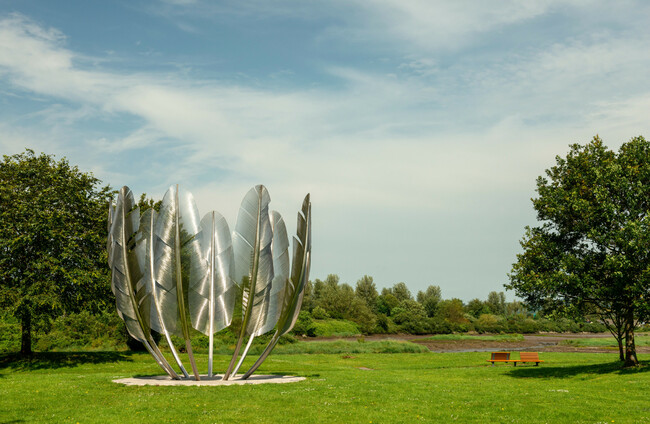
There is a deep resonance to this friendship on account of how the Choctaw Nation raised $170 for Irish famine relief at a time when they themselves were in dire straits. The name Kindred Spirits is the same as the sculpture in Midleton that honours the friendship between the two peoples.
The story of the gift of the Choctaw is known by every schoolchild in Ireland now, and it was widely reported by newspapers in the 1840s (along with a similarly generous gift of fifty dollars from slaves on a plantation in “the Southern States”, which is also deserving of commemoration).
However, it was not mentioned in my own schooldays, especially when compared to the tale of the Ottoman Sultan who matched Queen Victoria’s charitable contribution, or De Valera being made an honorary chief of the Chippewa Tribe in 1919 (in fairness, there was no forgetting that photograph of Dev in First Nation headdress).
A combination of factors in the 1990s shone the light back on this story. Famine commemorations in that decade leading to the 150th anniversary of 1847 played a part, including Famine walks in Mayo with Choctaw walkers in attendance.
However, a reappraisal of Native American histories – not least a concerted effort in 1992 to not allow the 500th anniversary of the arrival of Columbus be treated as a simple celebration – made space for acts like the Choctaw Gift to get the attention they deserved. This led to a visit by President Robinson to the Choctaw in 1995, to the Choctaw-Ireland scholarship in 2017, and now to a feature film.
But how could such a moving and inspirational act of generosity almost disappear from memory?
We shouldn’t be too surprised, as when two languages are pushed close to extinction, a significant amount of folk memory is lost from both. Stories need tellers and listeners to be passed on.
In 1871, a Choctaw-English dictionary was published following the efforts of a missionary called Cyrus Byington, who died before his work was printed. Byington did his best in the absence of written source material, and while very sympathetic to their plight, he was not a member of the Choctaw Nation himself. While not perfect, his work broke ground to make further digging into the language possible.
Browsing this dictionary, I was tickled to see that there were entries for Ireland, Irish and Irishman, but not for England, Englishman, Scotland or Scotsman. And what’s the Choctaw for Irish, you ask? Well, it’s Ailish.
Perhaps you know an Ailish (or an Éilis who pronounces it that way) and this coincidence thrills you. Maybe your mind is racing to the idea that an Irishwoman called Ailish touched the hearts of a Choctaw person sometime in the nineteenth century, a friendship similar to the one to be depicted in Kindred Spirits.
But no. Given that the Choctaw word for Russia is Lashe, it is far more likely that
Choctaw is one of the languages that often switches Rs and Ls in loanwords, with the words for Russia and Irish changed accordingly.
There is an overlap in the work of preserving a language and that of preserving the memory of historical events and family lines, and in all cases the urge to jump to pleasing conclusions should be resisted.
But just as a movie like Kindred Spirits can raise awareness of a moment without being expected to explain every part of it, I believe that knowing that the Choctaw word for Irish is Ailish will stick in someone’s head, worm its way into conversations and maybe even coax someone into learning a bit more about this and other parts of our heritage.
Darach will be back next Sunday with more thoughts on the words that unite us.
To embed this post, copy the code below on your site













have your say