TheJournal.ie uses cookies. By continuing to browse this site you are agreeing to our use of cookies. Click here to find out more »
Dublin: 12 °C Saturday 25 May, 2013

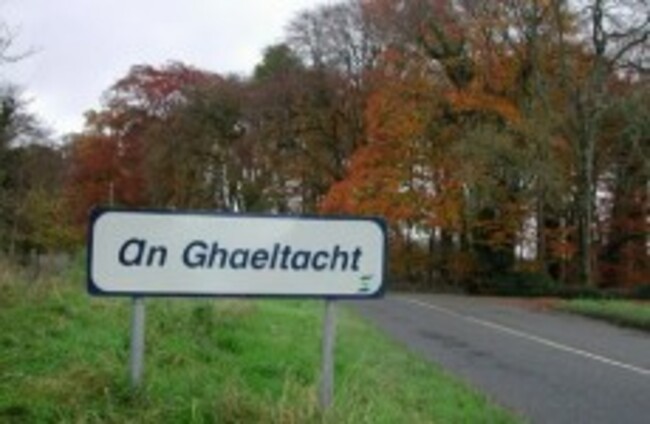
Clondalkin could be Dublin’s first official Gaeltacht

The Dublin satellite town has a large community of Gaelgeoirí so could benefit from new rules.

Image: Udaras na Gaeltachta

A SPRAWLING SUBURB of Dublin could become Ireland’s newest Gaeltacht area thanks to a bill which will create a new definition of what it is to be an official Irish-speaking region.

Labour TD Robert Dowds said that the approval of the draft bill gives Clondalkin a great opportunity to be designated as a Gaeltacht area “at a certain level”.

“One of the main aims of this bill is to create a new definition of what constitutes a Gaeltacht,” explains Dowds. “This will give areas outside of traditional gaeltachts a chance to be recognised should they fulfill certain criteria.”

Under the proposed legislation, the Gaeltacht will be based on linguistic criteria instead of on geographic areas. During last year’s presidential election, Michael D Higgins said that Clondalkin had a case to be recognised due to the number of Irish speakers living there.

Joe MacSuibhne has been principal of the local Irish-speaking secondary school Coláiste Chillian for the past eight years and strongly supports the idea of designating Clondalkin as a Gaeltacht area.

“We have been looking for something like this for years. Currently, there are about 1,500 students receiving their education through Irish in the area and are, therefore, fluent in the language,” he told TheJournal.ie this morning.

Language planning at community level will also be central to the new definition of the Gaeltacht. As well as MacSuibhne’s school, Clondalkin boasts two all-Irish primary schools, Áras Chrónáin Irish Cultural Centre and a host of naíonraí (pre-schools).

“The benefits of being designated as a Gaeltacht area would greatly help here,” continued MacSuibhne. “I think it would help us in the promotion of the language in the school, as well as the town.”

Coláiste Chillian currently serves students from Clondalkin, Rathcoole, Inchicore and Ballyfermot.

“There are endless possibilities for the area if it is given the recognition for the number of Irish speakers here,” added MacSuibhne who has been teaching in Clondalkin for more than 20 years.

Even simple ideas around language development could create employment for students when they graduate, according to MacSuibhne.

Being designated as a Gaeltacht would encourage more local businesses to use Irish and to take on people who are fluent. An Irish-speaking till at local shops would be just one example.”

The decision to prioritise the drafting of the bill was welcomed by Minister of State for Gaeltacht Affairs Dinny McGinley yesterday.

The bill will also make amendments to the role and functions of Údarás na Gaeltachta.

Gaeltacht areas are currently restricted to parts of Donegal, Mayo, Galway, Kerry, Cork, Waterford and two small villages in Meath.

Read next:

Comments (98 Comments)

  • According to the 2006 census figures released by the CSO the only two counties where over 50% of respondents claimed to speak Irish on some kind of regular basis were Galway and Clare. The Gaeltacht in Clare however ceased to be officially recognized in the 1960’s. Would this legislation give voice to the call to have it re-instated?

    Reply
  • Sceal maith!

    Reply
  • I grew up in Clondalkin with Irish as my 1st language spoken in the house and did all my education thruogh irish until i moved to Mayo for college and have become involved in promoting irish in Castlebar. Of the freinds i have who grew up in the gealtacht area of Achill, only one is a fluent irish speaker.great sense of pride that the irish speaking community in Clondalkin is becoming recognised and will be futher developed. its about time areas other than the traditional gealtacht regions are recognised for the development of the languge.

    Reply
  • I’m a past pupil of Coláiste Chilliain, I can’t say I’m surprised at the comments being left above. The reality is, the people who have such an issue with the Irish language are generally people who have no grasp of it. I have never, ever met someone who could speak Irish and wished they couldn’t. Wherever possible shouldn’t we say yes, learn new things, educate ourselves as much as possible?

    I’ve met Irish speakers in lifts in Paris, at temple ruins in Angkor Wat in Cambodia (by Cambodian children no less), there are words of Irish in ‘Down and Out in Paris and London’ that George Orwell notices for their strangeness- because he couldn’t identify it as Latin or French. Have a look here for how Irish is doing elsewhere: http://www.daltai.com/classes/

    It’s fine if you think Irish is ‘useless’, but Clondalkin being designated a Gaeltacht area is only a good thing. Even it it doesn’t happen, the Irish community is thriving here and will continue to do so. It takes nothing from people, and it promotes Irish culture, so ask yourself how and why is it being considered a negative?

    Reply
    • Like religion is today considered child abuse because forcing kids to learn something completely bolox is child abuse the same goes for Irish. Kids should be learning languages for the mid 21st century. If you’re an adult and you want to learn a soon to be extinct language then that is your choice but for children like religious crap it needs to be stripped out and replace with modern languages science and IT. I can speak Irish but I always thought why aren’t we learning languages that will be dominant in 20-30 years. Irish is never even going to be useful here. The language is on artificial life support and needs to be turned off to die or flourish on its own. And to those of you who say its live and well less than 1% (fact not gov stats propaganda bull)of the population is not a thriving language.

      Reply
    • Yes let’s beat Irish into them, then they’ll appreciate it. That’s that the education system has been doing for years. This proposal is only more of the same old let’s force the people to recognise their language guff. If Irish were the language of the people it would be spoken by the people. It isn’t and it isn’t. For a those who enjoy it as a hobby, good luck to you. As for the rest of us, leave us alone.

      Reply
  • Ceapaim gur smaoineamh iontach é, maith sibh!

    Reply
  • Conal 09/02/12 #

    Ar fheabhas!

    Reply
  • Sceal bud ?

    Reply
  • Why ever not surely the temporary home of the linguistic genius Sir John Betjeman deserves majority language advantages ??

    Reply
  • I know one person from Clondalkin and she speaks Irish fluently, that’s a 100% so it gets my backing.

    Reply
  • Those who bizarrely describe Irish as a “dead language”, following a report about the proposed designation of an area in the capital as a Gaeltacht are usually the same people who fail to understand the meaning of the English word “education” (clue: it is not about preparing children to be paye slaves or for emigration) and also believe that learning two languages somehow limits the learning of a third, fourth, etc.

    Reply
  • An mbeadh páirceanna ar fáil do Na Gaeil Óga, CLG sa Ghaeltacht nua seo? http://www.nagaeiloga.ie

    Reply
  • Tá a mhaid níos mó Gaeilge ag usáid i mB.A.C. ná áiteanna sna ‘Gaelteacht’, i mo thuarim. Tá an ceart acu.

    Reply
  • Saoilí 09/02/12 #

    It would be nice to see my hometown known for something other than being a sh*thole.

    Reply
  • All well and good, and as fellow Clondalkinite great to see. Bit lame seeing all the bollox comments about the area. Like everywhere, good and bad parts, now stop the stereotyping all you “D4 protestant snobs” (see, stereotyping’s no fun).
    I think it’s a good step, but the reality is, outside of Irish schools and areas, people aren’t doing enough to get the language really spreading. In my opinion this all down the way it’s taught. A serious overhaul has to happen there and I’d guarantee there’d be a lot more Irish speakers using it every day. I certainly would if I could, and while I’m capable I’d love to be fluent! Teach our language like they teach French or other languages and there’d be huge improvement.

    And making Irish optional is no way to go about it FG.

    Reply
    • As a D4 Protestant snob, I agree.

      Reply
    • Agree in part about the way Irish is taught being part an issue. But thriving languages aren’t taught they’re aqcuired in the home, the teaching happens through the language (i.e. immersion education). No matter how passionate, motivated, well-resourced and educated our Irish teachers are and might be in the future unless we grow the numbers of people who choose to bring their children up speaking Irish in the home then we’ll be trying to fill a bucket of water with a sieve.

      Naíonraí, Gaelscoileanna & Gaelcholáistí (immersion schools) are much better than english medium schools in terms of their success rate regarding Irish speakers but the numbers leaving gaelscoileanna/Gaelcholáistí and not using their Irish on a day-to-day basis (socially, professionally or in the home) far outnumbers those that do continue to use it.

      Giving increased status to the language in certain areas will help in this process of reversing language shift but intergenerational language transfer is the key.

      Not to mention joining you’re local Irish language GAA team! https://www.facebook.com/nagaeiloga

      Reply
    • Why teach it at all?

      Reply
  • Súil agam é a Sheáin!

    Reply
  • Innui Clondalkin, amárach an Domhain. Comhgairdeas

    Reply
  • We set up a Coiste Gaeilge in Áras Chrónain before Christmas with the aim of getting Clondalkin recognised as a ‘Network Gaeltacht’ area.

    Here is what the goverment’s 20 Year Irish Language Plan says about it:

    “Statutory status will be given to a new type of ‘network Gaeltacht’ area outside the existing statutory Gaeltacht areas. These will be areas, predominantly in urban communities, that will have a basic critical mass of community and State support for the Irish language.”

    We’re starting with an 5 a Side soccer competition as Gaeilge in the Commo on March 3rd and will be asking Gaeilgeoirí in shops, pubs etc to wear a badge saying they speak Irish during Seachain na Gaeilge (3-17 March). Much more to follow. New members and ideas to promote Irish in Clondalkin are always welcome!

    Reply
  • N’fheadar cén fáth nár gcuir siad Leamhcán sa phlean seo chomh maith nuair atá an dhá áit suite béal dorais lena gcéile. Tá péire gealscoil agus gaelcholáiste ann atá lonnaithe díreach in aice a gcéile sa chaoi is go bhfuil sórt “mionghaeltacht” ann cheana féin. Nílim ag gearán anseo, ach feictear dom gur ait an smaoineamh é nó an gcás é gur de réir a chéile a tógtar caisleáin?

    I wonder why they didn’t include Lucan in this plan as well since the two places are right on each others doorstep. There’s two Irish primary schools and an Irish secondary school there that are situated next to one another so that there was a sort of “mini gaeltacht” going on there anyway. This isn’t so much a complaint as it strikes me as odd, or is it a case of Rome wasn’t built in a day?

    Reply
  • Reg 09/02/12 #

    How do you say “Alright there bud” in Irish?

    Reply
  • Hi all,

    I’m with Dermot on this one. Would love to see constructive commentary on this rather than jibes and insinuations about the people of the area.

    Personally, I know a lot of people who were educated in the fantastic schools in Clondalkin. The article shows that there are currently about 1,500 kids being taught through Irish in the town.

    I’m not saying everyone should agree that the area should be designated as a Gaeltacht but we could debate the issue here…

    Cheers,
    Sinead

    Reply
    • Hi Sinead.

      I agree with you. I’m an alumnus of Coláiste Chilliain and a member of Muíntir Chrónáin – an organisation dedicated to promoting the Irish language in Dublin. Our cultural centre Áras Chrónáin plays host to language and music classes every week and is the social hub for a substantial community of Gaeilgeoirí in Clondalkin, Rathcoole, Lucan and surrounding areas.

      The work that has been done to foster a love of an Ghaeilge and of Irish culture in Clondalkin has been immense since the late 1970s and, should legislation allow for “certain levels” of Gaeltachtaí, then Clondalkin is a prime candidate for such status.

      Let’s not forget that an “artificial” Gaeltacht was established in Ráth Chairn in Meath some decades ago. Why not have a vibrant urban Irish community, just like in Belfast at the moment?

      Thanks for highlighting the need to talk about this constructively.

      Reply
    • Little Deco from Clondalkin might wear a shell tracksuit but it was the scumbags in suits and ties that f*cked this country, well done lads you are a class act…… and to all those omadon’s above who have nothing constructive to say I hope it gives you great pleasure in putting someone down and having a laugh at their expense, it must make you very proud

      Reply
    • Peter i left what now seems a stupid comment above, i retract it totally as i had completely forgot about the aras and the great work that is done there, my mother does that craft fair there every christmas and i was there once or twice with friends from round towers GAA, I remember being in the company of so many ordinary people who found delight at the ease at which they were able to converse in our native language and it was only when i had posted the comment above that i realised that i hadnt thought it through at all.
      fair play to you and your like for all the hard work done to keep what is a unique language alive

      Reply
    • take a pill it’s just a bit of craic, that’s all we have left.

      Reply
    • I don’t care who you’re with or what you think

      Reply
  • It’s such a great feeling of pride to be abroad on holidays among English speakers from other countries and be able to pass a comment to a fellow Irish person as Gaeilge (pigeon I admit) that only they can understand. Let’s support the language people.

    Reply
  • Why not make the whole country a Gaeltacht area? Maybe people would start to learn their native tongue then so…

    Reply
  • Something to consider, that area has a great reputation in Dublin for an Ghaeilge! The fact that people associate Gaeltachtaí with scenery or certain areas of Ireland is precisely why this legislation is being proposed, and should it be passed, will be another step towards Irish becoming ár gcéad teanga arís (of course not at the expense of our fluency in English, which I might add, is not overwhelmingly obvious in some of these comments!). As for Irish in education a) It’s being taught, but poorly, Irish to the rafters but exam and writing orientated = wrong! and b) Due to it being compulsory, Irish is then abandoned by students after leaving secondary school! If it is taught so we become relatively fluent by Junior Cert. then it can become optional and specialized (poetry etc.) thus allowing us all to be ag labhairt Gaeilge and the most interested to further their pursuits as Gaeilge! :D

    Reply
  • Lou Mac 09/02/12 #

    Is é seo an treo riachtanach don dteanga má tá aon seans dí an éag a sheachaint! Maith an fear Micheál D.! Gaeilge abú!

    Reply
  • Very constructive comments here guys, this site has become a joke.

    Reply
    • Hi all,
      I’m with Dermot on this one. Would love to see constructive commentary on this rather than jibes and insinuations about the people of the area.
      Personally, I know a lot of people who were educated in the fantastic schools in Clondalkin. The article shows that there are currently about 1,500 kids being taught through Irish in the town.
      I’m not saying everyone should agree that the area should be designated as a Gaeltacht but we could debate the issue here…
      Cheers,
      Sinead

      Reply
    • sinead you cannot blame people for ridiculing this idea, and having a laugh, regardless of how many people are speaking irish or are being thought irish in the area, when people hear ”gaeltacht” they immediately think, picturesque scenery, ”bean an ti”, ceoil agus craic, agus rira agus rula bula!! a gaeltacht attracts tourists and i can only imagine the laughs of the gardai when ”brad, and charleene” from ohio on their first trip to ireland march into clondalkin garda station complaining of the the views in Neilstown and the fact that they were mugged at knife point ant the thief didn’t even do it ”as geailge”!!

      APOLOGIES FOR ALL THE SPELLING MISTAKES!!

      Reply
    • jimbo 09/02/12 #

      no sense of humor,whats that in irish?
      Ta me boring!!!!

      Reply
    • Reg 09/02/12 #

      Feck me! The fun police have pitched up!

      Reply
    • Dec Rowe 09/02/12 #

      Sorry to say this but, 50% of you guys have lost your sense of humour! FACT!

      Reply
  • jimbo 09/02/12 #

    an bhuil cead agam doil go di on leitheras.

    can i go for a slash

    Reply
  • jrbmc 09/02/12 #

    “maith go leor bud” !

    Reply
  • I work in the shop nearest Coláiste Chilliain and there may be 1500 students receiving their education through Irish but very few of them use it conversationally outside of the school. I see them almost every weekday for 4 years and have heard Irish from them only once.

    Reply
    • you should try and mark a player from round towers!! i was full back and the whole full forward line used to run us ragged and they talked constantly as gaelige, at one stage after a bit of a row i was insulted as gaelige, and having a pint with the man after the match i told him i couldnt help but be imprressed!! :)
      ………to this day he wont tell me what he called me….. i can hazard a guess tho!!

      Reply
    • Thats impressive, Its a handy trick alrite. The girls I heard where usin Irish to talk about how hot a bloke, who was in earshot, was…… Not me in case ur wonderin :(

      Reply
  • eh Paul are you sure about that.

    Reply
  • jrbmc 09/02/12 #

    Focal off !!!!!

    Reply
  • Isn’t “bud” an Irish word?

    Reply
  • Where the focal is clondalkin anyway??? :)

    Reply
  • Genius. Think of of those extra grants they’ll be able to attract.

    The fact that the locals can’t even speak English correctly is neither here nor there.

    Reply
  • Went to the West last year to Inis Mor and Spideal and couldn’t find a soul who spoke Irish.

    Reply
  • Ronan 09/02/12 #

    Nach deirtear “story bud”? timpeall an haite seo.. Muna mbeidh sibh curamach beidh ciall eile ag baint le “sceal bud”?

    Reply
  • Go Maith

    http://brianpolitics.wordpress.com – My Blog

    Reply
  • Shootings in Irish? Cute…

    Reply
  • Hi a chairde ta me anseo I Bhancouver BC, Ceanada, ta ar dteanga go brea ar fad ,ar An Aoine seo chaite bhi me fein agus beirt eile againn ag leabhairt Gaeilge le cheile gan aon stro ar bith.Ar aghaidh libh le Ghaeiltacht ur i mBaile Atha Cliath, agus na bac le na begrudgrs an Bhearla.C’n fath go bhfuil eagla ortha roimh an Ghealge? Agus ta eagla an domain ortha,sin an fhirrinne.
    Bia agus Beannacht
    Christy.

    Reply
  • Seosamh 20/05/12 #

    Tá seo ar fheabhas:D

    Reply
  • The author should.stop censoring comments she doesn’t like, journalism huh.

    Reply
  • Thumbing up Irish comments because it’s the only reply you know!

    Reply
  • hahahahahahahahahahahahahaaaaaaaaaaaaaaaaaaaaaaaaaaaaaa…sure

    Reply
  • My opinion, i’d rather my kids spend their time learning something that will stand to benefit them in life… not waste their time learning a dead language!

    Reply
  • Is bud not the Irish for penis ?

    Reply
  • Irish is about as useful as Sanskrit get over yourselves.

    Reply
    • My girlfriend went to school in Italy – they study Latin the way we study Irish. They are incredibly proud of Latin and it’s place in their country’s (and Europe’s) history, and don’t reserve the same amount of vitriol some people here do for Irish. And Latin truly is a ‘dead’ language. Irish has a TV station, and a few radio stations (the excellent Radio na Life serves Dublin), and is far more vibrant than many other languages.

      Of course if you don’t speak any Irish, you would think there are far fewer speakers – we all also speak English so it’s understandable when you don’t notice us.

      As for Irish being ‘useful’ – it is incredibly useful to study something that you don’t (initially at least) like. Education isn’t entertainment, and when you get to college you will be forced to study many things you don’t like. Having studied and excelled at a language like Irish, especially if you don’t speak it at home, is an incredibly worthwhile experience to have.

      It’s also a part of your history and culture – I hope you grow out of the mindset that only attaches a monetary value to things, you créatar bocht! :-)

      Peace.

      Reply
    • What’s Sanskrit?

      Reply
    • Actually Sanskrit is more useful. I suppose we’ll still be learning (mostly nothing ) Irish while the rest of the world learns Russian, mandarin and Spanish languages that actually matter.

      Reply
    • @ Paul – what’s stopping them from learning those languages too? I studied English, Irish and French in school and went on to study Russian in college. I am now fluent in English, Irish, Russian and Manx and can speak or read French, Ukrainian, Belarusian, Finnish, Slovakian, Bulgarian, Spanish, and Scottish Gaelic to varying degrees.

      Reply
    • That’s not the point, that’s like saying music or sinning is pointless.

      Reply
  • Irish language would have been more interesting if it would be somewhat modernised. Even foreign people would learn it I think. And as for now it is like talking in Shakespeare English, lovely but in literature and not day to day basis.

    Reply
    • What do you mean if it had been somewhat modernised? The language is modern. Pretty much every technical, biological, mechanical, engineering, etc. term that exists in English also exists in Irish. Fair enough, many may have been borrowed from English or other languages, but then look at English where c. 75% of the language isn’t even English anyway, but simply borrowings from other languages. I think, rather than jump on the anti-Irish language bandwagon with an apparently complete lack of knowledge of the language, you should perhaps educate yourself on it first. And if you think people don’t use it day-to-day, take a little trek down to the heart of the Galway, Kerry or Donegal Gaeltachtaí where you’ll find that plenty of people converse in it on a day-to-day basis – they don’t seem to have any problem expressing modern thoughts and ideas to their neighbours in Irish.

      Reply
    • It is a modern language. As is every language currently spoken.

      Hence, its called modern.

      Reply

Add New Comment