Sign in. It’s quick, free and it’s up to you.
An account is an optional way to support the work we do. Find out more.
Sign in. It’s quick, free and it’s up to you.
An account is an optional way to support the work we do. Find out more.
A ROADMAP for a phased lifting of Covid-19 restrictions in Ireland was announced by Taoiseach Leo Varadkar this evening.
This plan – which can be read in full here – lays out the staggered approach to lifting certain measures put in place by the government to slow down the spread of Covid-19.
It includes a detailed plan on social gatherings, including a staggered approach to allowing people to see family members outside their household again.
It must be noted that the plan is tentative and will be kept under constant review. There is an ongoing possibility that restrictions could be re-imposed.
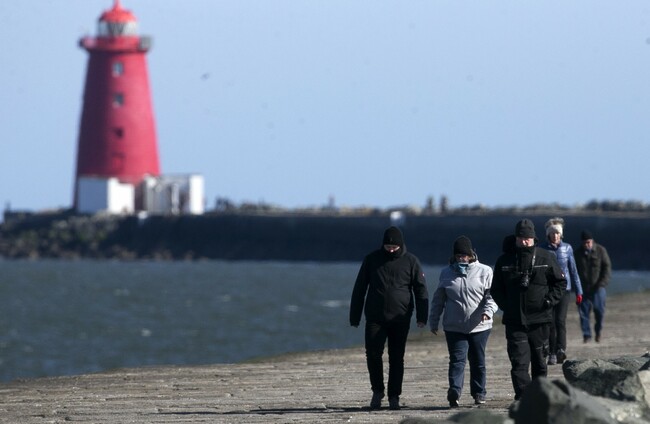
Varadkar firstly announced this evening that from Tuesday, people will be allowed to travel up to 5km for the purposes of exercise. Over 70s will also be allowed to leave their homes to exercise or drive within a 5km radius.
Other restrictions remain in place until 18 May, when the country will then begin to re-open in five stages, three weeks apart.
Here’s a breakdown of the part of the plan which would allow extended family to begin seeing each other again:
During phase one, people must continue to avoid unnecessary journeys.
Up to four people not from the same household will be allowed to meet outdoors, while maintaining strict social distancing.
However, people will have to continue to avoid non-essential social visits.
Current restrictions on attendance at funerals to a maximum of 10 people should be continued during this period.
During phase two, people will be allowed to travel within 20km of their home. However, they will have to continue to avoid unnecessary journeys.
Visits to homes of over-70s and the medically vulnerable by no more than a small number of people for a short period of time will be permitted. People will have to wear gloves, face coverings and maintain social distancing.
Up to four people may visit another household for a short period while maintaining strict social distancing.
Slightly larger groups of people will be allowed to attend funerals. However, attendance will still be restricted to immediate family and close friends and limited to a maximum number of mourners for a limited period of time.
There won’t be many changes to social visits during phase three.
During this phase, people will have to maintain restriction to within 20km of their home.
Again, people will have to avoid unnecessary journeys.
In terms of health and social care, there will be a commencement of a phased approach to visiting hospitals, residential healthcare centres, other residential settings and prisons, etc.
During phase four, people will be allowed to extend their travel to outside their region.
Slightly larger numbers of people will be allowed to visit another household for a short period of time while maintaining social distancing.
Small social gatherings by family and close friends will be permitted, limited to a maximum number of attendees for a limited period of time. Such gatherings would include small weddings and baptisms. People will have to maintain social distancing.
Small social gatherings of non-family members will be permitted. Again, this will be limited to a maximum number of attendees for a limited period of time. Such gatherings would include small weddings and baptisms. People will have to maintain social distancing.
The document advises that during phase five large social gatherings will be restricted due to risk.
There will be a continued restriction on all household contact of suspect cases.
Decision-making
It must again be noted that there is an ongoing possibility that restrictions could be re-imposed.
Before each government consideration of the easing of restrictions, the Department of Health will provide a report regarding the latest data available.
It will also provide risk-based public health advice on what measures could be modified in the next period.
The government would then consider what restrictions could be lifted, having regard to the advice of the Department of Health, as well as other social and economic considerations.
This process will be carried out on an ongoing basis once every three weeks.

To embed this post, copy the code below on your site










have your say