Sign in. It’s quick, free and it’s up to you.
An account is an optional way to support the work we do. Find out more.
Sign in. It’s quick, free and it’s up to you.
An account is an optional way to support the work we do. Find out more.
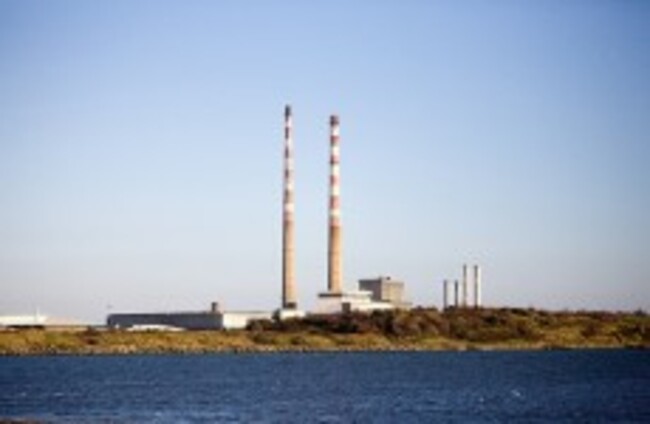
DUBLIN IS ON track to being the first city in Ireland to install District Heating – but funding issues with the Poolbeg generating plant are delaying the project.
District Heating (DH) is used in countries like Russia and Poland, where it is low-cost or paid for through taxes, and involves “the distribution of heat from centralised heat sources via a hot water pipe network”, explains Dublin Waste.
A piping system has even been laid from Poolbeg to Spencer Dock in Dublin city that is supposed to pipe the heating to homes, but it can’t be used until the funding is gathered for the Dublin Waste to Energy project. This project in turn is dependent on work beginning at the Poolbeg generating site, as this is where the incinerator would be based that would generate the steam used to heat homes.
Earlier this week, a report presented to the Dáil’s Public Accounts Committee said the deadline for the resumption of work at the Poolbeg facility – which is currently set for November 5 – is set to be extended in order to give its operator Covanta enough time to secure funds for the deal.
Dublin Waste to Energy project
This project is a public private partnership between Dublin City Council (acting on behalf of the four Dublin local authorities) and Dublin Waste to Energy Ltd “to provide a thermal treatment plant to treat approximately 25 per cent of waste that cannot be reused or recycled”.
They say the plant will:
generate energy from up to 600,000 tonnes of waste per year that would otherwise go to landfill and will generate enough electricity for up to 50,000 homes annually as well as district heating for up to a further 60,000 homes.
The project received planning approval from An Bord Pleanála in November 2007, was granted a waste license from the Environmental Protection Agency in December 2008 and received authorisations from the Commission for Energy Regulation in September 2009. But now funding is needed for the rest of the plan to go ahead.
The Poolbeg incinerator plan was opposed by the Minister for the Environment, John Gormley, and has also been opposed by some residents in the local area.
A report on the potential of DH in Dublin suggested the waste from the Poolbeg plant could be used to create the energy needed. Following its publication, a pipe was laid in 2010 from Poolbeg to Spencer Dock, which would be the first area to benefit from DH. However, this type of heating would only be placed in new homes being constructed in Dublin, and homes would not be retrofitted, said the RPS spokesperson.
The report found that:
Dublin City has both the quantity and concentration of large buildings to host a large DH system. Despite the mild Irish climate, heating is necessary for several months of the year and domestic hot water is needed year round. In addition, there is a demand for cooling of hotels, offices and shopping centres inter alia during the summer season.
What is District Heating?
District heating allows the use of thermal energy from combined heat and power plants (CHP), refuse incineration plants, waste heat from industrial processes, natural geothermal heat sources, and fuels.
The proposed district heating (DH) network for Dublin will circulate hot water in an underground, pre-insulated pipe system.
District Heating (DH) can offer higher energy efficiency, and reduced consumption of energy resources, as well as cost savings and reduced operating and maintenance costs, its proponents say.
Russia
In Russia, heating is on all the time during the colder months, due to the fact that the temperatures drop so low in the winter.
One blogger wrote:
the local council takes care of everything. Every apartment has a few central heating radiators, which are switched on around October and work 24/7 until April/May. There are NO on/off switched or controls to raise or lower the temperature, the Soviets didn’t think this was necessary, the main thing was keeping everybody as warm as possible. When the heating is on, its on until the council switch it off, and there is nothing you can do about it.
With 70 per cent of homes having district heating, and this type of heating being installed for so long, plans are underway to cut the country’s heating bills and regulate temperatures.
One company, Danfoss, worked with authorities in Moscow for introducing guidelines for the use of thermostats on radiators – but it says that some people didn’t use them, as they paid the same amount regardless. But with Moscow eliminating the district heating subsidy, people may find themselves reaching for the thermostats.
Sweden, Denmark, Poland, Finland, Austria, Bulgaria, Czech Republic, the UK and other countries also use DH in varying amounts.
In Warsaw, for example, over 1 million people throughout 19,000 buildings benefit from this type of heating.
One TheJournal.ie commenter explained:
Here in Poland, I have no choice about the heating being on or off. Heating is provided by the city council to virtually every apartment in the city. It’s free (well, paid for by taxes) so you never have to worry about having it up too high. Just regulate each radiator to suit your preference. With the harsh winters here, this is done to ensure no one dies of the cold because they can’t pay the gas bill. As soon as the temperatures dip below ten degrees for three days, on goes the heating for the whole city. If it stays over ten degrees for three days, it goes off again. It’s off right now because it’s still around 18-24 degrees most days. As well as this, the city council provides your hot water as well (though there is a water meter for this and a separate one for cold water, but it costs half nothing) so no need to ever worry about the immersion.
Payment
We’ve seen that in some countries, payment for this type of heating is through the council, or through taxes. But it hasn’t been decided yet how people in Dublin would pay for it.
That said, the project’s spokesperson said that it is envisaged that the costs would be lower than gas, and that it “normally is cost effective” when compared with gas or coal.
The spokesperson for the Dublin Waste to Energy Project told TheJournal.ie that unlike heating plans that are fitted in places like the older buildings in Ballymun, if DH was installed the temperature and duration of heat would be controlled by the homeowner.

To embed this post, copy the code below on your site












have your say