Sign in. It’s quick, free and it’s up to you.
An account is an optional way to support the work we do. Find out more.
Sign in. It’s quick, free and it’s up to you.
An account is an optional way to support the work we do. Find out more.

IRELAND NEEDS TO prepare itself for an increase in the use of fentanyl and other powerful drugs if there is a heroin shortage next year, the head of an addiction charity has warned.
A heroin shortage is expected across Europe in 2024 following a ban on poppy cultivation by the Taliban in Afghanistan. The vast majority of heroin consumed in Europe – about 95% – comes from Afghanistan.
Tony Duffin, CEO at Ana Liffey Drug Project, which provides harm reduction services to drug users and their families, said Ireland needs to prepare itself for an increase in the use of fentanyl or other highly addictive drugs.
In an interview with The Journal, Duffin said “something is going to happen” and Ireland needs to be ready.
“The opium crop is being destroyed by the Taliban in Afghanistan, meaning that something is going to happen. If you destroy 95% of Europe’s supply, then something has to happen, and we need to be ready.
“Fentanyl could be the issue. It could be xylazine which is another drug that they certainly have seen in the UK more recently which isn’t an opiate, which Naloxone won’t work with, but it is part of the overdose deaths problem in the US.”
Naloxone, which is widely accessible in Ireland, is a prescription medication used to temporarily reverse the effects of opioid drugs such as heroin, fentanyl and methadone.
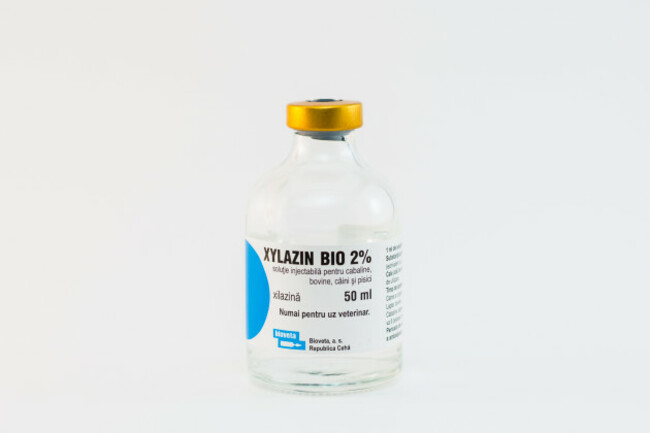
Xylazine is a powerful sedative typically used in animal surgeries; naloxone cannot reverse its effects.
Duffin said relevant stakeholders in Ireland “need to really closely monitor what’s going on”.
“We need to speak to people about what’s going on, monitor what’s going on in terms of overdose deaths, look for new trends, test drugs – all these things that we do some of, but we need to do more of.”
Duffin said there is already “great collaboration” between groups like Ana Liffey and the HSE, An Garda Síochána and the Probation Service, “but there’s always more that can be done”.
“Ana Liffey is one agency. If you’re looking at it from a macro perspective, from a Government perspective, it’s about all of the agencies increasingly working together.”
The Journal recently reported that the HSE, gardaí and other organisations are working behind the scenes in preparation for fentanyl use becoming more prevalent in Ireland.
Last year the Taliban banned poppy cultivation but the 2022 crop was exempted, meaning the effect of the ban likely won’t be felt in Europe until next year.
Fentanyl is a powerful synthetic opioid that is about 50 times more potent than heroin and up to 100 times more potent than morphine. The drug is not currently widely used in Ireland but experts fear its use could become more widespread if there is a heroin shortage.
There are two types of fentanyl: pharmaceutical fentanyl and illegally made fentanyl. The former is prescribed widely as pain relief medication in the US.
Fentanyl and xylazine can both be injected, snorted, smoked, or taken orally via a pill. Tens of thousands of people in the US have died from fentanyl overdoses.
Overdose deaths involving xylazine are less common, but concerns over the drug have increased in recent years.
In countries such as the US, it is not uncommon for street drugs to be laced with fentanyl or xylazine without the user realising what they are consuming.
Earlier this year, the first death related to xylazine was reported in the UK.
Citizens’ Assembly
The Ana Liffey Drug Project yesterday launched its Strategic Plan for 2024 to 2029.
Duffin said the plan is “a commitment to those we serve and those we collaborate with”.
“We’re refining our identity, enhancing our systems, and putting our service users at the forefront of everything we do,” he added.
This morning we launched @AnaLiffey’s strategic plan. For over 40 years they have been working hard, responding to the burgeoning problem of drug use. The boundless energy of the team members, across the organisation, all focussed on helping the people they serve is inspiring🙏 pic.twitter.com/SKiG9qtnHk
— Hildegarde Naughton (@1Hildegarde) November 8, 2023
The Citizens’ Assembly on Drug Use last month recommended that the State should take a comprehensive health-led policy response to dealing with people who are in possession of drugs for personal use, rather than a criminal approach.
The assembly vote on the approach to dealing with people found in possession of cannabis was the tightest – 39 people opted for a health-led approach on the final count, and 38 opted for legalisation and regulation.
Duffin said the assembly’s recommendations are “very progressive” but also “achievable”.
If the recommendations are accepted by the Government, Duffin said “the true test will be in their implementation”
This will require political will, adequate funding, stakeholder engagement, and continuous evaluation and adaptation.
Duffin noted that drug use is “a contentious issue”, but said previous assemblies on other controversial topics have “worked well”.
“It would be unfortunate if the Government didn’t take the recommendations on board, and implement at least some of them,” he said.
Duffin noted that other jurisdictions have regulated and controlled cannabis “in many different ways”.
“Ireland needs to consider what it’s going to do in the future. I don’t think it’s going to happen anytime soon.
But 10 years from now – when other jurisdictions have had different experiences and different evidence to show us – maybe we will.
Speaking at the launch, Hildegarde Naughton, Minister of State with responsibility for the National Drugs Strategy, said the Citizens’ Assembly on Drug Use was “a really, really pivotal moment for us”.
“This is the first time that we’ve truly had an open and honest conversation about drug use, and how it impacts on the wellbeing of people directly affected by substance abuse issues, but also their loved ones, their communities and society as a whole.
“And this is a long overdue conversation that is happening at the moment.”
Naughton said the Government will consider all of the assembly’s recommendations in detail.
She thanked Ana Liffey for its work on the frontline, saying its strategic plan is based on “extensive community involvement” and incorporates feedback from service users.
“The strategy is reflective of the voice of that community through its renewed focus on outreach, low-threshold interventions, advocacy, research and trends,” she added.

To embed this post, copy the code below on your site















have your say