Sign in. It’s quick, free and it’s up to you.
An account is an optional way to support the work we do. Find out more.
Sign in. It’s quick, free and it’s up to you.
An account is an optional way to support the work we do. Find out more.
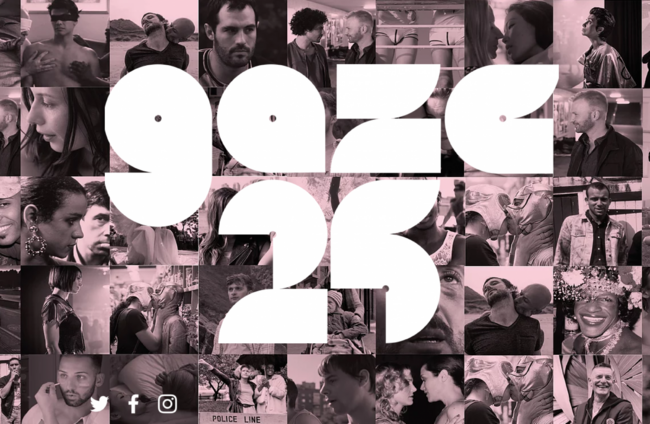
THIS YEAR IS the Gaze Film Festival’s 25th year of sharing movies, documentaries, and short films about the gay community.
And that, upon first reading might seem like a very simple thing, but Ireland in the late ’80s and the early ’90s was a very different setting to set up a festival showcasing romances, comedies and dramas about gay men and women.
In the years before the Dublin LGBT festival was set up, the community had been hit with the AIDS epidemic, which marked a period of society-fuelled fear and profound loss; media segments grilled gay men and women on their human rights; and Ireland’s gay community were living as part of an underground.
Filmmaker Bill Hughes, who’s attended almost every Gaze festival, describes it as a “nudge nudge wink wink” existence.
“It was deeply unpleasant,” Hughes tells TheJournal.ie.
There was a gay bar in Dublin that had the best music and the best sound in the city, but they couldn’t serve alcohol because they weren’t given a license… the gays couldn’t be trusted with alcohol, was the feeling, so all we got was tea, coffee and a bun!
Homosexuality was decriminalized in 1993, but the year before that is when Gaze, or the Dublin Lesbian and gay Film Festival, was set up. its founders were conscious of the legislation was on the way, and wanted to make their cultural mark in Ireland.
But of course, there was opposition to it. Cinemas at the time wouldn’t screen the content as many of them were under management of the Catholic Church.
But once the Church lost power and decriminalisation happened, the dark cloud lifted. It wasn’t just metaphoric, you actually felt it being lifted off your shoulders.
There were other, more practical difficulties as well – at the start, finding films and documentaries was difficult.
“Trying to contact distributors when calling abroad cost a fortune, trying to track people down, you really had to be Miss Marple to find content,” Hughes says.
But once it got status, then you got to the stage where content was being offered, and you’d have people saying ‘you should try to get it shown in Dublin’.
That seems like miles away from last year’s festival, where films like A Date for Mad Mary, Handsome Devil, and Viva which were screened as part of the festival prompted a response not only in Ireland, but abroad too.
Over the weekend almost 12,000 people are expected to attend the festival’s events; 4,500 of them are for film screenings.
The power of the cinema is that it can bring people together to experience the subjects like love, heartbreak, success and loss with other people.
After an AIDS drama aired at the festival one year, Hughes described how many of the audience members, who would have lived through the AIDS epidemic in the ’80s, reacted.
It was such an outpouring of emotion, it was like therapy really. And that’s such an incredible thing and an example of how Gaze is a force of good.
“The History of Gay Lives in Ireland, which was first broadcast in 1998, was shows on the big screen again in 2013, and when it finished it got a standing ovation that gave me the buzz of my life,” Hughes says.
Here’s some of the highlights of this year’s Gaze Film Festival, a special ‘Silver Anniversary’ edition:
There’s a colourful, interesting, fabulous list of other films on here.
For years, Gaze has been documenting the part the gay community play in Irish society, a place for people to meet, and an emotional journey for many of its members.
After 25 years of being a part of Gaze’s audience, and over 20 years of being a soundboard for the festival’s organisers, Bill has watched film-goers themselves change too.
“They’re getting younger,” he laughs.
“They’re not afraid of their opinion, it’s not a reverential experience for them, they’re there to be entertained, intrigued, provoked, and stimulated.
“It’s wonderful to see the wide-eyed curiosity they have about the greater world of LGBT issues, that tells me the future is good hands.”

To embed this post, copy the code below on your site












have your say