Sign in. It’s quick, free and it’s up to you.
An account is an optional way to support the work we do. Find out more.
Sign in. It’s quick, free and it’s up to you.
An account is an optional way to support the work we do. Find out more.
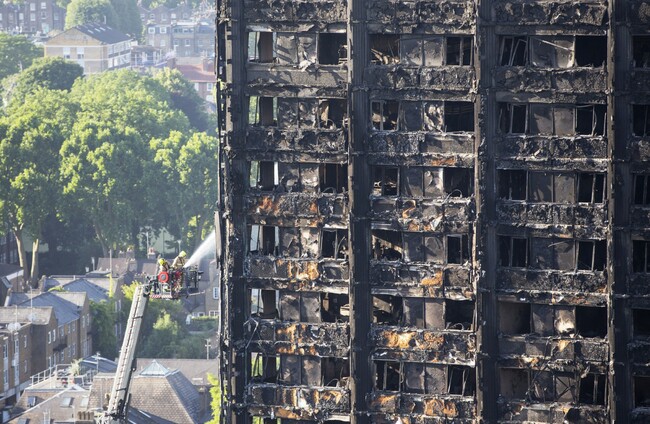
SIXTY FIREFIGHTERS AND eight fire engines remain at the scene of the Grenfell Tower fire which has claimed at least 17 lives.
Grenfell Tower was home to around 600 people and whole families remain missing after the fire, which forced residents to flee through black smoke down the single stairwell, jump out of windows or even drop their children to safety.
The London Fire Brigade says that it does not expect to find any more survivors after the blaze.
The fire affected all floors of the 24 storey building, from the second floor up, and at its height 40 fire engines and more than 200 firefighters were at the scene.
Met Police say that fires are still breaking out, making the recovery of victims a slow process.
Met Police Commander Stuart Cundy yesterday said that the recovery operation was “enormously challenging”.
“The recovery of victims from inside the building is enormously challenging, but it is our absolute priority above everything else to recover and identify the victims and let the families know.
“It is important to be frank – fires are still breaking out and conditions are very difficult and hazardous for the emergency services in the upper levels of the building.
“We can only recover bodies when it is safe to do so and that will take some time in the days and weeks to come. Sadly, the nature of injuries caused by such an intense fire will mean the identification process will take some time.”
Of the 17 victims found by emergency services so far, six were outside the tower, while it has not yet been deemed safe enough to recover the 11 bodies found inside.
“They are simply not recognisable because of the fire,” Fiona McCormack, from the Metropolitan Police’s identification team, said of the victims found inside Grenfell Tower.
Questions and anger
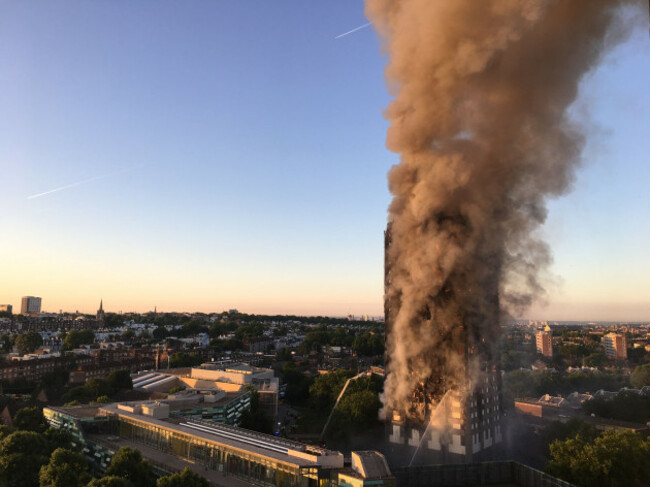
Questions are growing about how the flames spread so quickly, engulfing the tower’s 120 apartments in what fire chiefs said was an unprecedented blaze.
The focus of criticism centres on the cladding fitted to external walls on the 1970s concrete block as part of a £8.7 million refit completed last year.
The cladding was linked to a 2014 fire in Melbourne and has been banned in high-rise buildings in the US.
Today’s Times reports that a fire-resistant version of the cladding would have cost just £5,000 more.
Rydon, the firm responsible for the refit, said the project “met all required building regulations”.
Harley Facades, which fitted the panels, told the BBC: “At this time, we are not aware of any link between the fire and the exterior cladding to the tower.”
The questions over the tragedy have led to anger from residents.
Locals yelled questions at Mayor Sadiq Khan as he walked through the west London neighbourhood.
“How many children died? What are you going to do about it?” a boy asked Khan, as the mayor tried to stop tensions rising further.
“You can see the anger for the community, justifiably so,” he said.
With AFP reporting

To embed this post, copy the code below on your site












have your say