TheJournal.ie uses cookies. By continuing to browse this site you are agreeing to our use of cookies. Click here to find out more »
Dublin: 4 °C Saturday 25 May, 2013

Ireland’s youth mental health services can save lives – and should be minded

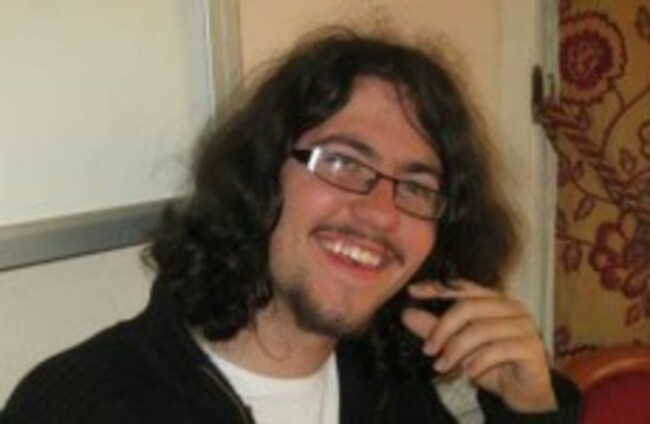
As a schoolboy, Bobby Edgar self-harmed and described himself as being “alone in a crowd”. Today, TheJournal.ie meets a confident, ambitious and active 19-year-old. So, what changed?

Bobby Edgar
Bobby Edgar
Image: Jigsaw

IN 2010, BOBBY Edgar was a 17-year-old fifth-year-student suffering from depression. He self-harmed and described himself as being “alone in a crowd”.

Today, he talks about his aspirations, action plans and “genuine friends”.

The stark difference in his wellbeing is owing to a mental health service that is part-funded by the Health Service Executive.

Ireland’s health service has come in for a drumming – often quite rightly –  in the past for not providing adequate levels of care to the country’s young people. Just this week, a raft of cuts across various services were announced which will impact patients countrywide.

But there are also many positives to be found within that somewhat ailing system. Luckily for Bobby, he found some of that good in Jigsaw, a programme developed by Headstrong, the National Centre for Youth Mental Health.

“It is a cliché but the best thing to ever happen to me was to reach out and talk to someone. That feeling – it was alleviating. It was just an amazing experience to ask someone for help,” Bobby explained to TheJournal.ie. “And after asking, there were people there openly offering that help. It was different to anything I had ever experienced before. I thought it would be weird, or strange, or awkward. But it was the absolute opposite – it was really comfortable.”

After spending the previous two years “in a really bad place”, Bobby went along to a Jigsaw centre after being told about it by a friend.

“I was going through a hard time. I was hanging out with a lot of people but they weren’t like me,” he recalled. “They weren’t people I really liked – or that even liked me. One of the people I was hanging around with was also verbally abusive towards me.”

As just one example, Bobby tells a story about eating lunch and immediately being called fat.

As a young teenager, he had also started self-harming, a dangerous practice of cutting oneself which he describes as “almost addictive” because of “that rush”.

“I was alone in a crowd. I didn’t talk to my family and I didn’t feel like I had friends I could talk to,” he continues.

I wanted to talk to someone but what I really wanted was for someone to listen – not only to actively listen but to understand as well. It is hard to find that when you’re 17.

He found that person in Mike at his local Jigsaw service. “After a couple of months of volunteering, I decided that I needed to talk to someone about the stuff going through my head.”

It was “the first time ever” that he had spoken about what he was feeling and once he did, everything changed.

“We made out a plan and then things started to get better,” remembers Bobby. “I started developing aspirations, figuring out where I wanted to be.”

The next step

One of the defining features of Jigsaw is that people under the age of 18 can attend sessions without the express permission of their parents. Teenagers can attend the spaces up to three times before they are required to tell their mother, father or guardian.

For Bobby it was “a few months” before he told his parents that he was suffering from depression or that he was self-harming.

“Obviously there was a lot of worry but they reacted well to bad news,” he explains. “My mom had noticed cuts and scratches on me but I always had an excuse ready. After I told her, she thought she should have realised or known more but I was good at hiding it.”

Although he still has what he calls “dark times” because depression is something that will “stick with him”, Bobby says the way he is open about his feelings has actively changed how he reacts to those moments.

“It got better before the start of sixth year but I had a bad patch at Christmas. Since then though, it has been smooth sailing. I know if I am going through a bad time, I need to talk to someone, have an action plan as well as something that will keep me busy.”

The 19-year-old hasn’t cut himself in over a year-and-a-half, stating that he has “learnt to resist it”.

Now he says he has genuine friends that he feels comfortable with – either hanging out with casually or to talk to. He has moved away from the person who used to be “a bit abusive”.

A message to Ireland’s leaders

After such a positive engagement with Ireland’s youth mental health services, Bobby is keen to see the system thrive. In the midst of cutbacks and budget targets, he says his message to the Government would be that services like Jigsaw are “absolutely necessary”.

“We won’t have a nation if we don’t have a young people in a healthy state of mind. Just look at our suicide rates. We need to concentrate on keeping as healthy as possible. These services should be minded.”

Earlier this week, a chain of private clinics said it had experienced a 30 per cent spike in the number of children it was treating for social dysfunction, withdrawal, depression and other mental health issues because of the current economic climate.

“I think the recession is a big part of what is going on in young people’s heads these days,” agrees Bobby. “It is more difficult to be a young person in Ireland today because things like getting employment and emigration are genuine worries.”

He himself is currently unemployed but is busy planning a future which will include a number of media training courses, as well as work with mental health groups Jigsaw and Headstrong.

Related: Recession leads to surge in mental health issues in children>

Read next:

Comments (16 Comments)

  • Well done Bobby.. Support groups like these need to be advertised more.. I think young people who want to get help don’t know where to begin..once a person begins to talk about their problems it can be a huge weight of their shoulders..

    Reply
  • Torpedo 02/09/12 #

    Ireland’s policies regarding mental health are a joke. Very little resources are available and if you need help after 4:30pm or the weekend, you can forget about it. Even the media won’t report suicides in Ireland. Why? The whole system needs to be scraped and shaken up. For a start someone could go to every secondary school and speak to 4th year students about mental health and suicide. Let them know that suicide is not an option and there are groups out there that will help them.

    Reply
    • Maria 02/09/12 #

      There are guidelines re the reporting of deaths by suicide in the media. I assume one of the reasons is to ensure it is not glamourised. I imagine respect for the devastated families is also a consideration.

      Reply
    • Torpedo 02/09/12 #

      It all depends how it’s reported in the media. The RSA are starting to do it with road accidents through their Facebook page so why can’t it happen with suicide awareness. I am sure a family that has been devastated by suicide would help with the campaign.

      Reply
    • Maria 02/09/12 #

      The guidelines are here: http://www.nosp.ie/media_guidelines.pdf. I imagine that they were based on well founded research. I see where u r coming from in that it is an avoidable death and is comparable to a road death in that respect. However, speaking myself as a devastated family member, it is a completely different to any other kind of bereavement and needs extremely sensitive handling out of respect for all involved.

      Reply
    • Maria 02/09/12 #

      The guidelines are here: http://www.nosp.ie/media_guidelines.pdf. I imagine that they were based on well founded research. I see where u r coming from in that it is an avoidable death and is comparable to a road death in that respect. However, speaking myself as a devastated family member, it is a completely different to any other kind of bereavement and needs extremely sensitive handling out of respect for all involved.

      Reply
    • Torpedo 02/09/12 #

      Maria my deepest sympathies to you and your family for your loss. Annually there is nearly 3 times more people lost to suicide then road deaths. Yet road deaths are reported with in hours of the accident. All I would like to see is the same effort that is put into reducing road death put into suicide awareness.

      Reply
  • A welcome article. What Bobby stresses in the article is that Jigsaw gives young people support and practical advice rather than “healthcare”. In doing so it provides an invaluable service in diverting young people away from the psychiatric services where they run the risk of becoming long-term patients. In doing so it not only protects the quality of their lives, but ensures that money is not wasted on unnecessary medical treatment and social welfare payments.
    James O’Reilly has said that he subscribes to the the prinicple of the patient (an inapproriate word in this context but..) being treated at the lowest level of complexity and in a setting as close as feasilbe to his/her home. This is a case in point where providing low-tech, high quality care can keep young people out of medical treatment yet give them the help they temporarily need.

    Reply
  • Well done Bobby, have confidence in yourself that’s what it’s all about…walk away from those who make you feel bad about yourself, your worth more than that. I sincerely wish you the best, it will happen, teenage years are hard!

    Reply
  • I can tell by Bobbie’s picture he is so much happier now, so great that he shared his story which is letting other sufferers know things can get better well done Bobby….

    Reply
  • love this article well done bobby u should be so so proud !!

    Reply
  • Well done, Bobby. Wish we had more people with your true courage.

    Reply
  • (apologies of this is a double post, the app hung on me and I’m not sure of it went through or not)

    An eloquent article that speaks immeasurable truth.

    Most of this countries budget on mental healthcare would be spent on medications, psychiatric consultants and in-patient services – things that should really only be required for a very small percentage of people.

    For the majority of those suffering mental health problems it is therapy such as social interaction with those, as Bobby points out – you can truly relate to, speaking about problems with a view to their resolution rather than idle moaning or bitching, getting out of isolation and even simple exercise are all supposed to be the first ports of call in therapy and yet sadly, medicines, which can carry serious side effects, are often the first port of call. In some cases this can actually serve to worsen or even stagnate a problem which could easily have been resolved without them, by simply following the officially recommended guidelines – seek therapy first.

    I never had the benefit of one of these organisations, they were never suggested to me. I spoke to my doctor, who referred me to the psychiatric out patients clinic, who got me on anti depressants which just made everything worse for me. I needed counselling, but there was a huge waiting list for it and I was told the drugs would “get me into the *place* for counselling”. What they got me was hallucinations, suicide attempts, hypomania and dysphoria. I feel like they held back my recovery rather than helped it.

    Services like the one mentioned here, Jigsaw, would be an extremely cost effective way to enhance the nations mental health services, by diverting people away from costly medications and in patient care – allowing these things be narrowed and focused for those who really require them. But they need to be properly promoted.

    The proverb “a problem shared is a problem halved” has some credence – but you need to share that problem with someone who can appreciate where you are coming from, if they can’t, it just leaves you feeling more alone and hopeless. You need to speak to people who have some inkling of how you feel, or who can at least help you to see your own solutions. And these services provide the perfect place to meet those people. It can even offer you the opportunity to help someone else – which has tremendous benefit to you.

    These are extremely positive initiatives which should be encouraged and protected.
    To Bobby I wish you the very best in your future, you sound like your head is way more on your shoulders than mine was at your age, and no doubt that is a testament to how valuable these organisations are in the development of a decent, considerate, compassionate and above all mentally healthy society.

    Reply

Add New Comment